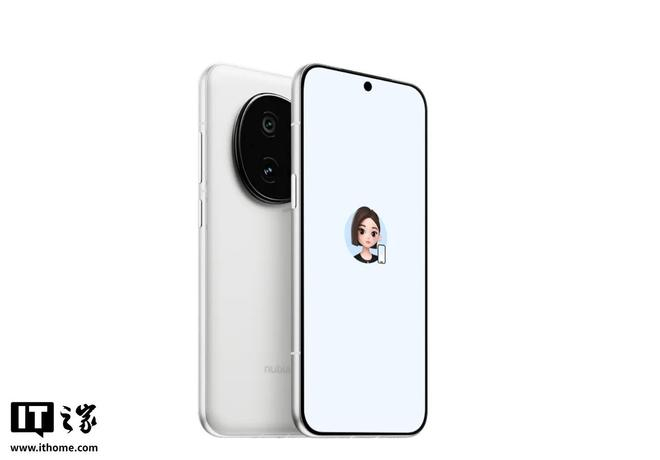
On December 1, the AI smartphone concept ignited the consumer electronics sector, with ZTE hitting the daily limit and trading volume surpassing ¥13.1 billion. ByteDance and ZTE’s AI phone is expected to launch in early December—ByteDance will handle the integration of the Doubao large model and AI interaction features, while ZTE leads hardware design and production. The collaboration has sparked huge anticipation.
However, market enthusiasm proved short-lived. The next day, ZTE’s AH shares both retreated, with H-shares falling over 6% intraday. The Nubia M153 is now available in limited quantities on the Doubao Assistant website and ZTE Mall at ¥3,499, with only the 16GB+512GB configuration. Some second-hand platforms have already marked up the price by over ¥700.
Industry insiders note, “Large model assistants may become a standard feature in smartphones in the future. In the short term, such collaborations mainly boost market confidence and stock performance rather than fundamentally enhancing core phone experiences.” They emphasize that AI cannot directly solve core issues like photography, battery life, or system smoothness.
Despite the capital frenzy, Nubia still faces quality control challenges. For a niche brand in a market dominated by giants, survival is far from guaranteed. Can the partnership with ByteDance become a game-changer?
From Signing Cristiano Ronaldo to Becoming the “DSLR of Phones”
Founded in 2012, Nubia embodied ZTE’s ambition to break into the high-end market. Its early innovations in photography and edge-touch technology earned it the nickname “DSLR of smartphones.” In 2015, Nubia signed Cristiano Ronaldo to expand globally, yet market share lingered around 1%, keeping it niche.
Recently, Nubia has struggled with quality control and marketing. The Z80 Ultra launch on October 22 suffered two live-stream blackouts, raising doubts about its imaging and pricing. Compared to mainstream brands, Nubia lags in telephoto capabilities and imaging algorithms, making long-distance photography a weak point.
The Harsh Reality of the High-End Dream
Since inception, Nubia has targeted the premium market. Yet in a landscape dominated by Apple and Samsung, its sales and user base remain limited. Without clear differentiation and with underwhelming mid-to-high-end experience, competition is fierce.
Users report recurring issues: unstable rear camera focus, screens prone to scratches or dead pixels, and software problems including poor notifications, app compatibility, and basic function errors. On Black Cat complaints platform, Nubia has accumulated 1,547 complaints, highlighting these systemic issues.
In a fiercely competitive, tech-homogenized market, hardware alone cannot impress consumers. The M153, priced at ¥3,499, is explicitly not for ordinary consumers, with functionality possibly below mainstream flagships. Will Nubia’s first “Doubao AI Phone” be a lifeline or another futile attempt? Only time will tell.