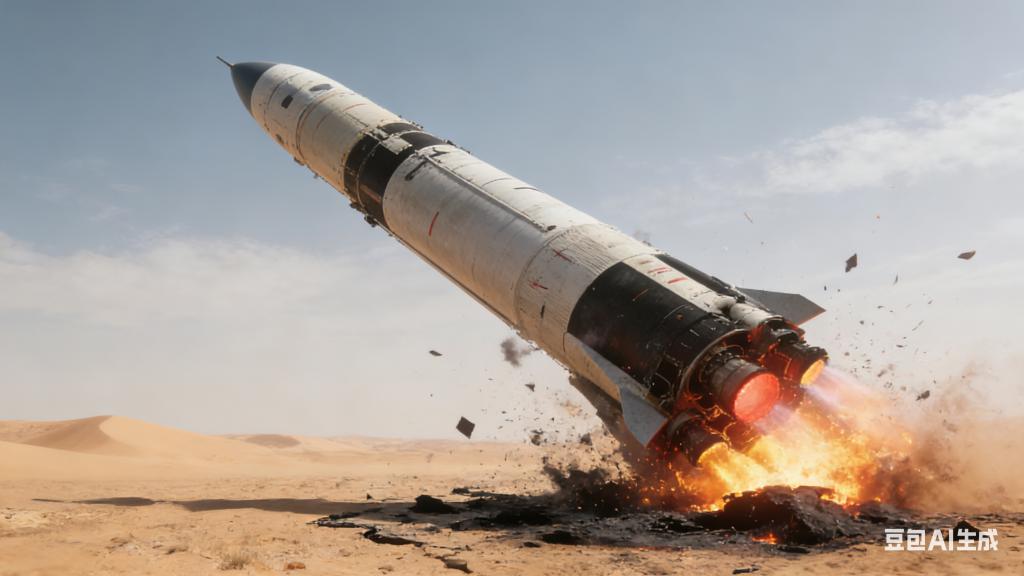
On December 3, LandSpace’s Zhuque-3 rocket successfully placed its second stage into orbit, but the first stage failed during the recovery attempt due to abnormal combustion. Footage shows the first stage did not significantly slow down during descent and ignited before landing. LandSpace plans to review the test, identify the failure, and optimize the recovery process.
This is the first reusable rocket recovery attempt by a Chinese private aerospace company, and failure is expected. Reusability is only the first step toward commercial scale; future challenges include stage refurbishment, order fulfillment efficiency, and satellite constellation deployment costs.
Zhuque-3 uses a “stainless steel body + liquid oxygen methane” design with high potential, but vertical recovery is technically challenging: engines must adjust thrust, ignite multiple times, and withstand high temperatures and thermal fatigue. Post-recovery, engines require strict inspection. SpaceX’s Falcon 9 also experienced multiple failures before achieving successful recovery.
Facing high satellite launch demand, Chinese commercial space companies adopt a “dual approach”:
- Tianbing Technology: Tianlong rockets are mass-producible; Tianlong-3 aims for a reusable first stage and launch up to 36 satellites per rocket.
- CAS Space: Lijian rockets advance steadily; Lijian-2 will launch a cargo spacecraft to China’s space station, with plans for fully reusable large liquid rockets.
In summary, reusable rocket technology is unlikely to achieve short-term commercialization; reliable, scalable launch capabilities remain the practical path for China’s commercial space sector.