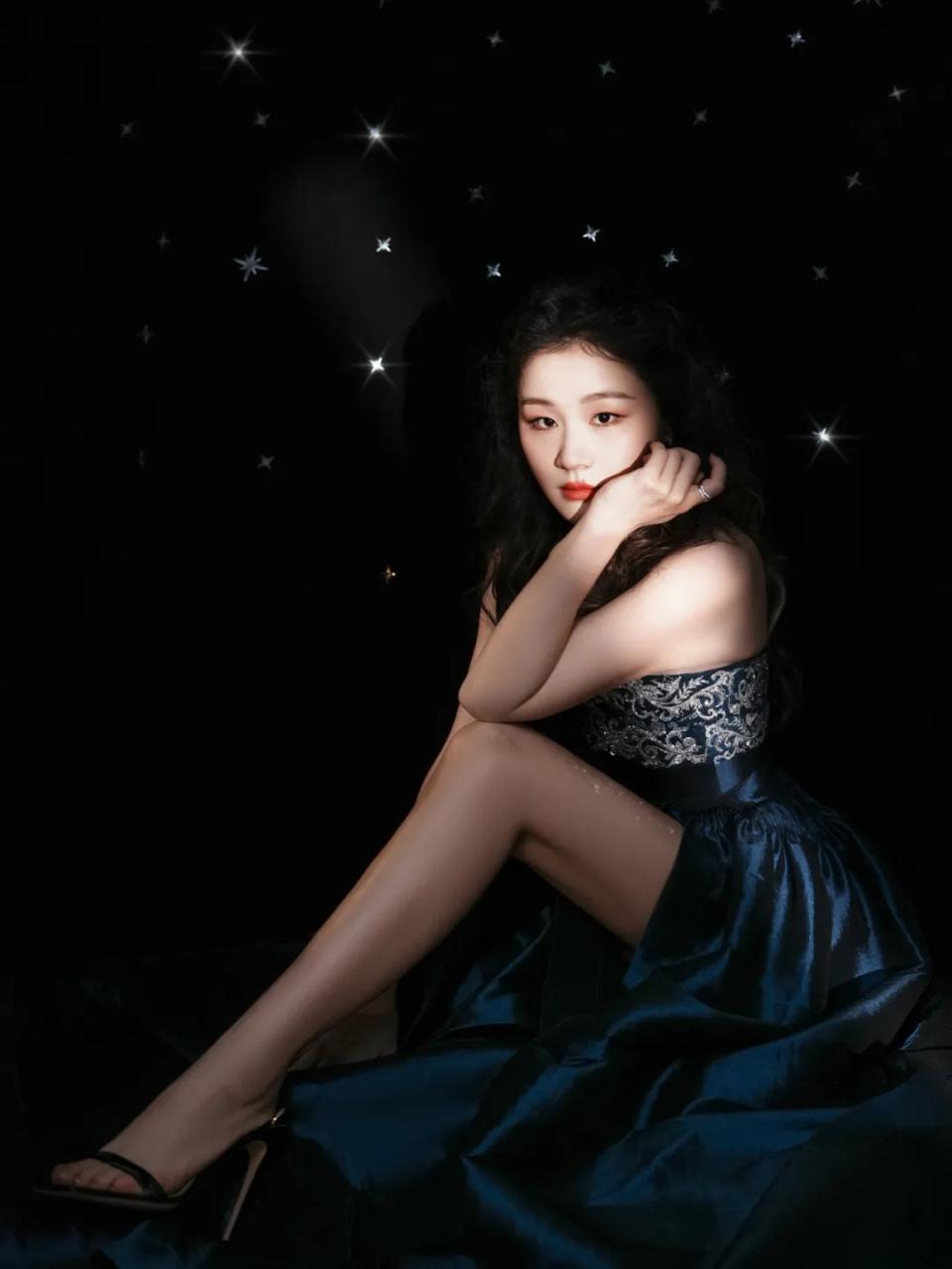
After the controversy around Wong Kar-wai, I found myself remembering Jin Jing’s name.
She reportedly spent three months on the set of Blossoms Shanghai: training hard in Shanghainese, turning down other jobs, and preparing dozens of scenes—only for her footage to be cut down to almost nothing. What followed wasn’t just disappointment, but the sharp sting of public speculation: people dissecting fragments, turning rumors into “facts,” and piling on assumptions. Many would have broken down or fought back loudly.
Jin Jing didn’t.
On a livestream, she simply smiled and moved on: being chosen by a director like Wong was already a stroke of luck. No angry posts, no dramatic accusations, no endless self-pity. She swallowed the hurt and kept living—like the real protagonist of her own story.
When she took the role, she was already at her peak in variety shows: quick-witted, endlessly meme-able, flooded with gigs and brand deals. Yet she chose the harder route—diving into a drama set, starting from scratch, and rebuilding her craft. She worked on accent and rhythm, studied street-market behavior, adjusted her physical presence, and pushed for extra takes to get the emotion right. She tried to become the character, not just play her.
Then the show aired, and she realized she barely “existed” on screen. Effort without visibility can feel brutal—like your work disappeared before it even had the chance to be judged.
What made it worse was the internet’s reaction: speculation escalated, and some comments turned unfair and ugly. Still, she didn’t turn herself into a victim narrative. She kept filming shows, kept making people laugh, and kept posting her outfits and life as usual. Only when the public began to feel sorry for her did she acknowledge it—lightly, almost casually: at least she was chosen, at least she was there.
For years, people labeled Jin Jing as “the funny girl,” even an “ugly clown” stereotype. Early on, harsh looks-based comments clearly hurt her confidence. But over time, she flipped the logic: beauty isn’t one standard. If you call me imperfect, I’ll make imperfection my style. If you think funny women can’t be fashionable, I’ll prove you wrong.
She became skilled at “knowing herself precisely”: bold makeup to highlight her features, smart silhouettes that flatter her proportions, and—most importantly—she stopped hiding her biggest advantage, her joyful, contagious smile. She didn’t chase approval; she clarified her identity.
That clarity shows in her mindset too. When she’s questioned, she doesn’t spiral. When she’s criticized, she doesn’t collapse. After becoming a mom and returning to work, she doesn’t let motherhood erase her humor—she frames it as an added dimension, not a limitation. She rests when tired, then gets back up without dimming her light.
If you’ve ever been misunderstood, dismissed, or crushed by life’s pressure, her story offers a simple reminder: other people’s opinions don’t get to write your script. You’re not a side character in anyone else’s story. A “comeback” isn’t only about looking better on camera—it’s about becoming harder to define, and easier to be yourself.