Space is rapidly becoming the next battleground for AI infrastructure.
Lately, “space data centers” have been one of the hottest topics—both in Silicon Valley and closer to home. And if there’s one person pushing the idea into the spotlight with sheer momentum, it’s Elon Musk. Nearly every recent post and comment from him seems to orbit the same theme.
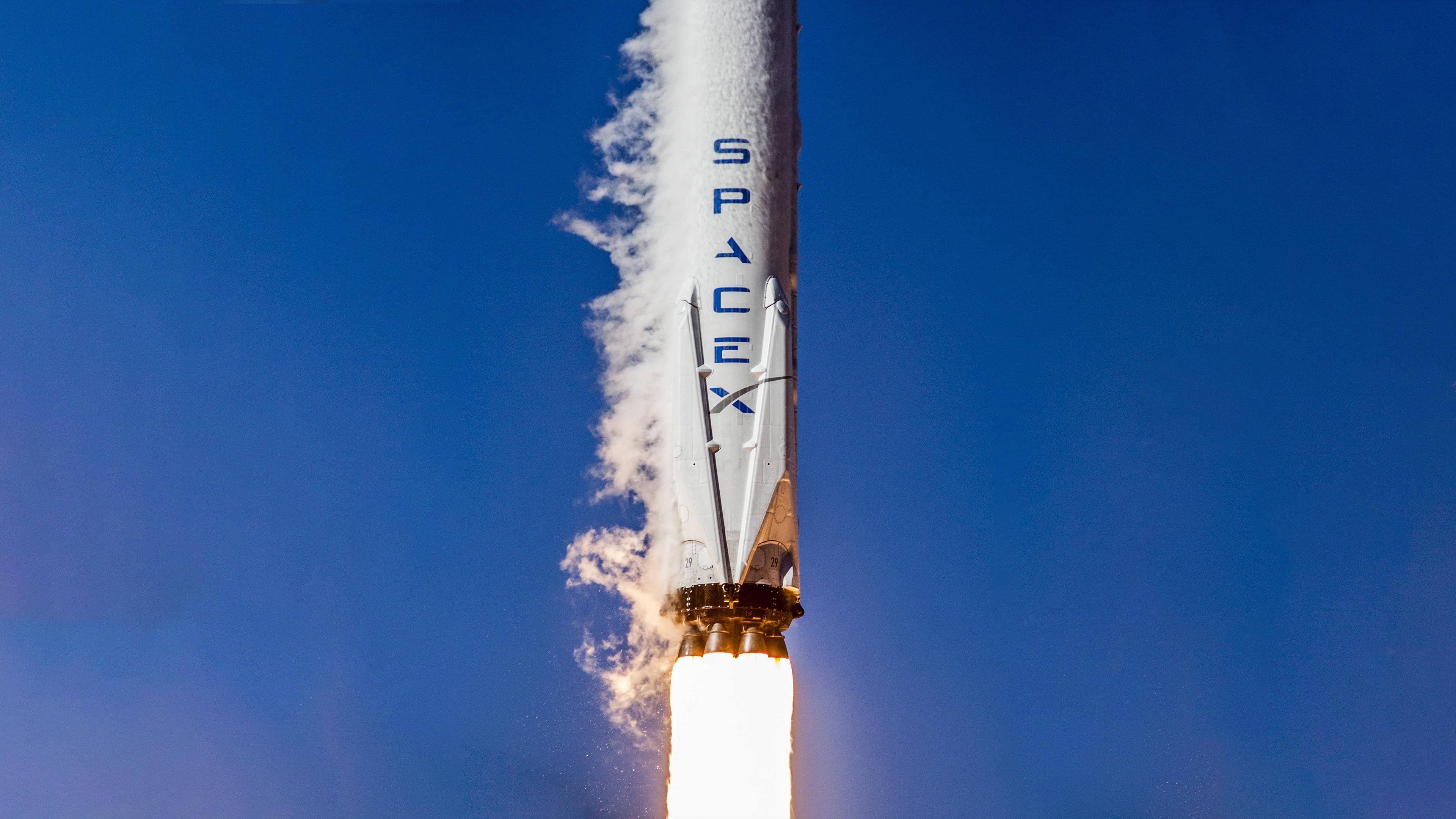
He first confirmed that SpaceX is looking to deploy data centers in space.
Then, when Google revealed its own space data center ambitions, Musk dropped a simple but telling “Interesting,” signaling clear approval of the direction.
In public interviews, he has also made the energy argument bluntly: Earth captures only a tiny fraction of the Sun’s output, and if humanity wants energy on a scale that’s orders of magnitude larger than what we can sustain on the ground, we eventually have to go to space.
He even suggested that within the next four to five years, deploying and operating large-scale AI systems in orbit could become more cost-effective than running comparable systems on Earth.
The message is hard to miss. Musk—true to his bold, engineering-first style—is treating space data centers as the next experimental field for AI infrastructure.
And it isn’t just him.
Names like Jeff Bezos and former Google CEO Eric Schmidt have also been talking about the idea—and positioning themselves for it. That naturally raises the big questions: What exactly is a “space data center,” and why is it suddenly drawing so much attention from the people who normally define the next decade of tech?
Let’s look at what they’re saying—and what they’re actually doing.
Musk Leads the Charge as “Space Data Centers” Go Mainstream in Silicon Valley
On Silicon Valley’s sudden fascination with space data centers, The Information offered a sharp observation: every so often, tech’s most influential voices start hyping the exact same topic so intensely that it makes you wonder if they’re all in the same group chat.
Whether that group chat exists is anyone’s guess. But if it did, the admin would almost certainly be Musk.
Much of today’s buzz traces back to SpaceX itself. Some observers believe that as SpaceX edges toward a potential IPO, pushing the “space data center” narrative could be part of a broader hype cycle—similar to how Musk paired Tesla with the Optimus humanoid robot storyline to ride the strongest waves in the AI investment narrative.
Set aside the “hype or not” debate. The underlying logic Musk is promoting is straightforward—and extremely “engineer-brained”:
If one environment creates hard constraints, change the environment.
From first principles, he frames AI’s ultimate ceiling as an energy problem. Compute demand is rising at an exponential pace, while Earth’s energy supply and heat-dissipation limits are increasingly becoming a bottleneck for large-scale expansion.
In that framing, space starts to look like the closest thing we have to a long-term, high-ceiling solution. Musk has pointed out that the Sun dominates the solar system’s energy story—so much so that, in the long run, solar energy is the resource that matters most. Earth, by comparison, intercepts only a microscopic share of that output.
So if the goal is vastly more energy, staying confined to the surface simply won’t scale. Space becomes the only path forward.
Why Space Looks So Attractive: “Power” and “Cooling”
Once you move off-planet, Musk argues, you gain access to two of the most expensive components of data centers—at least in theory—at dramatically better economics: electricity and cooling.
Power: In orbit or deep space, solar panels can generate electricity without the same interruptions caused by Earth’s day-night cycle and weather variability. That means a more stable, near-continuous energy source.
Cooling: Space is extremely cold, and proponents argue you can rely far more on radiative cooling—shedding heat into the vacuum—rather than building massive water-cooling or air-cooling systems that dominate terrestrial data center design. Some industry voices claim it could be significantly more efficient to radiate GPU heat into deep space than to cool the same hardware on the ground.
Startups are already using this as a core pitch. For example, the U.S. space startup Starcloud has estimated that its energy costs could be as low as one-tenth of comparable land-based solutions.
Put those together, and the proposed advantage becomes clear: space data centers aim to address the two most expensive pain points of terrestrial AI compute—energy and heat.
From Musk’s perspective, that’s why a timeline like “four to five years” even enters the discussion. If launch costs keep falling, and if orbital operations become reliable enough, the entire cost equation could tilt faster than most people expect.
The Missing Piece: Launch Costs Are Falling
A space data center still has to get into space—and historically, that has been the deal-breaker.
But the broader commercial logic hinges on one trend: launch is getting cheaper.
As The Information noted, estimates from the Center for Strategic and International Studies (CSIS) suggest that one of the lowest-cost ways to reach orbit today is via SpaceX’s Falcon Heavy, at roughly $1,500 per kilogram.
Because SpaceX rockets are reusable, inflation-adjusted launch costs have already dropped significantly compared with earlier decades.
And optimists expect another step-change. Some estimates argue that within a few years, SpaceX’s Starship could push orbital launch costs toward $100 per kilogram.
That creates a compelling chain of reasoning:
Lower launch costs become the lever that unlocks access to space-based “nearly free” energy and more efficient cooling—potentially breaking through the energy and thermal constraints now tightening around Earth-based AI infrastructure.
And those Earth-based constraints are becoming very real.
The Earth-Based Problem Behind the Space Dream
If space data centers sound exciting, it’s partly because building data centers on Earth is becoming increasingly difficult—especially in the U.S., where power demand is rising sharply.
Morgan Stanley has warned that in the coming years, the explosive growth of AI could contribute to a 20% power shortfall for U.S. data centers.
The U.S. Department of Energy has also cautioned that without meaningful new power sources, the mismatch between electricity supply and data-center-driven demand by 2030 could increase the risk of outages.
And outages aren’t just a tech-industry inconvenience—they impact everyday life. Public backlash and regulatory pressure naturally rise when reliability drops.
In that context, space data centers become more than a sci-fi curiosity. To tech companies, they represent a potential alternative route—one less constrained by regional power bottlenecks, land-use disputes, environmental controversy, and slow permitting cycles.
Not Just Silicon Valley: Startups and “National Teams” Are Moving Too
The momentum isn’t limited to headlines and interviews. Companies are starting to test real hardware in orbit.
In early November, the U.S. private startup Starcloud launched an experimental satellite, Starcloud-1, carrying an NVIDIA H100 GPU. During its time in orbit, it completed what it described as the first experiment in history to train a large-language-model system in space—training a NanoGPT model based on Google’s open-source Gemma.
Starcloud’s co-founder and CEO described it as a major step toward moving most computation off-planet—reducing dependence on Earth’s energy resources and tapping into the Sun’s near-limitless supply.
Google, meanwhile, is also actively exploring the concept through a program reportedly called “Project Suncatcher.” CEO Sundar Pichai has discussed a vision of a satellite constellation powered by solar energy, equipped with Google’s TPUs, and connected via optical communications. To validate feasibility, Google plans to launch two prototype satellites for in-orbit testing in 2027.
On the other side of the rivalry map, Jeff Bezos—founder of Amazon and head of Blue Origin—has publicly said that relocating data centers to orbit makes sense, and predicted that within 20 years or less, costs could surpass terrestrial AI infrastructure in competitiveness.
Former Google CEO Eric Schmidt has also disclosed that his interest in space data centers played a role in his acquisition of the space company Relativity Space.
Across these moves, a shared conclusion is forming among people closest to the frontier:
AI is no longer “just” an algorithm problem. It’s increasingly an energy problem—and a physical-space problem.
And once the problem becomes physical, the solution starts to move beyond Earth.
China’s Push: A Structured Roadmap for Space-Based Compute
This trend is also gaining traction domestically.
On November 27, a work-advancement meeting focused on space data center development—titled “Mapping the Stars, Winning with Space”—was held in Beijing. The event was organized by the Beijing Municipal Science & Technology Commission and the Zhongguancun Science Park Administrative Committee, among others, with support from participating technology and service organizations.
According to Zhang Shanchong, president of the Beijing Institute of Future Space Technology, the plan envisions three phases:
2025–2027: Break through key technologies such as space-based energy supply and thermal management, iterate experimental satellites, and build a first-phase compute constellation—targeting 200 kW total power and 1,000 POPS of compute—enabling “compute in space for space needs.”
2028–2030: Break through key technologies for in-orbit assembly and construction, reduce build and operating costs, and expand to a second-phase constellation—aiming for “space compute serving Earth needs.”
2031–2035: Achieve large-scale satellite mass production and networked launches, complete in-orbit docking and construction of a large-scale space data center, and support a future model of “space-based primary compute.”
No matter where you look—Silicon Valley or China—the signal is increasingly clear:
The next arena for AI competition is taking shape, and the world’s attention is lifting toward the vastness of space.