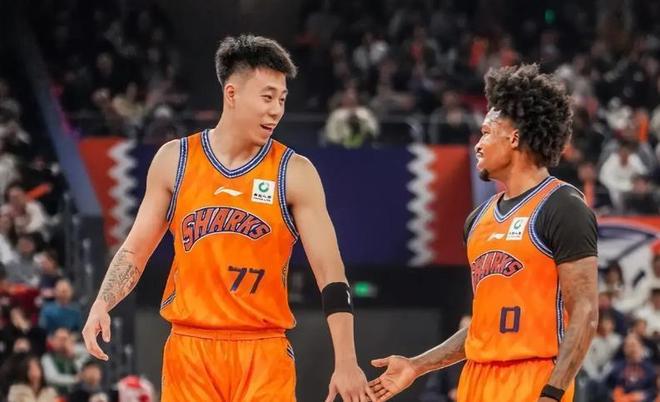
In the offseason, two former Liaoning players—Zhang Zhenlin and Kyle Fogg—joined Shanghai. Many expected them to become instant scoring weapons and key pieces in Shanghai’s title push. But through the first six rounds of the regular season, both production and efficiency have fallen well short of expectations, raising doubts about how “plug-and-play” these additions really are.
After six games, Shanghai and Liaoning share the same 4–2 record. Interestingly, Liaoning—despite being in a transitional phase—look lighter and still very much like a playoff-caliber contender, while Shanghai’s new signings have not delivered the immediate boost fans were hoping for.
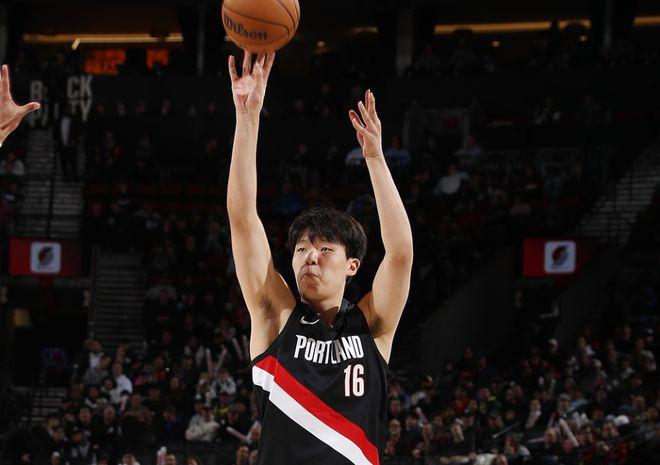
Zhang Zhenlin, listed at 2.05m with a 2.04m wingspan, was once viewed as Liaoning’s “crown prince” and a long-term cornerstone. Over five seasons in Liaoning, he won three championships and collected multiple individual honors, including All-Star selections and recognition in domestic player teams. However, injuries limited him to just 16 games last season, with his numbers dropping to career lows. He requested a move in the offseason and was ultimately traded to Shanghai.
So far this season, Zhang has played six games (four starts), averaging 24.8 minutes for 11.5 points, 2.7 rebounds, 2.2 assists, and 0.8 steals, shooting 41.3% from the field and 33.3% from three. The numbers are serviceable, but they are nowhere near the level of impact many expected. More importantly, his overall form looks far from his peak during Liaoning’s championship run—possibly due to reduced minutes, lingering hip/waist issues, or both.
Kyle Fogg, on the other hand, was one of the biggest contributors to Liaoning’s three-peat and even earned a Finals MVP. Yet Liaoning quickly decided not to renew his contract after last season’s playoffs, and he landed in Shanghai. Fogg has a long CBA resume and once posted huge scoring numbers for teams like Guangzhou and Beikong. Even last regular season with Liaoning, he averaged 23.2 points with strong efficiency. But in the playoffs, his production and shooting dipped sharply, including a three-point percentage that fell to 20%.
This season, Fogg has played six games and is averaging just 10.2 points, 2.7 rebounds, and 2.3 assists, with his field-goal percentage dropping to 27.2% and three-point shooting at 25.9%. He has scored in double figures only three times, while the other three games ended with 4, 4, and 3 points. With that level of output and efficiency, it’s difficult for him to carry the shot-creation burden expected of a contending team’s import—especially at age 35, when physical decline and inconsistency become hard to avoid.
It’s possible that as the season progresses, both players will look better as chemistry improves and roles become clearer. However, a major rebound—or a return to peak form from previous years—seems unlikely. Professional basketball ultimately runs on performance: age, efficiency, and team planning often outweigh sentiment, which is exactly why Liaoning were willing to move on from two proven names.