At 3:00 a.m., the video call is still running—this time with a team in India.
On weekend mornings, coffee brews while code compiles.
Bedtime stories get replaced by urgent emails.
This isn’t a workplace drama. It’s the real life of a software architect in his early forties—someone who has spent 25 years in the tech industry, from a programming-obsessed teenager to a senior architect at a major company, holding patents and earning a six-figure income that, in his own words, once felt “almost absurd.”
Two weeks ago, he lost his job.
For the first time in 25 years, he was unemployed.
But he wasn’t pushed out.
He chose to leave.
After round after round of layoffs, he saw the next candidate list—and his name was on it, alongside younger teammates who were just getting started.
So he made a decision: he wrote his own name at the top of the layoff list.
Not out of heroism, but out of clarity.
Because he finally understood something he had been resisting for years: if he kept grinding like this, the reward might not be a promotion—it might simply be being replaced, sooner or later, by a system that never sleeps.
The company offered a generous severance. Yet after walking away, he felt a strange new mix of emotions: uncertainty, yes—but also relief, even excitement.
Like someone stepping off a treadmill after running for 25 years—legs shaking, lungs burning, but finally free.
He learned early to work hard—and save harder.
Back in high school, he was already building computers and writing code. Before he even finished university, he was taking on small projects, writing applications in Visual Basic, doing whatever freelance work he could find.
After graduation, he joined digital consulting firms, where his technical skills grew fast. He devoured programming languages, frameworks, and systems design with relentless intensity.
Bookstores became his second home. He buried himself in O’Reilly technical books, chasing mastery with the kind of hunger that makes you feel unstoppable.
He was so capable that he was regularly sent to hackathons—and he placed near the top again and again.
That “I can do this” feeling is addictive.
He threw himself into everything: languages, frameworks, design patterns, infrastructure. He wanted to understand it all, down to the smallest detail.
Then 2008 hit.
The financial crisis arrived—and the illusion of stability vanished overnight.
He watched older colleagues get laid off one by one. A mentor he deeply respected broke down in tears, terrified about how to provide for her family.
It shook him.
He started asking the question every tech worker eventually faces: is this industry actually safe?
Around that time, he read Your Money or Your Life, a book that frames income as “life energy”—time and health exchanged for money. The message landed hard: if you’re trading your life for a paycheck, the most rational move is to reduce expenses, invest steadily, and build the option to walk away.
It changed his family’s habits. They became disciplined, intentionally lowering their cost of living and saving aggressively.
Meanwhile, his career kept accelerating.
Developer to Tech Lead.
Tech Lead to Architect.
Architect to senior leadership.
He switched jobs a few times and eventually joined the technical leadership team of a major tech company. The role took him around the world—North America, Europe, India—and led to multiple technical patents.
And through it all, he stayed grateful for the people.
Most colleagues he met over 25 years were smart, driven, and dependable. The camaraderie of shipping big projects together, side by side, stayed with him.
The money was strong, too.
For most of his career, he earned well into six figures. After moving from consulting to big tech seven years ago, compensation climbed even faster—stock, bonuses, incentives, and numbers that started to feel less like reality and more like a spreadsheet.
He did well.
But he never forgot 2008. No matter how much he earned, he kept saving and investing, refusing to let lifestyle inflation take control.
Still, the cost of that income was enormous.
Tech doesn’t just move fast—it demands that you move fast with it.
Global teams meant late nights and early mornings. Meetings at impossible hours became normal. The workdays stretched, the weekends shrank.
And the industry never stops reinventing itself. New languages, new frameworks, new paradigms. Staying relevant meant constant learning—again and again, year after year.
In his twenties, that felt energizing.
In his forties, it became heavier.
Not because he couldn’t learn—but because it took more time, more effort, more mental fuel.
Then came the deeper problem: meaning.
Looking back, he realized how many systems he had built—how many lines of code, how many architectures, how many “urgent” projects.
And how many of them didn’t truly matter.
Often, it was the same problems repackaged. Products launched, barely changing anyone’s life. Not improving the world—just filling another roadmap.
You pour in your creativity, your focus, your best years.
And sometimes, what you leave behind is something nobody even remembers.
Worse, the job devoured what he could never earn back: time with his family.
He spent so little time with his kids that, for a while, he could only give them an hour after dinner—just enough to finish a story before returning to work, meetings, or commutes.
His son loved outdoor camping and fishing.
But as the years passed, those moments grew rarer.
And he knew the truth that every parent eventually faces: there comes a time when children stop asking.
Not out of anger—just because life moves on.
When that happens, you don’t get a rewind.
This is the quiet reality behind “successful” tech careers: the best parts of your life don’t disappear all at once.
They vanish in small trade-offs you barely notice—until you do.
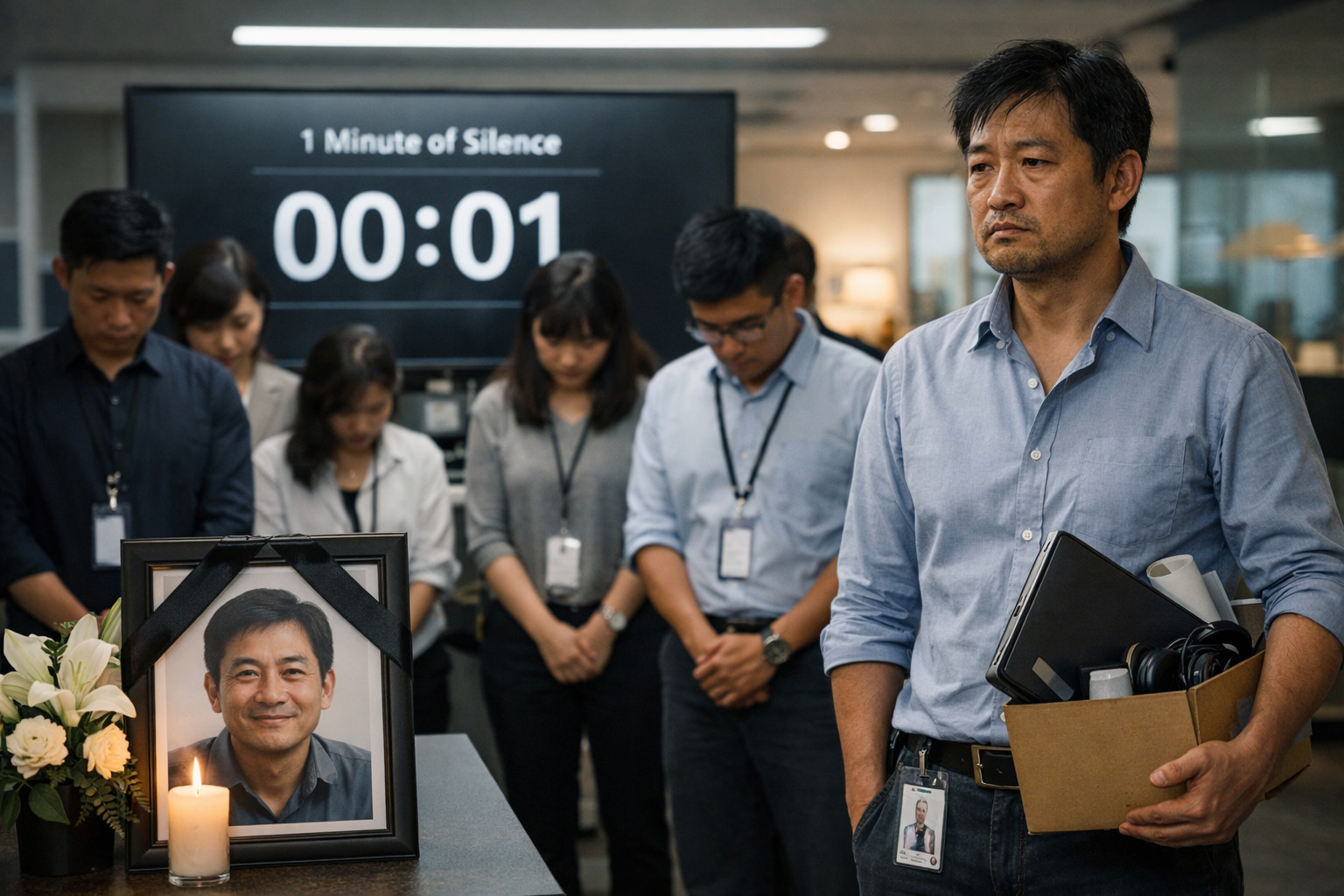
The moment that hurt most was what happened to his colleague, Jay.
A few years ago, right before Christmas, they were working together on a massive digital transformation project.
Jay was talented and relentlessly hardworking. He once told him what he was looking forward to most: the holiday break, so he could finally spend real time with his kids.
He never made it to that break.
The project was intense, with constant late nights. Jay’s health failed suddenly. He was hospitalized, and not long after, the team received the news he was gone.
He was in his forties.
The company praised him, expressed condolences, and held a one-minute silence.
And then, a month later, it was as if nothing had happened.
No one mentioned him. No one talked about him. Work continued. The machine moved on.
That was the moment the architect couldn’t ignore anymore: companies recover quickly.
Families do not.
Then life got even more personal.
Earlier this year, his wife experienced serious health issues and was left with partial disability.
That reality hit like a bell you can’t unhear: life is fragile, and tomorrow is never guaranteed.
You can’t assume you’ll “make time later.”
Later isn’t promised.
And while his internal conflict was growing, the external world was shifting, too.
Over the past two years, the tech industry’s logic has changed at high speed.
Tighter funding conditions.
Rapid growth of offshore teams.
AI tools automating parts of technical work.
From a business perspective, decisions became brutally simple. As his manager put it: keeping one senior engineer can cost as much as hiring multiple offshore teams.
In that view, employees aren’t people with lives—they’re costs to optimize.
So the layoffs kept coming.
And when the next list appeared, he made his choice.
If he left voluntarily, he could protect several younger teammates who still needed momentum, growth, and a chance to build their careers.
So he stepped forward.
He put his own name first.
And that’s how he was laid off—by design.
His former employer handled it “professionally”: advance notice, time to search while still employed, and solid compensation.
Two weeks later, sitting in front of the camera, he no longer carried the tight, polished tension of a big-tech leader. In its place was something quieter: a blend of confusion and relief.
“I feel like I’ve been dropped into the wilderness,” he said. “There are endless paths—but nothing is certain.”
And that contradiction—feeling lost and energized at the same time—reveals something important.
Sometimes retreat isn’t defeat.
Sometimes it’s the first moment you’ve had in years to take your hands back onto the steering wheel.
If life is a project, the most important product you’ll ever ship isn’t a system nobody remembers.
It’s the days you almost missed—days you can’t roll back, patch, or redeploy.