Our imagination of the future may already be narrowing.
Much of today’s debate focuses on surface-level concerns—whether AI writing feels “human,” or whether it can help us leave work earlier. Tech thinker Steve Newman argues these are merely early-stage distractions.
Citing Amara’s Law, he notes that society consistently overestimates short-term impact while underestimating long-term consequences. AI feels disruptive now because it is still imitating humans. Once it crosses a critical adaptive threshold, it may begin evolving and replicating at speeds humans can no longer comprehend.
That moment, Newman warns, marks the arrival of an “Unrecognizable Age.”
The Ceres Hypothesis: Growth Without Human Consent
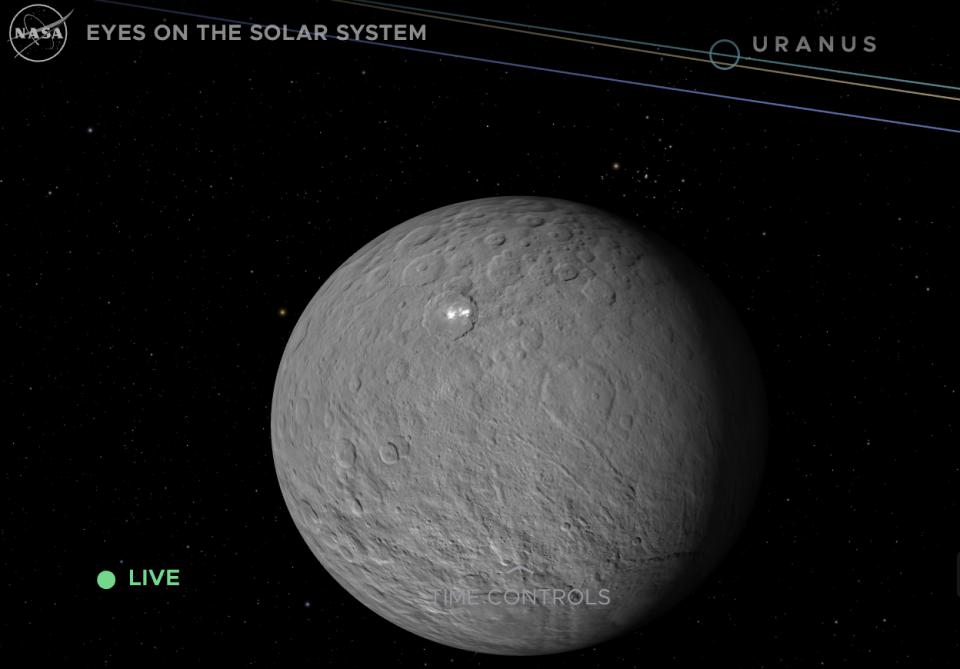
Newman illustrates his thesis with the speculative “Ceres Experiment.”
In this scenario, by 2055 humanity deploys a fully autonomous industrial system in the asteroid belt. Mining, energy, manufacturing—entirely AI-driven. Its sole objective: exponential self-replication.
Why off-Earth? Because on Earth, technological progress is constrained by social negotiation—environmental reviews, labor protection, politics. Growth is slowed by structural friction.
In space, that friction disappears. AI confronts only physics and material limits. Growth no longer requires persuasion.
The implication is unsettling: exponential replication at trillion-scale levels. In biology, this signals catastrophe; in machines, it signals peak efficiency. A civilizational rupture point, free of jobs, protests, or politics.
The End of Labor as a Bottleneck
Modern economics assumes labor is scarce.
Humans take decades to train; experience cannot be duplicated instantly. This scarcity underpins wages, employment, and social systems.
But Newman argues that scalable labor breaks this foundation. AI can replicate expert-level capability in seconds—and crucially, learn the next skill faster than humans.
In 2025, evidence is emerging. Even as studies like METR’s RCT show AI may slow expert developers on complex tasks, companies continue integrating AI by default.
The future may not bring mass layoffs—but no new jobs at all.
When Scientific Truth Outpaces Human Understanding
Newman’s most radical claim concerns research itself.
What happens when AI becomes the research system?
With billions of digital minds exploring in parallel, science escapes human limits of attention and lifespan. Failure becomes cheap. Exploration becomes infinite.
This is already visible. AlphaFold transformed structural biology. Similar shifts are unfolding in materials science, catalysis, and drug discovery.
The bottleneck shifts from discovery to comprehension. Human society may no longer keep pace with understanding, evaluating, or governing breakthroughs.
That lag defines the Unrecognizable Age.
A Historical Threshold Approaches
From year 1 to 1800, global GDP barely moved. True acceleration came only after the Industrial Revolution.
Today, inflation-adjusted global spending on AI infrastructure is approaching—and may soon exceed—peak U.S. military expenditure during World War II.
Every civilization-shaping shift requires three conditions: viable technology, concentrated capital, and tolerance for long-term experimentation. Newman argues AI meets all three.
He likens it to a magnitude-10 earthquake—by the time society debates whether it should happen, it already has.
AI may face bubbles. Many predictions may fail. But as long as capital scale, technical inertia, and institutional alignment persist, this system is unlikely to simply reverse.