If there were an AI that could write 100% of your code, would you still be pulling all-nighters?
What’s even wilder is that this wasn’t a moonshot funded by a tech giant’s endless budget, or a venture-backed project built by a massive team. It started as an engineer’s side project.
In just six months, it reportedly scaled from a personal build into a product generating nearly $1B in ARR (annual recurring revenue)—instantly becoming a phenomenon across the developer community.
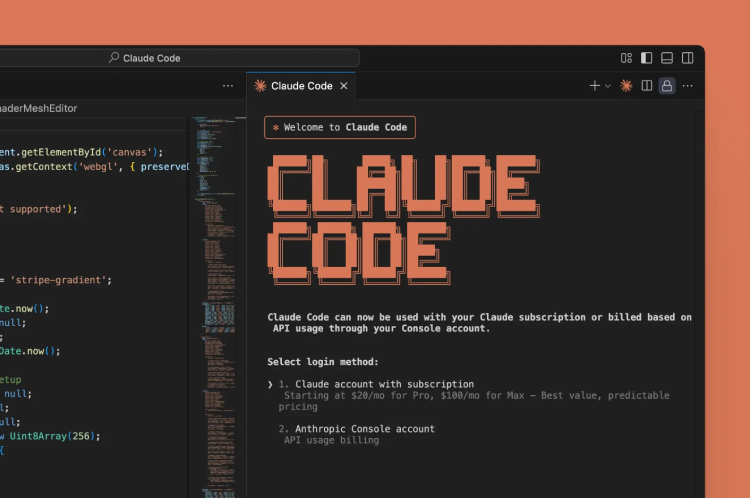
You’ve probably already guessed the name: Claude Code.
And the person leading the project has now openly admitted something that stunned the AI world: for the past 30 days, every single line of code he produced was written by the AI.
The engineer at the center: Boris Cherny
As the development lead behind Claude Code, Boris Cherny is widely seen as the technical “core” of the product.
His career path has also become part of the legend: he was reportedly recruited by Cursor-maker Anysphere, then quickly brought back by Anthropic—a move many interpreted as a sign of how strategically important Claude Code had become.
Six months in, revenue hits the headline number
In early December 2025, the AI coding space lit up after Anthropic announced that Claude Code, just six months after launch, was already producing close to $1B in annualized revenue.
If accurate, that’s an extraordinary pace—one that would outstrip what many established software companies generate in an entire year.
Around the same time, the product’s momentum was reinforced by a major signal: a strategic acquisition of the developer tool Bun. The takeaway was clear—AI coding tools weren’t just add-ons anymore. They were moving into the role of infrastructure, and the enterprise market was opening its wallet.
Why Claude Code grew so fast
The most important “secret” behind its growth is that Claude Code isn’t positioned as a simple autocomplete tool.
Typical AI coding assistants help you finish snippets or explain bugs. Claude Code aims to act more like a full AI teammate—one that can understand broader project context, help design solutions, generate code, run tests, and integrate directly into real workflows.
That means writing features, debugging, building, packaging, and iterating can be triggered directly from a terminal or IDE with minimal manual “glue work.”
In other words, it’s pitched as an AI engineer that can build alongside you—sometimes even independently.
That’s also how the business model compounds: enterprise subscriptions plus commercial API usage can scale quickly once teams begin treating the tool as essential.
“My code is 100% written by Claude Code”—and how he set it up
After Boris said his code output over the past month was entirely generated by Claude Code, the obvious question followed:
How do you actually work like that day-to-day?
He shared his configuration—and surprisingly, it’s not complicated. His core message: Claude Code works well out of the box, so he rarely needs heavy customization.
Here’s the workflow he described.
1) Run multiple Claude sessions in parallel
He routinely runs five Claude sessions in parallel inside the terminal.
At the same time, he also runs five to ten sessions on Claude.ai/code.
During coding, he’ll frequently pass a local terminal session to the web interface (or start a web session in Chrome), sometimes moving work back and forth depending on what’s most convenient.
In the morning and throughout the day, he’ll also launch a few sessions from his phone via the Claude iOS app, then check in on them as they progress.
2) Use Opus for thinking, Sonnet for speed—depending on the job
For deep reasoning and planning, he leans on Claude Opus 4.5, describing it as the best programming model he’s used.
Even though it can be larger and slower than smaller models, he finds it needs less hand-holding and uses tools more effectively—often making it faster in real practice for complex tasks.
3) Maintain a shared “CLAUDE.md” rulebook for the whole team
His team maintains a shared CLAUDE.md inside the Claude Code repository.
They commit it to Git, and the entire team contributes updates multiple times per week.
Every time Claude makes a mistake, they add guidance into CLAUDE.md—so the model learns what not to do next time.
During code review, Boris will often tag @.claude on a colleague’s PR to add or refine guidance inside CLAUDE.md as part of the PR itself.
They also use a Claude Code GitHub Action (via /install-github-action) to support this workflow.
4) Start in “Plan mode,” then switch to auto-accept edits
Most sessions begin in Plan mode.
If the goal is to ship a Pull Request, he’ll use Plan mode to iterate with Claude until the plan is solid.
Only then does he switch into an auto-accept editing mode—at which point Claude can often complete the implementation in a single pass.
His emphasis is blunt: a strong plan matters. A lot.
5) Use slash commands for repeat workflows
For repetitive “inner loop” tasks, he relies heavily on slash commands.
This reduces repeated prompting and turns common workflows into one-liners that Claude can execute consistently.
One example he mentioned is a /commit-push-pr command used dozens of times per day.
That command can embed Bash scripts that precompute details like git status and other context—making execution faster and avoiding time-wasting back-and-forth confirmations.
6) Delegate common PR tasks to subagents
He also frequently uses subagents—specialized mini-agents that handle repeatable patterns.
Examples include:
- code-simplifier, which refactors and simplifies after implementation
- verify-app, which follows detailed instructions to run end-to-end tests
He frames subagents as automation wrappers for the most common PR workflows—handing off predictable steps so humans can focus on higher-level decisions.
7) Format automatically after tool use
The team often uses PostToolUse hooks to format Claude-generated code.
Claude typically produces clean formatting from the start, but the hook handles the final “last 10%” so CI doesn’t fail due to style issues.
8) Don’t skip permissions—pre-approve what’s safe
He specifically avoids --dangerously-skip-permissions.
Instead, he uses /permissions to pre-approve commonly used, known-safe Bash commands in his environment—reducing noisy permission prompts without sacrificing safety.
9) Let Claude use tools across the stack
Boris says Claude Code effectively uses all the tools he uses.
That can include searching for information, messaging via MCP-connected services (like Slack), running analytics queries (for example through BigQuery CLI), pulling error logs from tools like Sentry, and more—depending on the environment setup.
For long-running tasks, he uses patterns like:
- asking Claude to validate results with a background agent after completion
- using a Stop hook for more controlled verification
- or relying on a specialized plugin workflow
The single most important tip: give Claude a way to verify itself
His final advice is the most practical:
If you want Claude Code to perform at its best, you must give it a clear way to verify its work.
Once Claude has a feedback loop, the quality of its output can jump dramatically—he estimates 2–3× improvement.
2026 and the “four-day workweek” question
This naturally leads into a bigger conversation already heating up at the start of 2026: the future of work.
The “four-day workweek” used to sound like idealism. Now it’s being seriously debated by influential business and tech leaders—and many people believe it’s moving from theory toward reality.
High-profile predictions vary widely:
- Bill Gates has suggested humans may only need to work 2–3 days per week in the future.
- JPMorgan’s Jamie Dimon has floated a world where people live to 100, avoid diseases like cancer, and work around 3.5 days per week.
- NVIDIA’s Jensen Huang has said four days feels like the most likely outcome.
- Elon Musk has argued even more aggressively that work could become optional within 10–20 years, with a future shaped by abundance.
And this isn’t purely theoretical. Multiple countries have run four-day workweek trials, often reporting that productivity holds steady—or even improves—while stress drops and satisfaction rises.
Still, the trade-offs are real.
AI-driven automation can displace roles quickly, especially for lower-skill positions. Reskilling pressure grows. And social support systems may need major reform to absorb the shock.
But one thing is hard to argue against: technology rarely slows down because we’re uncomfortable.
Whether it’s Claude Code or the next wave of AI tools, we’re watching the rules of labor get rewritten in real time.