As the new year began, I finished my first novel of 2026—Mai Jia’s classic In the Sea of Life, recommended by a friend.
One line stayed with me: Happiness is meant to nourish your own heart, not to feed other people’s eyes.
Looking back at 2025, for many people—as in the years before—it wasn’t exactly an easy ride. Happiness, for a lot of us, felt distant. Everyone knows their own struggles, even if they don’t say them out loud.
And now, when people start thinking about stepping away from the grind of first- and second-tier mega cities—when they consider settling somewhere calmer, somewhere more livable—there’s often a quiet anxiety that rises up. A kind of fear of counties and small towns.
That fear is usually explained as: fewer opportunities, less openness, “backward” development. But if we’re honest, those reasons rarely come from real lived experience. More often, they’re inherited impressions—stereotypes built over years, shaped by imagination, and reinforced by a consumerist narrative.
So who creates that narrative?
I’d argue it’s not one single “villain,” but a commercial consensus—an emergent outcome of modern society. Like bees or ants: each individual acts on its own, yet the collective gradually produces something bigger than any one intention—new behaviors, new order, new meaning.
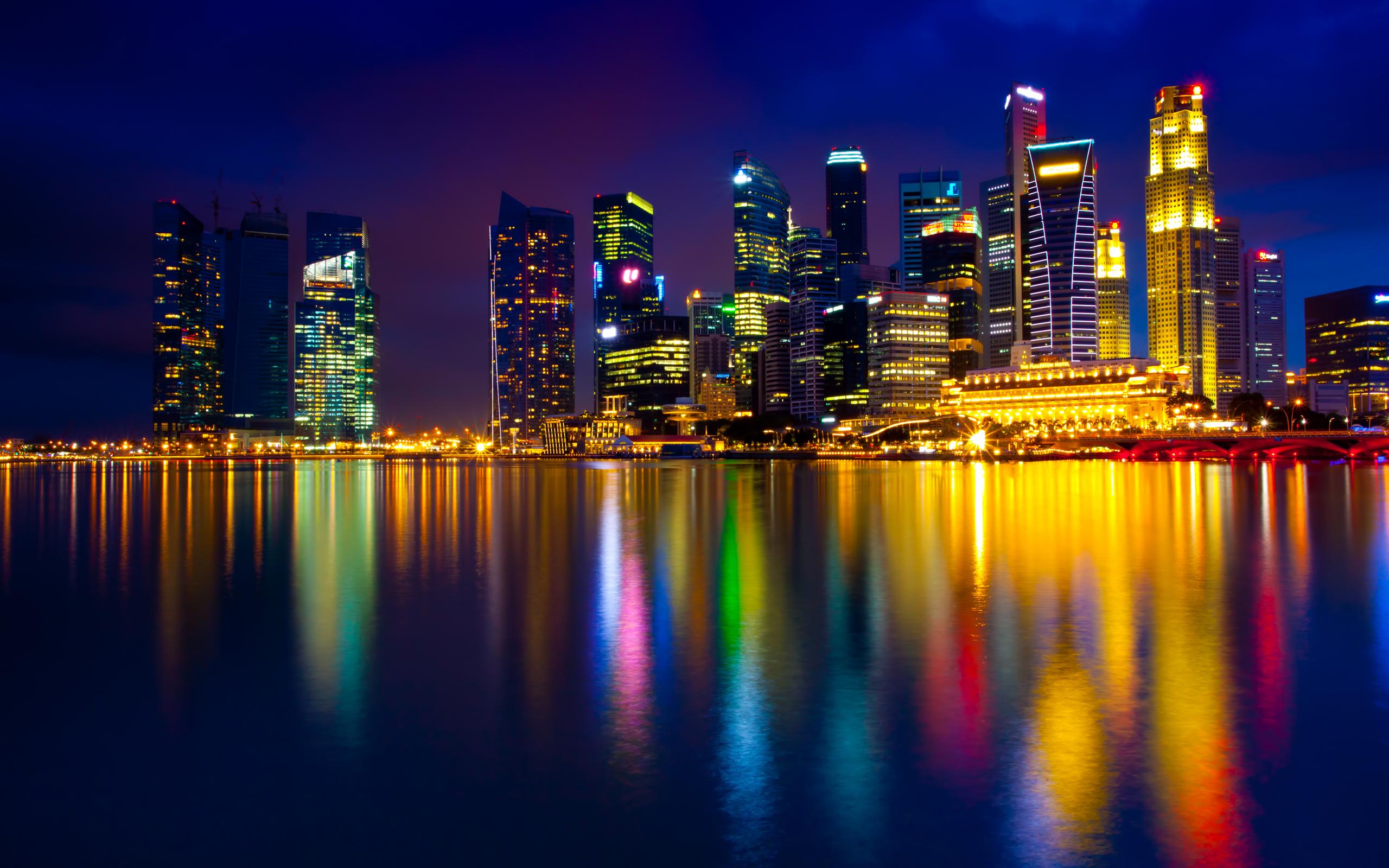
Once first- and second-tier cities hold the power to define what is “advanced” and what counts as “respectable,” they can use consumer symbols to marginalize other ways of living.
Take food delivery and express shipping. They’re packaged as efficiency and freedom. If you can’t get bubble tea in 30 minutes, or a parcel within 24 hours, the narrative quietly tells you: your life is behind.
That message creates anxiety. And it distracts us from what this convenience can hide—how it erodes everyday life skills, and how fragile our dependence on massive logistics systems can be.
In big cities, landmarks, cafés, and “must-check-in” trendy spots become identity tags. When you return to a county town or a small city without those symbols, people who have grown used to consumerist storytelling can experience a kind of withdrawal—as if life has suddenly become ordinary, unsophisticated, even “uncool.”
This reminds me of a small conversation.
Yesterday, my son had a WeChat call with a high school classmate—now studying in Hangzhou. My son asked whether he eats at the campus cafeteria often. The classmate said he orders delivery many times a week, even though it costs two or three times more than cafeteria food.
That wasn’t about saving money. It was about satisfying cravings.
Then the classmate asked, “Have you ever ordered delivery in the U.S.?”
My son replied, “I never ordered delivery back in China. I definitely won’t start in the U.S.—I’ve heard it’s expensive and slow.”
So I asked my son: “Do you envy your friends back home for having ‘delivery freedom’?”
He said, “What’s there to envy? It keeps getting more expensive, and I can’t see how the food is made. Why would I dare eat that?”
That led me to a bigger question: What is “quality of life,” really? Is it simply freedom to order delivery, get instant packages, buy milk tea and coffee on demand? Is it being able to spend without thinking, and have everything arrive immediately?
I’ve talked about this with my son before.
Right now, we live in a small town in the southeastern United States—about 60,000 people. There are only four or five bus lines. We go to Costco and an Asian supermarket twice a week to stock up on ingredients.
But we also have a top-tier university, modest public schools, safe school buses and cafeterias, large forests and green trails, clean air, quiet neighborhoods, simple social relationships, and a warm, friendly community atmosphere.
Can anyone seriously claim this is a lower quality of life than living in a major Chinese metropolis?
Which brings us to the real issue: Have we unconsciously narrowed our definition of “quality of life”?
The core narrative of big cities is efficiency.
Delivery, express shipping, instant services—at heart, they are about paying for other people’s time so you can maintain your own high-intensity rhythm. In that framework, “high-quality living” becomes the ability to access resources at maximum speed.
Consumerism is especially skilled at creating illusions—until quality of life becomes directly equated with purchasing power.
Small-town quality of life is different. It’s rooted in connection—between people and their environment.
In a town of 60,000, or in a well-located county town back home, quality of life comes from the confidence of breathing clean air on a morning run, the security of a child’s commute, and the calm of not having to shove through crowds twice a day just to get to work.
It’s a kind of low-entropy living: material circulation may slow down, but your life gains breathing room.
That’s why, when my son says he doesn’t order delivery—whether in China or abroad—I feel genuinely relieved.
I see a young person who enjoys a simpler but more autonomous life: willing to buy groceries, understand where ingredients come from, learn how food is prepared, and stay cautious about expensive, unhealthy consumption.
Meanwhile, some students back home use premium-priced convenience to compensate for the monotony of campus life.
But if “delivery freedom” becomes a key happiness indicator, it implies something else: that you don’t need time or a mindset to appreciate life itself. It becomes a voluntary surrender—trading your attention and agency for speed.
Small cities also offer a kind of invisible welfare.
Forests, greenways, air quality, and uncomplicated relationships are “public goods”—non-material assets.
In big cities, if you want clean air, you buy an expensive air purifier. If you want greenery, you drive two hours out of town. If you want safe space for children, you might need to buy a school-district apartment worth millions.
In many good small towns, these are built-in defaults.
If you converted those natural and safety resources into money, you’d find the true “cost of living” in small towns is often far lower—while the baseline quality of life can be remarkably high.
Consumerism’s most successful lie is this: it pushes you to work hard in first-tier cities for high salaries—then spend those salaries purchasing sunlight, air, and peace that once existed for free.
In the end, all of this returns to one question:
Does a person really need to place their body in a specific city to achieve material satisfaction, spiritual fulfillment, and a meaningful life?
If someone firmly believes they must stay in Beijing, Shanghai, Guangzhou, Shenzhen—or in New York and California—there’s a good chance they’ve accepted the logic of meritocracy without realizing it.
And that logic often asks for a bodily “sacrifice”: trading health, calm, and autonomy for a ticket into a commercially defined version of “success.”
The tragedy for many high-achieving small-town students is that they discipline themselves relentlessly, compete fiercely, and finally make it into a big city—only to discover they’ve simply jumped from one track into another, more crowded track.
In a meritocratic worldview, a person’s value depends on the resources they hold and the height of the platform they stand on.
That’s why we constantly see media narratives claiming the difference between people begins with family background, education, university ranking, job title, income level—until social class feels like a fixed ladder.
This framework makes it dangerously easy to ignore how people actually feel. It turns human beings into tools.
To maintain a glamorous big-city life, people endure noise, pollution, and chronic pressure—then pay even more for modern medicine, gym memberships, and therapy to repair the damage.
A perfect consumer loop.
And it’s fueled by endless marketing and constant mental conditioning. Through every screen and every short video, the world keeps whispering:
Your home isn’t good enough for your child’s future.
Your child’s ranking is too low.
Your décor isn’t refined.
Your outfit isn’t this year’s trend.
A steady drip of inadequacy—until peace becomes impossible.
But in an ordinary small town—or any place quiet enough to let a person breathe—this comparison-based reference system fades.
When nothing is shouting what I “should” have, I can finally hear what I actually need.
This morning’s dawn was calm and bright.
Quiet is the rarest luxury of modern life. And that is exactly what In the Sea of Life points to: happiness is about nourishing your own heart, not performing for other people’s eyes.
So where do we go from here?
In the past—when goods were scarce, logistics were weak, and resources were uneven—material satisfaction really was tied to geography.
Today, that link has weakened.
Much of what consumerism sells as “material satisfaction” is actually about status and premium symbols. Meanwhile, the essentials that truly matter—clean air, clean water, safe food, a warm home—are often not only cheaper in non–first-tier places, but also better in quality.
More and more people are realizing: if you have the internet and a heart that can settle, your body doesn’t need to be locked into an expensive CBD.
What we need is a kind of awakening—a reconstruction of the relationship between people and environment.
A person shouldn’t become a parasite of their environment. And we shouldn’t trade away our vitality just to purchase “convenience” that comes with hidden costs.
Many so-called “inconveniences” are actually signs of strong agency.
You choose your ingredients. You control your rhythm. You define what “abundance” means in your life.
For young people today, this awakening can be profoundly liberating.
Once you see through the vanity of consumerism and the traps of meritocracy, leaving the big city for a cleaner, more affordable, well-connected county town or small city is no longer a retreat, or “giving up,” or a shelter for losers.
It can be something far more powerful:
a free territory where you reclaim sovereignty over your own life.