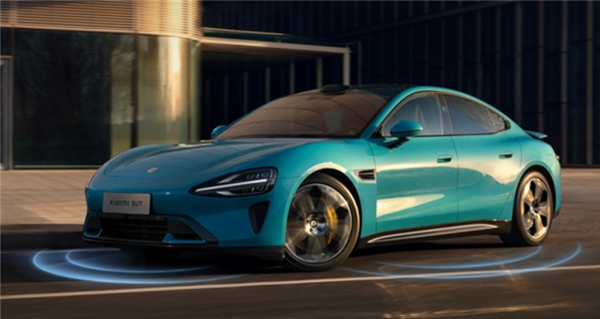
On January 30, Joanna Stern, a technology columnist for the Wall Street Journal, shared her impressions after a two-week test drive of the Xiaomi SU7 Max. She wrote: “The experience of driving a Chinese EV is so good, I don’t want an American car anymore.” Stern praised the vehicle’s design, technology, and driving performance.
The SU7 Max features a 16.1-inch central touchscreen running HyperOS, with excellent Apple CarPlay integration. Navigation prompts are delivered through speakers embedded in the driver’s headrest, while music and podcasts continue playing uninterrupted through the cabin’s remaining speakers.
On the road, the SU7 Max delivers a smooth, quiet, and sporty drive. Its advanced driver assistance system offers more seamless braking, steering, and acceleration than the Ford Mach-E. In cold weather, a 50-mile round trip consumes less than 30% of the battery.
Priced from CNY 299,900, comparable to the Tesla Model Y, Stern noted the SU7 Max offers a better experience and expressed hope it soon reaches the U.S. market. She highlighted that Chinese EV makers like Xiaomi, BYD, and Geely, with longer range and deeply integrated digital platforms, are gaining recognition worldwide, increasingly outpacing Tesla in Europe and Mexico.

.jpg)