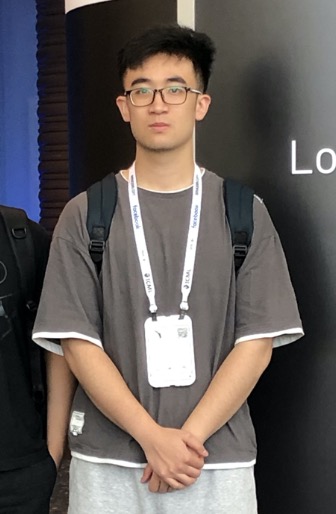
Pang Tianyu announced his move to Tencent in a very contemporary way—by posting it himself on Xiaohongshu. Just yesterday, he shared a recruitment post on his verified account and casually confirmed that he had “recently joined Tencent Hunyuan.”
A PhD graduate from Tsinghua University’s Department of Computer Science and a former Senior Research Scientist at Singapore’s Sea AI Lab, Pang has now become the second post-95s elite AI scientist Tencent has recruited in recent months, following former OpenAI researcher Yao Shunyu.
In terms of responsibilities, Pang and Yao are not in a hierarchical relationship. Public information shows that Pang Tianyu will serve as Chief Research Scientist of Tencent’s Hunyuan large-model team, as well as Head of Multimodal Reinforcement Learning. Yao Shunyu, meanwhile, previously disclosed that in addition to holding the title of “CEO Chief Scientist,” he also leads the AI Infrastructure Department and the Large Language Model Department.
Notably, Tencent’s much-publicized Hunyuan 3D series—including its world model initiatives—was placed under the multimodal division following a major internal restructuring last year.
Unlike the relatively low-profile Yao Shunyu, Pang Tianyu has already “broken out of the circle” on the Chinese internet. As early as 2021, while still a PhD student at Tsinghua, he appeared on the variety show Burning Genius Programmers, becoming one of the few young AI researchers widely recognized by the general public. He has also long been active under his real name on platforms such as Zhihu, engaging directly in technical discussions.
After joining Tencent, Pang once again chose to “self-announce” on Xiaohongshu. This seemingly influencer-style move actually reflects a broader trend in the AI industry over the past year: social media has become a key connector. Leading researchers and AI heads now recruit, share results, and communicate openly online, with many companies encouraging high-profile experts to post under their real names.
Inside Tencent, this external openness contrasts interestingly with internal messaging. While Pony Ma has emphasized “steady and solid progress” at employee meetings, he has also personally endorsed Tencent’s AI social product Yuanbao and backed it with a RMB 1 billion cash-red-envelope campaign during the Spring Festival to compete aggressively for consumer users.
Taken together, these two threads form Tencent’s evolving AI narrative: on the product side, Yuanbao and Hunyuan charge ahead; on the organizational side, Tencent brings in post-95s top-tier talents like Yao Shunyu and Pang Tianyu, placing a new generation of “young champions” at center stage. At 27 years old, Tencent appears eager to refresh its AI story with younger faces.
01 An AI Researcher Who Stepped Onto the Variety Show Stage
In the winter of 2021, the variety show Burning Genius Programmers premiered, featuring a group of early-20s researchers specializing in cybersecurity and AI.
The program divided contestants into an “offense-and-defense” track and an “AI track.” Pang Tianyu, then 25, competed as an AI contestant while in his fourth year of doctoral studies at Tsinghua University’s computer science department.
In media interviews from that period, Pang described himself as “ordinary.” He emphasized that he “doesn’t wear plaid shirts,” and that his daily life includes basketball, fitness, gaming, and watching movies. This portrayal aligned with the show’s broader intent: to challenge the stereotypical image of programmers as one-dimensional, introverted, and socially detached.
Born in 1995, Pang Tianyu earned a guaranteed admission to Tsinghua University while still in high school. After completing his PhD in 2022, he joined Sea AI Lab in Singapore as a Senior Research Scientist. Sea Group wields significant influence in Southeast Asia and is best known as the parent company of e-commerce giant Shopee.
At Sea AI Lab, Pang quickly gained recognition within the research community. According to Google Scholar, he has published extensively as a first or co-first author at top-tier machine learning conferences such as ICML, NeurIPS, and ICLR, with total citations exceeding 14,000.
While citation counts are not a perfect measure of academic impact, 14,000 citations place Pang firmly among the top echelon of young AI researchers. For reference, Yao Shunyu’s total citations are even higher, approaching 16,000—but given their very different research focuses, such comparisons are largely symbolic.
During his time at Sea AI Lab, Pang’s research interests spanned several core areas of machine learning, with particular emphasis on trustworthy machine learning, deep generative models, and robustness.
Robustness refers to a model’s ability to maintain stable performance under non-ideal conditions such as noise, distribution shifts, or adversarial interference. Rather than chasing peak performance on standard benchmarks, robustness research asks whether models remain reliable and controllable in real-world environments.
In machine learning, robustness and accuracy have long been seen as inherently trade-off-bound. In a paper presented at ICML 2022, Pang argued that this tension is not intrinsic to model capacity, but rather stems from flawed definitions of robustness itself.
He proposed a new concept called SCORE (Self-Consistent Robust Error), redefining robustness training loss in a way that better reflects “local equivariance”—a more realistic description of how robust models should behave. Experimental results showed that models could retain high accuracy while achieving stronger adversarial robustness.
Overall, Pang’s research trajectory reflects a sustained focus on stability and reliability in complex environments. While such work may not directly push the upper limits of model capability, it is critical for ensuring that multimodal systems and AI agents function reliably in real-world products. Against the backdrop of Tencent’s growing emphasis on multimodality and agents, this research orientation carries clear engineering and product relevance.
In the past two years, Pang’s focus has further expanded to risk issues arising from real-world deployment of large models and multimodal systems. In a paper published at ICML 2024, he helped systematically demonstrate a potential “security amplification” effect in agentized multimodal large models: in experimental settings, a single adversarial input, once “memorized” by one agent, could rapidly propagate through multi-agent interactions and destabilize the entire system.
This work was among the first to extend the concept of “large-model jailbreaks” from single-model scenarios to multi-agent systems, offering reproducible experimental pathways.
Taken together, Pang’s publicly available work spans generation, understanding, and system-level challenges. He is capable of contributing to core model development while also addressing stability and boundary issues in multimodal and agent-based deployment. This technical breadth aligns closely with the needs of Tencent’s Hunyuan system—and helps explain why Tencent chose to recruit him.
02 What Is Pang Tianyu Expected to Do at Tencent?
Tencent’s multimodal division was formed following last year’s organizational restructuring. Within Tencent’s model landscape, this division covers image generation, video generation, and 3D generation—including standalone models and world models.
With Pang Tianyu’s arrival, it is worth taking stock of the multimodal foundation he is inheriting.
On the image side, Hunyuan Image has been updated to version 3.0 (HunyuanImage3.0-Instruct), with both image-to-image functionality and open-source releases. Unlike earlier versions that emphasized pure visual quality, this iteration focuses more on understanding and executing complex instructions—integrating text comprehension, visual understanding, and image editing within a unified multimodal architecture.
In video generation, Tencent continued to expand the Hunyuan video series throughout 2025, adding capabilities such as image-to-video generation and customized outputs, while optimizing inference and deployment to better serve developers.
3D represents Tencent’s most long-term-oriented multimodal bet. Tencent has officially released and open-sourced the Hunyuan 3D World Model, which can generate navigable 3D scenes from text or images and export them into real production pipelines for further editing and use.
Throughout 2025, the Hunyuan 3D series continued to iterate, accompanied by production-oriented tools that enhance geometric precision, controllability, and result reproducibility.
Viewed together, Hunyuan’s multimodal progress is already well-defined: image, video, and 3D generation advancing in parallel, coupled with a strong commitment to open-source ecosystems and developer engagement.
From an industry perspective, Tencent’s multimodal open-source models have seen relatively high activity. The Hunyuan 3D series alone has surpassed one million downloads on Hugging Face and gained notable attention among developers. By contrast, while Hunyuan has also released large language models such as Hunyuan-Large and Hunyuan-A13B, their industry visibility still lags behind Tencent’s own multimodal offerings.
As multimodal capabilities mature, new challenges emerge. The key question is no longer what models can generate, but whether they can reliably complete complex tasks in line with user intent.
These challenges vary by modality. In image-to-image generation, edits must be precise without unintended alterations, while preserving style and structure. In video generation, motion naturalness, temporal consistency, and long-sequence stability are critical. In 3D scenes, the hardest problems lie in geometric accuracy, controllability, and reproducibility across production workflows.
In an interview last August, Tencent Hunyuan 3D lead Guo Chunchao noted that a key optimization direction would be lowering the user barrier—through prompt rewriting assistance and richer multimodal inputs such as text-plus-image or text-plus-multiple-images—to better align controllability with user intent.
It is clear that improving reliability has long been a core internal focus for Hunyuan. With Tencent now signaling stronger ambitions in consumer-facing AI, the urgency of optimizing multimodal models has only increased.
At a recent Tencent employee meeting, Pony Ma personally endorsed Yuanbao, as Tencent rolled out “Yuanbao Party,” a multiplayer social exploration format paired with a RMB 1 billion Spring Festival cash campaign. This move pushes AI assistants from one-on-one conversations into group settings and high-frequency social distribution. Yuanbao’s multimodal capabilities will soon be tested by massive user traffic.
Compared with enterprise scenarios, consumer applications impose much stricter requirements on output stability. Enterprise users may tolerate repeated trial and error, but consumer users generally lack patience for iterative prompting—even if their expectations for fine-grained quality are lower.
From this perspective, Pang Tianyu’s likely mission becomes clearer: strengthening Hunyuan’s multimodal reinforcement learning and model behavior boundary research, improving output stability, and optimizing cross-modal generation and understanding in complex scenarios.
Beyond business needs, Pang’s arrival also sends an organizational signal. As the second post-95s AI scholar Tencent has recruited recently, his presence reflects a deliberate effort to spotlight younger talent in Tencent’s AI strategy.
03 To Shed an “Old Image,” AI Needs New Faces
“Our team is very young and international—about two-thirds hold PhDs, mostly from top universities at home and abroad,” Guo Chunchao said in an interview last year when describing the Hunyuan 3D team.
Shortly after that conversation, Tencent announced a major restructuring and brought in both Yao Shunyu and Pang Tianyu—assigning them to lead the language model/infrastructure layer and the multimodal domain, respectively.
This reflects a visible shift in Tencent’s AI talent strategy. Over the past two years, Tencent has increasingly treated AI talent as a core competitive asset.
At Tencent’s most recent annual meeting, Pony Ma remarked that “every company has a different DNA and constitution—Tencent’s style is steady and solid.” While acknowledging that products like ChatGPT and DeepSeek have reshaped the industry, he emphasized Tencent’s commitment to long-term product competitiveness and user experience.
At the same time, he noted that Tencent has intensified efforts to attract native AI talent, using younger forces to rebuild R&D teams. As Tencent enters its 27th year, Ma framed the AI strategy around two keywords: “restructuring” and “young talent.”
This approach is made concrete through Tencent’s Qingyun Program, which recruits PhD graduates from 2024 to 2026, as well as undergraduate and master’s graduates from 2025 to 2026 worldwide, offering mentorship, compute resources, and highly competitive compensation packages.
The notion of “restructuring” thus becomes a laddered growth narrative for Tencent’s AI teams—one that signals clear pathways for young technologists to grow into core contributors.
Meanwhile, competitors are also investing aggressively. ByteDance has increased salary and bonus pools, expanding its bonus budget by roughly 35% to boost AI competitiveness. Alibaba, for its part, has made AI roles account for over 60% of its autumn recruitment, clearly positioning AI talent as a primary growth driver.
To match these moves, Tencent has not only committed resources but also elevated younger leaders like Yao Shunyu and Pang Tianyu as symbolic standard-bearers.
For a long time, Tencent’s public image leaned toward restraint and stability. Yet the flip side of “steady and solid” is organizational inertia—a disadvantage in fast-moving AI competition. On the consumer front, Yuanbao has yet to decisively outperform rivals such as Doubao and DeepSeek, and in some metrics has even been surpassed by newer entrants like Qwen.
Against this backdrop, reshaping the core team and presenting a younger, more assertive public face has become a necessary step for Tencent to break path dependence and renew its AI narrative.
Pang Tianyu—posting recruitment calls across Xiaohongshu and Zhihu—is perhaps the most vivid signal of this shift. In an industry that defines future productivity, the story itself must feel new. At 27, Tencent needs a new generation of “young heroes” to tell the AI story for Hunyuan, now just three years old.