Lately, Chinese football has been delivering a steady stream of positive headlines—enough to make many fans wonder: is this finally the start of a real turnaround? With the younger generation stepping up in a big way, one question keeps coming up: has China’s men’s national team quietly climbed back into “Asia’s second tier”?
To be fair, the performances from the youth sides have been genuinely uplifting.
At the end of last year, China’s U17 team produced a truly dominant run in the AFC U17 Asian Cup qualifiers. Across five matches, they scored an astonishing 42 goals without conceding a single one, cruising through with a perfect record. That kind of one-sided superiority is something Chinese football supporters haven’t seen in a long time.
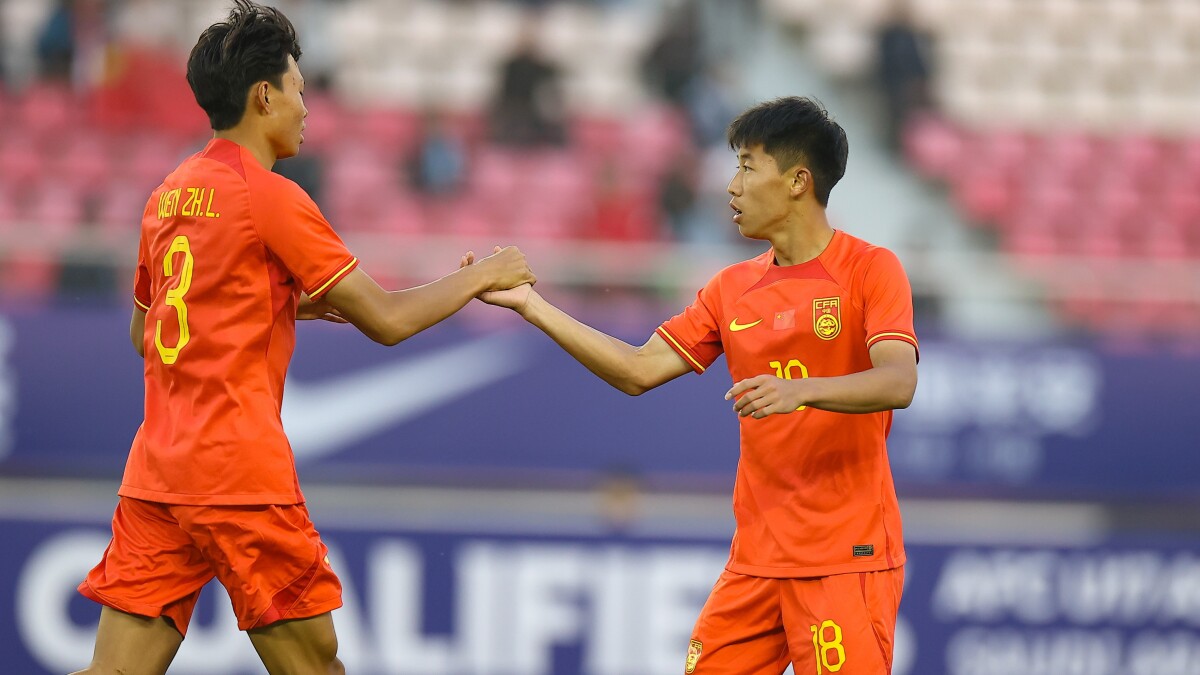
Then came an even bigger surprise: the U23 side’s run at the AFC U23 Asian Cup. Starting as an unfancied fourth-seeded team, they battled through the knockouts and reached the final for the first time in history, ultimately finishing as runners-up. Yes, the 0–4 defeat to a powerful Japan in the final was sobering—but simply making the championship match marked a historic breakthrough, and it showcased a level of fight, tactical discipline, and collective belief that fans have been craving.
Even the senior national team, led on an interim basis by Shao Jiayi, has shown signs of momentum during its recent overseas training camp. A return of one win and two draws is encouraging on paper, highlighted by a 2–2 draw against Uzbekistan—coached by Fabio Cannavaro and preparing for the World Cup. The attack found the net in every match, new faces got opportunities, and the overall feel was, at least, more energetic than what many have come to expect.
So—does this mean China are back in Asia’s second tier?
This is where it’s important to stay clear-eyed. The true “second-tier” benchmark in Asia is set by teams like Uzbekistan and Iraq—sides that consistently reach the final stages of AFC World Cup qualification and remain competitive at that level. China’s senior team, in contrast, has not reached that standard since the 2002 cycle. An unbeaten warm-up run is a welcome change, but the opposition level varied, and closed-door fixtures don’t always provide a reliable measure of progress.
The real optimism, undeniably, sits with the youth pipeline.
The U17 and U23 breakthroughs suggest that reforms in youth development—and the growing emphasis on overseas experience—may finally be producing tangible results. What stands out is not just the outcomes, but the manner: greater comfort on the ball, stronger tactical execution, and a confidence that past generations often lacked. Still, translating youth success into senior-level strength takes time, and history offers a cautionary reminder: China has had highly touted generations before that failed to sustain the leap.
The most reasonable conclusion is this: China’s men’s football—especially at the youth levels—now looks capable of launching a credible push toward Asia’s second tier.
But based on the senior team’s current track record and consistency, declaring a full return to “second tier” status is still premature.
There’s light at the end of the tunnel. To reach it, this generation must continue developing without derailment—and the broader football system must stay steady, healthy, and patient. For now, it’s progress worth appreciating, but not a moment for self-congratulation.