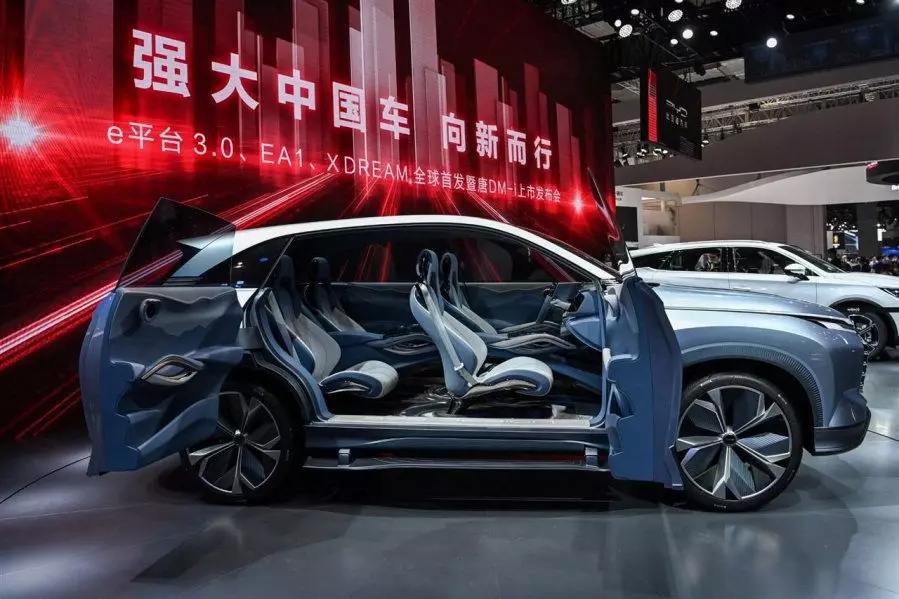
(Beijing, Feb 6) Investors have continued selling BYD shares this week, highlighting a broader reassessment of China’s EV sector as it faces a double squeeze from cooling domestic demand and surging raw-material costs.
According to foreign media reports, BYD’s Hong Kong-listed shares have fallen about 7% this week after weak sales data, and the decline since May last year has erased more than US$60 billion (about RM237.3 billion) in market value. The downturn has also weighed on other EV makers, adding to overall equity-market pressure as investors digest concerns over potential tax changes and the disruptive impact AI could bring to existing business models.
The report noted that with reduced government subsidies, investors had already been bracing for slower EV growth this year, and bearish bets have been building since November. However, the pace of demand deterioration has still caught many off guard. At the same time, rising battery-material and memory-chip costs are expected to further compress automakers’ margins.
Feng Xiao, co-head of China industrials research at CLSA, said sentiment is extremely pessimistic, with deeper concerns that the sector could face broad earnings downgrades this year—raising questions over EV makers’ long-term profitability in the domestic market.
Exports remain a bright spot, but China’s automakers are still heavily reliant on an intensely competitive home market, where consumer sentiment remains cautious. Morgan Stanley said most domestic brands expect first-quarter sales to drop 30%–40% from the fourth quarter of last year.
BYD’s January domestic deliveries fell 30% year-on-year, while XPeng—one of last year’s standouts—also posted a drop of more than 30% in total deliveries.
On the outlook, Chinese media cited the China Automobile Dealers Association as expecting China’s 2026 passenger-vehicle retail sales to be flat versus 2025, while exports maintain mid-to-high growth above 10%. Full-year wholesale passenger-vehicle sales are projected to rise by only 1%, with new energy vehicles growing by around 10%.
Still, investors worry that as automakers continue “burning cash” on promotions to attract buyers, rising raw-material costs are directly eroding profits. Over the past three months, lithium prices used in power batteries have more than doubled, while copper and aluminum have also surged. Tight memory-chip supply is pushing up costs for smart-vehicle components. Market estimates suggest incremental cost per vehicle for some premium models could reach US$1,000 (about RM3,954.50) or more. Bernstein Research said mass-market brands with weaker profitability—such as XPeng, Li Auto, and NIO—face higher risks, while BYD is relatively better positioned due to its in-house component supply chain.