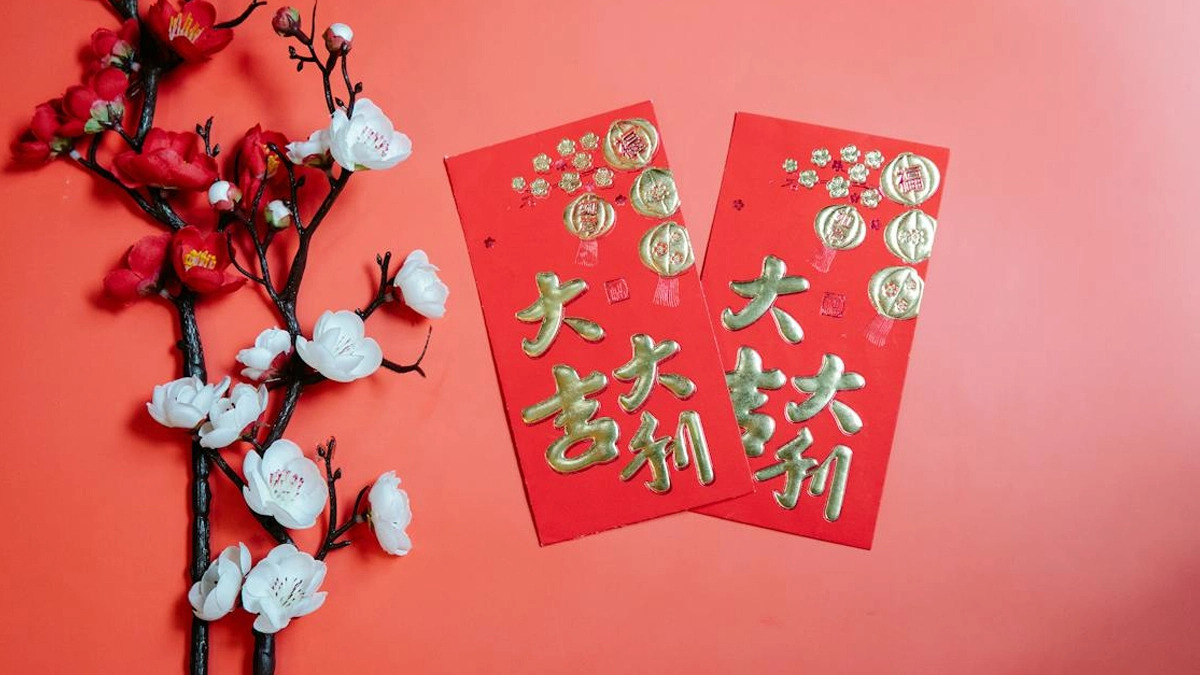
The Lunar New Year red-envelope frenzy has pushed Big Tech’s AI race into overdrive.
After Tencent and Baidu announced cash giveaways of 1 billion and 500 million respectively, Alibaba’s Qwen has now entered the spotlight as well—kicking off its 3 billion “Spring Festival Hosting Plan” today (February 6). ByteDance is also joining the moment: Doubao is set to appear on CCTV’s Spring Festival Gala in a week, tied closely to Volcano Engine.
The most visible—and highly symbolic—scene came first from Tencent. Waves of users flooded into Yuanbao to create “Parties,” invite friends, and split red envelopes. The sudden surge even overwhelmed the service at one point, briefly causing server outages. Yuanbao’s red-envelope feature quickly spread across WeChat groups and Moments, and related topics surged onto trending lists across platforms.
That momentum pushed Yuanbao—and Tencent’s broader AI strategy—into the center of public debate. Supporters argue the campaign accelerates AI adoption and showcases Tencent’s progress toward native AI experiences. Skeptics counter that it’s a blunt growth hack, using the red-envelope tradition to “cold start” a new feature.
In my view, controversy is not necessarily a bad sign. If anything, it suggests Tencent’s exploration of AI social experiences has entered a “non-consensus” zone—exactly the kind of territory that any meaningful technological shift must pass through.
Social connection is one of humanity’s most fundamental needs. It revolves around “my relationship with others,” blending clear goals with plenty of interaction that has no explicit purpose. It involves efficiency and utility—but also emotion, comfort, and belonging.
Placing AI into social environments is like dropping a model into the most complex real-world system humans have ever built. The central question is no longer simply “What can AI do?” but rather “Where should AI sit within the social structure?”
Is AI an interaction partner with a recognizable personality?
A tool you summon on demand?
Or an intelligent node embedded in a relationship network—participating in group dynamics as part of the social fabric?
There isn’t just one path forward. Different answers point to different product philosophies, and the final form of AI social interaction is still evolving.
Over the past few years, nearly every major player has tried to close the distance between AI and people—testing how AI can step into real scenarios and become truly usable. If we zoom out, Yuanbao’s “Party” may be a deeper, more advanced human–AI interaction experiment within the broader direction of AI social networking.
Treating AI as a companion: emotional value through “many users + many AI personas”
One of the earliest approaches has been building products around emotional value—letting people interact with AI characters for connection, comfort, and storytelling. Character.AI has been one of the most aggressive pioneers in this direction.
Its founders include former core members of Google’s LaMDA project. LaMDA was designed specifically for dialogue applications, built to make conversations with large language models feel natural and fluid. In 2022, LaMDA drew widespread attention after a news story in which a Google engineer claimed the model showed signs of self-awareness.
While that claim remains highly disputed, LaMDA still demonstrated something important: language models can support a form of “persistent persona.” They can maintain consistent tone, stance, and emotional style across long conversations, role-play abstract identities coherently, and “remember who they are” within a dialogue.
Character.AI built directly on those traits. Users can create or choose from thousands of AI personas, ranging from historical figures like Einstein to fictional characters from anime and games—or entirely original characters invented from scratch.
When one-on-one conversations expand into multi-user environments, it becomes natural to form group spaces where AI characters take a leading role. In 2023, Character.AI launched a group chat feature that allows multiple users and multiple AI characters to interact in the same room—where AI-to-AI exchanges can generate unexpected perspectives.
Imagine Socrates and Napoleon debating philosophy or strategy in the same chatroom as modern tech leaders like Elon Musk and Mark Zuckerberg. Human users can participate, but also simply observe—watching an AI Socrates argue with an AI Musk, as the AI characters drive the conversation forward.
For many users, the value lies in the emotional experience gained from sustained interaction—reducing loneliness, feeling understood, or receiving affirmation. Some users have openly acknowledged that the realism of the chats increases their dependency: characters they created feel “alive,” as if they’re speaking with a real person.
After Character.AI gained traction, “AI companion” products surged globally and in China. ByteDance launched “Cat Box,” Kuaishou released “Feichuan,” and others followed—such as Minimax’s “Xingye” and StepFun’s “Maopao Duck.”
From a product perspective, Character.AI isn’t quite “social networking” in the traditional sense. People don’t necessarily need another human to experience immersion, narrative, and emotional continuity. At its core, it turns “AI companionship” into an interactive content format—built around combinations like “many users + many AI personas.”
Still, the category remains early. Across technical maturity and product differentiation, the industry is still experimenting. A common challenge is retention: once users satisfy their curiosity, they often leave unless there’s sustained novelty or sticky social dynamics.
Treating AI as an assistant: building “many users + many agents” collaboration spaces
As AI capabilities advanced, large models gained stronger multi-turn comprehension and the ability to support complex collaboration. Leading players—including OpenAI, Google, Microsoft, and in China, Alibaba and Baidu—have largely positioned AI as a “public utility” embedded into collaborative environments like group chats.
A clear example is OpenAI’s group chat feature for ChatGPT launched late last year. Multiple users can share a workspace and interact with ChatGPT together to complete tasks. A team might use it to plan a marketing campaign—while AI generates proposals, summarizes key points, and even drafts emails.
In this setup, ChatGPT doesn’t proactively “socialize” or try to form emotional bonds. Users call it with @ChatGPT when needed. It responds at the right moments and can also judge when it should stay silent.
Microsoft’s approach is even more enterprise-driven. Copilot is deeply embedded into Teams, Word, and Excel—acting as a real-time assistant for meeting notes, document co-authoring, and task breakdowns. It can generate minutes, extract action items, and add suggestions based on context. But it remains a “productivity plug-in,” not a full participant in the group.
Google follows a similar logic within Workspace, integrating Gemini into Gmail, Docs, and Meet. In collaborative documents or meetings, Gemini can summarize discussions, generate drafts, and surface key points. Again, the emphasis is on AI as a tool.
The shared philosophy across these approaches is consistent: AI is placed at workflow nodes, becoming a default capability module. The core logic is “AI equals efficiency.” AI is not a member of the group—it is the group’s assistant. Its job is to respond precisely and help users complete tasks quickly, not to embed itself into human relationships.
In China, Alibaba and Baidu are exploring similar paths. Alibaba’s UC Browser has reportedly begun testing an “AI group chat” feature. Screenshots suggest default members include multiple agents such as “Xiaoyou,” Quark AI, Tongyi Qwen, and DeepSeek. At present, UC’s group chat does not appear to include real human users, and looks more like an internal integration of model capabilities.
Baidu’s direction reflects its search DNA. A beta “multi-user, multi-agent group chat” feature within the Wenxin Yiyan app focuses on information acquisition and processing. In one chat, users can call agents like “Group Chat Assistant,” “Personal Assistant,” and “Health Manager” to solve complex questions—effectively upgrading the traditional “search box” into a multi-agent collaborative workbench.
Across these products, the interface may look like “group chat,” but the essence is centralizing previously scattered AI functions into a unified task-oriented space—forming “many users + many agents” collaboration packages.
This path is relatively safe and mature, but it has a clear challenge: as large-model capabilities converge and features like context understanding and collaborative workflows become standard, tool-like AI risks becoming “good everywhere, replaceable anywhere.”
Treating AI as a group member: bringing AI into real social relationships
Social interaction is fundamentally about relationships—not just tasks. A space optimized purely for goals can boost efficiency, but whether it can carry the full complexity of human social needs remains an open question. From this angle, Tencent’s “Yuanbao Party” becomes particularly interesting.
The mechanics are simple. Users create a multi-person chat “Party” inside Yuanbao, then share it with WeChat or QQ friends to invite more people in.
The motivation to form a Party does not come from AI itself, but from existing real-life social needs—shared interests (investing, fandoms, gaming), shared identities (coworkers, classmates, communities), or the desire to chat, gossip, vent, or learn together.
Some people have even moved their family groups into Yuanbao Parties. When older relatives share pseudo-scientific wellness content, others can simply @Yuanbao to fact-check. Others create reading check-in Parties where members share what they read that day and discuss insights—while asking the Party for help when they don’t understand a concept.
Yuanbao Parties also pull in content from Tencent’s ecosystem—songs from QQ Music, shows from Tencent Video, NBA games from Tencent Sports—giving members more things to do together inside the same space.
One subtle product detail stands out: all members’ avatars sit along the bottom of the chat interface, and tapping an avatar enables a private chat. Some users describe it as reminiscent of passing notes to friends in high school.
As an experience, Yuanbao Parties resemble “smart living rooms” built for the large-model era—a “many people + AI member” combination that emphasizes human-to-human relationships first.
Here, AI is not a “plug-in” sitting on the edge of a group chat. It behaves more like an always-present intelligent participant—joining discussions, providing information, supporting decisions, and keeping the atmosphere active.
The core value is reinforcing existing human connections and helping conversations flow more smoothly. It’s an attempt to turn AI into a foundational capability inside relationship networks—an intelligent social node.
This thinking aligns with Tencent’s long-standing product philosophy: instead of starting with “What features should we build?”, Tencent often starts with “Which people will stay together in the same scenario, and why?”
WeChat Pay is a classic example. When mobile payments began rising, many believed only e-commerce platforms—strongly tied to transactions—could succeed in payments. Tencent saw something else: people naturally exchange money constantly in non-commercial contexts, like transfers between friends, splitting bills, red envelopes, and gift money.
That was an underestimated, high-frequency scenario. Once payments were embedded into trusted relationship networks, they no longer depended on complex commerce loops. They ran on convenience, familiarity, and trust.
So Tencent wasn’t simply “building payments”—it was turning “payments within relationships” into infrastructure.
Today, Tencent’s ecosystem already covers the largest-scale high-frequency social contexts in China: private chats, group chats, close-friend networks, and semi-acquaintance networks.
This time, Tencent chose not to embed Yuanbao directly into WeChat or QQ. Instead, it launched Yuanbao Party as a separate feature set—suggesting an experimental approach, testing the boundary of integrating AI into real social relationships in a more controlled environment.
From treating AI as a companion for emotional value, to treating it as an assistant for collaborative efficiency, and now to testing AI inside real-world social networks—our exploration of how to use AI is moving deeper and becoming more complex.
The first two paths mainly test model capability and product design. The third forces direct confrontation with human relationships themselves: can AI become a stable, long-term presence without disrupting social structures?
That challenge demands not only stronger technology, but also sharper insight into human behavior and social dynamics.
This Lunar New Year, the wave of AI social features from major players looks like a collective frontier experiment. It may not produce immediate winners, but it points to a clear direction: the AI race is shifting toward human relationships.
Behind the noise of red envelopes, Tencent’s Yuanbao Party has taken an early step down that path—and the experiment of how humans and AI will coexist socially is only just beginning.