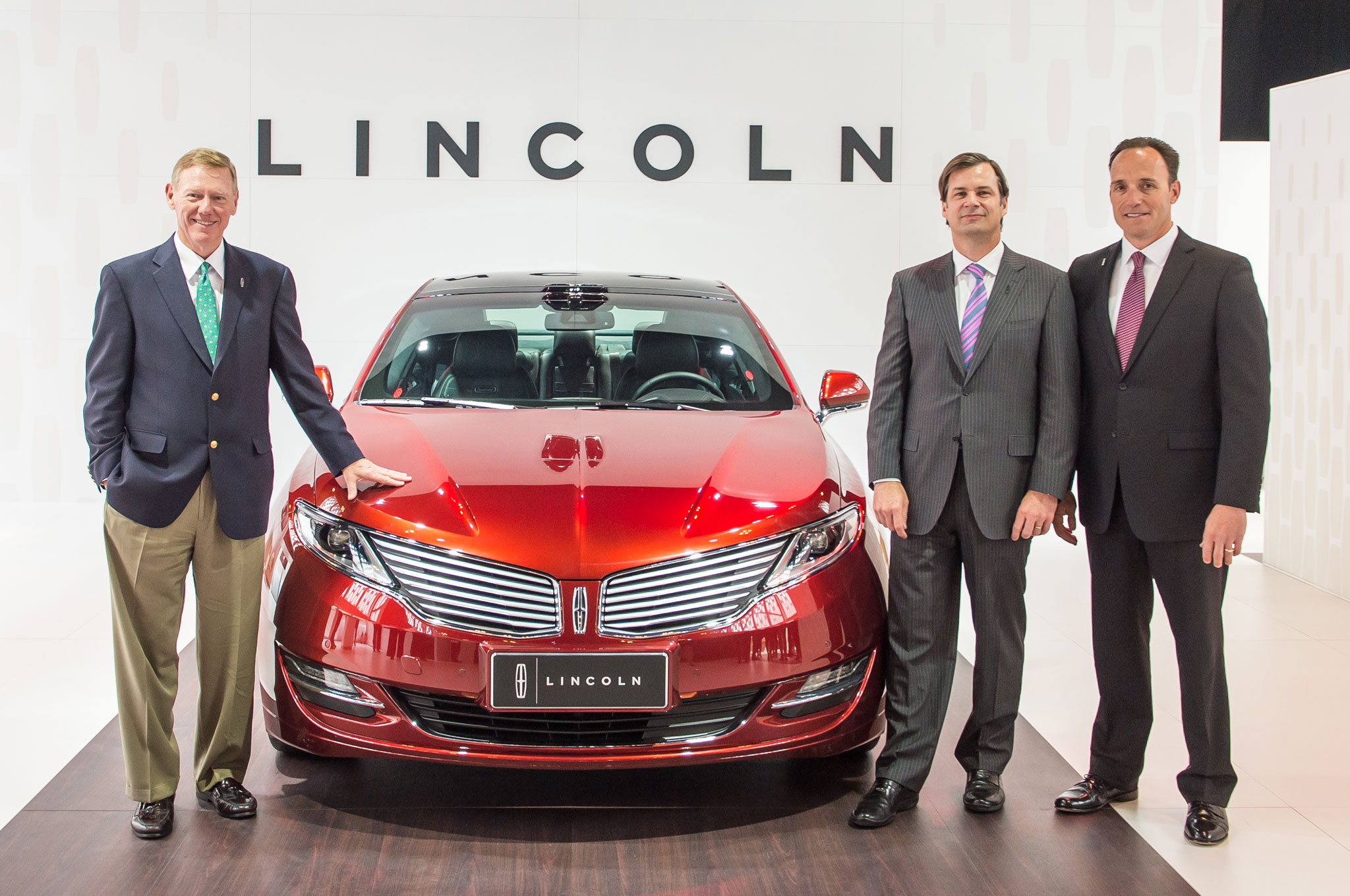
A recall notice posted on China’s State Administration for Market Regulation (SAMR) website has once again put Lincoln—once a luxury brand that sold more than 90,000 vehicles a year in the country—back in the spotlight. Behind a rearview mirror safety concern lies a harsher reality: Lincoln’s sales in China have been declining for four consecutive years.
Recently, Ford Motor (China) Co., Ltd. filed a recall plan with SAMR. Effective immediately, the company will recall 1,706 Lincoln Nautilus vehicles produced between August 5, 2025 and November 27, 2025. The issue involves certain vehicles whose left exterior rearview mirror may have been fitted with a flat mirror glass instead of the standard convex mirror, reducing the driver’s rear-left field of view and creating a potential safety risk.
Ford Motor (China) stated that authorized Lincoln dealers will inspect the left exterior mirror glass free of charge for vehicles included in the recall. If a flat mirror glass is confirmed, it will be replaced with a compliant convex mirror glass.
Beyond the recall itself, Lincoln’s sales figures point to an even more challenging situation: the brand is navigating a multi-year downturn in the Chinese market.
At present, Lincoln sells only four models in China: the Nautilus, Lincoln Z, Corsair, and Aviator.
Passenger-car sales data cited by Dongchedi from the China Passenger Car Association (CPCA) shows that in 2025, Lincoln sold just 36,255 units—down more than 30% year over year—averaging slightly above 3,000 units per month. Much of Lincoln’s volume relies on the Nautilus and Lincoln Z, which together account for nearly 83% of the brand’s total sales.
By 2025, Lincoln had recorded its fourth straight year of declining sales in China. The brand peaked in 2021 with annual sales surpassing 90,000 units, but momentum has weakened steadily since then: sales fell to 79,000 in 2022, slipped further to 72,000 in 2023, and dropped to 53,000 in 2024. Over the past four years, Lincoln’s year-over-year declines were 13%, 9%, 26%, and 31%, respectively—an accelerating slide shaped by multiple pressures.
From a macro perspective, the traditional luxury car segment has been contracting. In 2025, frontline luxury brands such as Mercedes-Benz, BMW, and Audi all saw varying degrees of year-over-year decline in China, and second-tier traditional luxury players like Cadillac and Volvo faced similar headwinds. Notably, however, Lincoln’s decline in 2025 was steeper than many of these peers. Fading brand appeal, a slower transition toward electrification, and a product lineup with limited competitive edge have all contributed to its faster retreat from the market.
Lincoln’s struggles are also not an isolated case within the Ford–Changan partnership in China.
According to CPCA data cited by Dongchedi, Changan Ford recorded wholesale sales of 121,500 units and retail sales of 99,400 units in China from January through December 2025. Both figures represent a sharp drop compared with the brand’s 247,000 units sold in 2024—effectively halving year over year.
(Source: Yicai / First Financial)