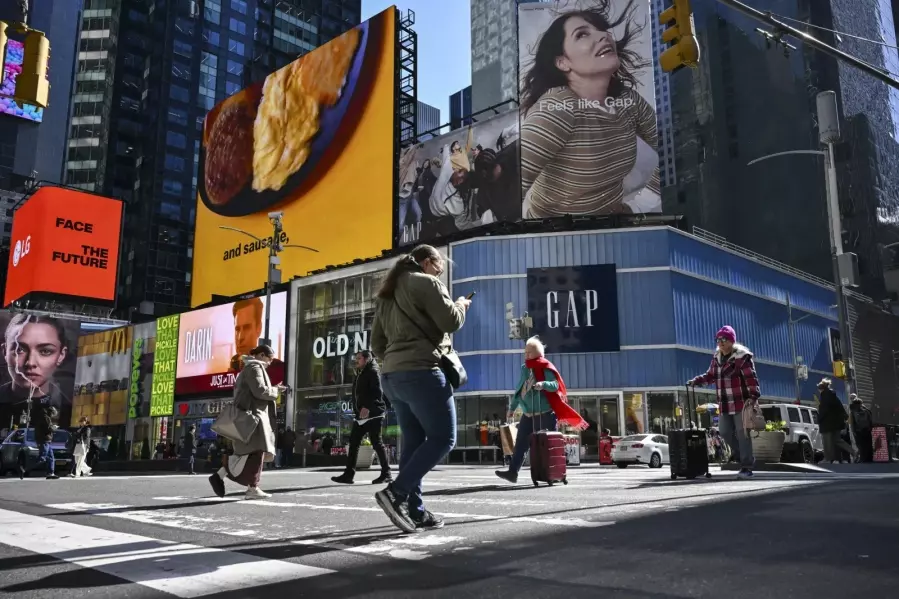
(Washington, 11th) U.S. retail sales unexpectedly stalled in December, showing zero month-on-month growth—well below November’s 0.6% gain and market expectations of 0.4%. Analysts cited severe winter weather, tariff pressures, and persistent inflation as factors that kept consumers cautious during the holiday season.
According to the Commerce Department, headline retail sales were flat, as were figures excluding autos and excluding autos and gasoline. The “control group” measure—excluding food services, building materials, auto parts, and gas stations—fell 0.1%, with 8 of 13 categories posting declines. While sales rose 2.4% year-on-year, that was slower than November’s 3.3%, signaling weaker holiday momentum.
Meanwhile, President Trump said in an interview that his preferred candidate to lead the Federal Reserve could potentially drive economic growth to 15%. Economists noted such a figure is highly optimistic; current forecasts place U.S. growth around 2.4%, with the long-term average near 2.8%, and GDP growth above 15% being extremely rare.
Trump has indicated he favors a Fed chair inclined to cut interest rates, suggesting he would not appoint someone advocating hikes. Analysts say this underscores pressure to boost the economy ahead of midterm elections—leaving any new Fed chair walking a tightrope between growth and inflation control. The Fed’s latest projections suggest only one rate cut in 2026, though investors expect two cuts this year.