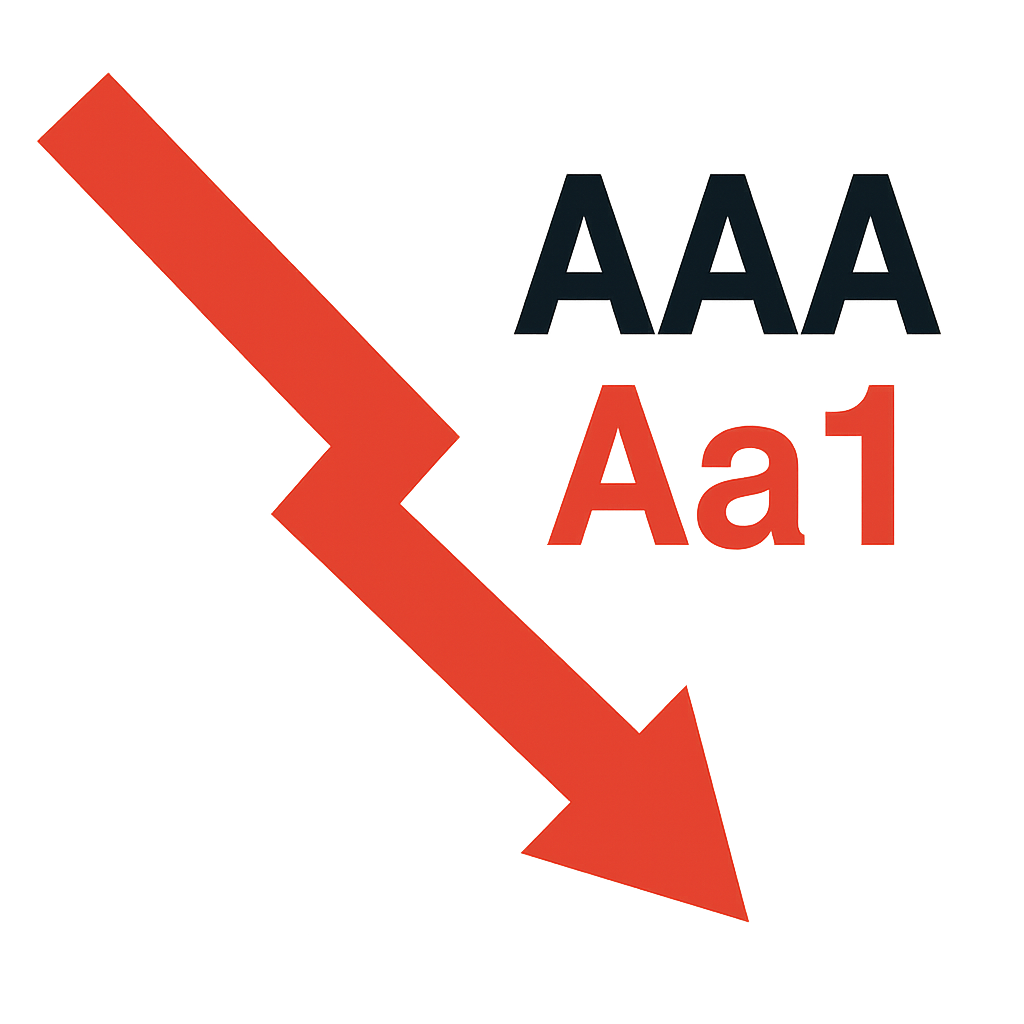
Moody’s recently announced it has downgraded the United States’ credit rating from the highest level, AAA, to AA1. Moody’s stated that this adjustment primarily reflects the continuous growth of U.S. government debt. It is projected that by 2035, the federal debt burden will rise to 134% of the country’s Gross Domestic Product (GDP). At the same time, the federal deficit is expected to reach 9% of GDP. Additionally, due to economic adjustments in response to tariff policies, GDP growth may slow in the future.
Analysis and Opinions
- Rising debt levels are the core reason for the downgrade
The persistent expansion of U.S. federal debt raises concerns among credit rating agencies, reflecting increased fiscal sustainability risks and pressure on national credit. - High deficits and debt burdens pose challenges to economic growth
The high deficit-to-GDP ratio over the coming decades may limit fiscal flexibility, increase interest burdens, and affect economic stability and development. - Tariff policies weigh on economic growth
Trade frictions have increased economic adjustment pressures, affecting investment and consumption, potentially slowing GDP growth in the short term. - The downgrade may trigger financial market turbulence
As the world’s largest economy, a credit rating adjustment for the U.S. could affect the attractiveness of dollar assets, increase borrowing costs, and cause chain reactions. - It urges the government to adopt prudent fiscal policies and structural reforms
This rating change serves as a warning to policymakers to control debt growth, optimize fiscal spending, and promote economic growth. - A downgrade does not necessarily signal a crisis but warrants attention to long-term risks
AA1 remains a high-grade rating, with limited short-term impact. However, if debt and deficits continue to worsen, credit risks will further increase.