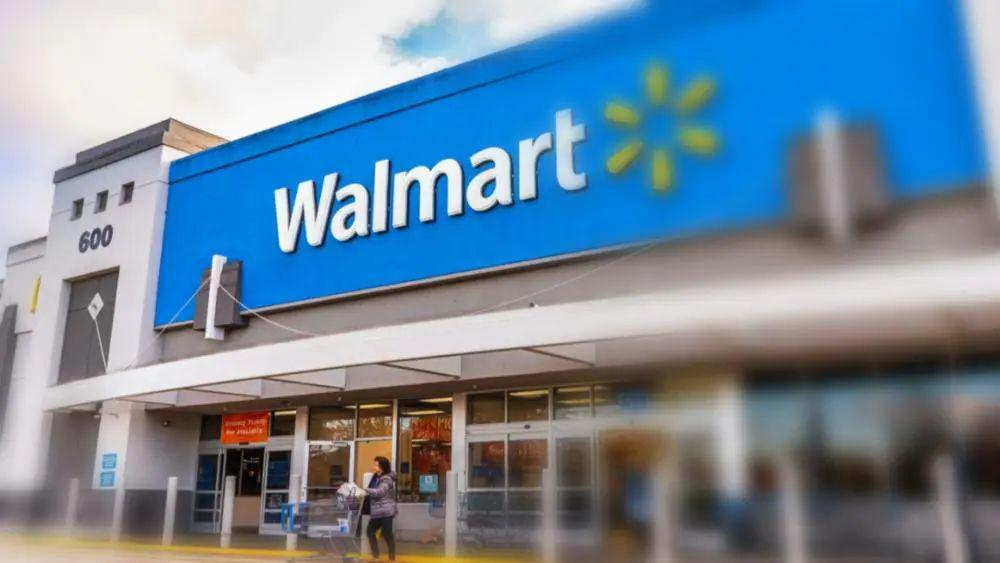
American retail giant Walmart is being forced to swallow the bitter pill of rising tariffs.
According to CCTV News, sources said on May 21 that Walmart plans to lay off about 1,500 workers as part of a restructuring effort to cut costs.
As the largest private employer in the United States, Walmart has over 2.1 million employees worldwide, with about 1.6 million in the U.S. This round of layoffs will affect the global tech operations team, e-commerce fulfillment for U.S. stores, and advertising business Walmart Connect. In fact, this is already Walmart’s second round of layoffs this year. In February, Walmart closed its North Carolina office and relocated staff to major hubs in California and Arkansas.
Last week, Walmart CEO Doug McMillon said during the company’s earnings call that tariffs on goods from Costa Rica, Peru, and Colombia have driven up prices of bananas, avocados, coffee, and roses — but that tariffs on Chinese imports have caused the biggest cost burden. Walmart CFO John Rainey acknowledged that although Walmart and its suppliers have absorbed some costs, “given the scale of the tariffs, we can’t absorb it all.”
These remarks prompted a strong response from the White House. Trump fired back, saying Walmart should “stop blaming tariffs for across-the-board price hikes. They made huge profits last year and should bear the costs themselves — not pass them on to their valued customers.”
Under pressure, Walmart and other U.S. retailers are treading carefully: scrambling to adjust supply chains and cut costs, but also wary of alienating customers with price hikes. Retail giant Target, for example, has already lowered its full-year earnings guidance, citing tariff-related pressures. Target, Home Depot, and others reaffirmed they won’t resort to blanket price hikes, opting instead to negotiate with suppliers, tweak product designs, and adjust order timing to absorb most of the tariff costs.
Yet price increases at retail are already brewing. John Rainey warned that by the end of May, American consumers are likely to see higher prices. According to interviews with consumers in the U.S., prices of certain goods — including sneakers, bicycles, beef, and eggs — have already risen more than 20% year-on-year.
Wang Jian, a professor at the University of International Business and Economics, pointed out that Walmart’s slim margins, driven by its “everyday low price” mantra, mean even slight tariff hikes quickly erode profits. While two-thirds of Walmart’s products are U.S.-made, one-third are imported, with nearly 60% of those from China — especially clothing, electronics, and toys — making the tariff impact swift and direct.
To cope, some retailers are resorting to “workarounds,” including negotiating with Chinese suppliers, redesigning products to avoid high tariff categories, and even pushing for overseas factories. But Wang noted that these efforts can’t erase the extra costs of tariffs entirely. As earlier “stockpiles” of goods are depleted, price pressures will soon become more visible.
In April, U.S. CPI growth slowed to 2.3% — the lowest since 2021 — but Morgan Stanley warned that inflation could rise again from May onwards, reaching 3.0-3.5% for the year. Yale University’s budget lab predicts U.S. food prices will rise 2.6% over the next three years due to mounting tariffs. The USDA also forecasts a 3.2% increase in overall food prices this year, including a 2.7% rise in grocery and household food costs.
Meanwhile, consumer confidence continues to deteriorate. The University of Michigan’s May survey showed consumer sentiment had fallen to its lowest level since June 2022, while the Conference Board reported in April that Americans’ expectations for the economy, labor market, and business environment were at their weakest since 2011.
“The U.S. economy is at a turning point,” said Jack Kleinhenz, chief economist at the National Retail Federation. “Although some indicators remain healthy, progress is slow, and people are increasingly worried about a potential recession.”
Wang Yanhang echoed that rising retail prices mean it’s America’s working-class consumers who will ultimately foot the tariff bill. While the broader economy still appears stable, trade war tensions could sow new risks for the future.