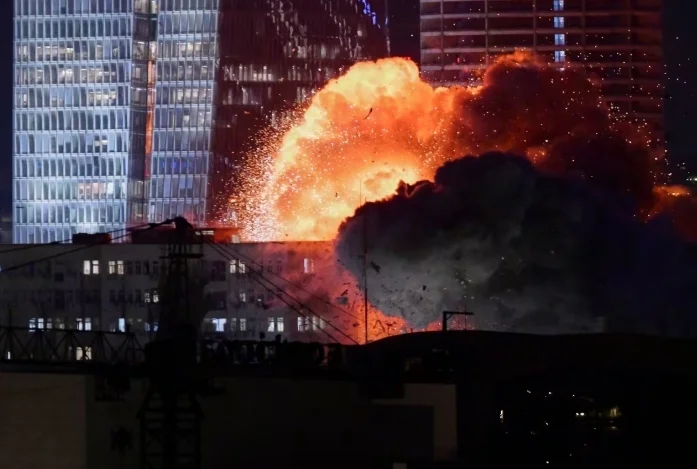
Tensions in the Middle East have surged once again. In the early hours of June 13 (Beijing time), Israel launched a surprise airstrike on Iran, killing several high-ranking military commanders and nuclear experts, and damaging key nuclear sites. Believing it had crippled Iran’s command structure, Israel was caught off guard when Iran retaliated just hours later with a series of missile barrages.
CNN cited experts who say Israel “severely underestimated Iran’s ability to rapidly restore its military coordination.” Trita Parsi, Vice President of the Quincy Institute in Washington, stated, “Israel thought it had disrupted Iran’s command system, but Iran quickly recovered — even managing to disrupt Israeli air defenses.”
On June 16, Iran’s Islamic Revolutionary Guard Corps (IRGC) launched Phase 6 of its “True Promise 3” operation, claiming missiles struck multiple targets in Israel and caused “friendly fire” within Israel’s layered defense systems. The IRGC warned that upcoming attacks would be “even more precise and destructive.”
Adding further concern, a senior Iranian security official told RT that Tehran is now preparing for a “long-term war” and aims to dismantle Israel’s military infrastructure entirely. With U.S.-Iran nuclear negotiations hanging by a thread, this unexpected escalation is drawing global attention.
Regional tension is now spilling over, with fears growing that the conflict could expand into a broader regional war.