Voice Struggles, Touch Feels Awkward — Can Meta’s Wristband Break Through?
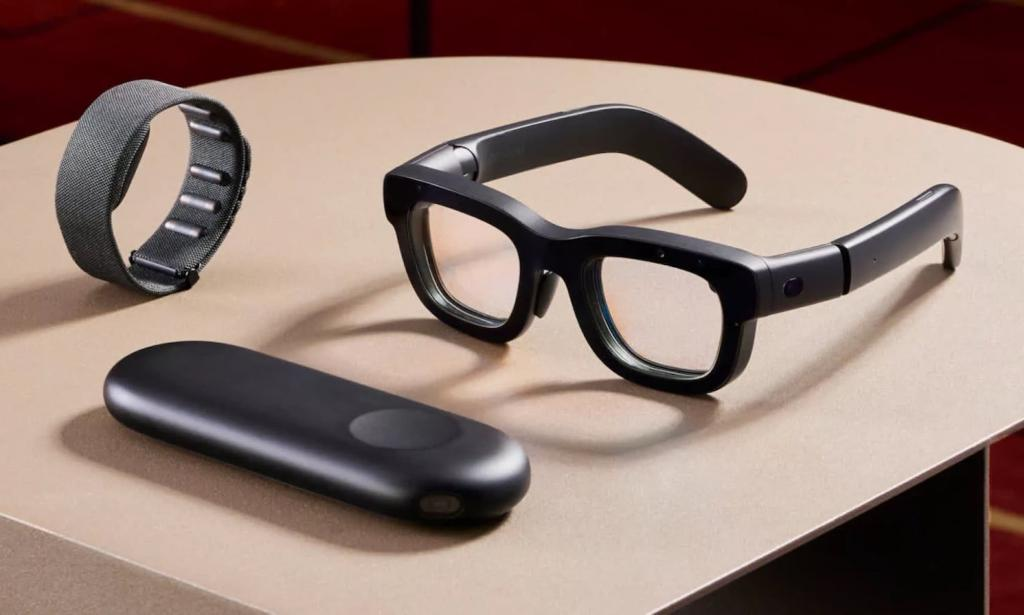
Meta is set to unveil its next-generation smart glasses, codenamed Hypernova, at the upcoming Connect conference in September, with a reported price of around $800. Unlike its earlier Ray-Ban collaboration, Hypernova features a right-eye display for notifications and visuals — and more importantly, it introduces a wristband powered by sEMG technology to enable precise gesture-level control.
This bold design immediately raises the big question: What is the ideal way to interact with smart glasses?
The Dilemma of Voice and Touch
Over the past decade, smart glasses have struggled to find a perfect interaction model:
- Voice Control: Natural, yet socially awkward. Google Glass once promoted voice as its core feature, but in real life, few users feel comfortable “talking to the air” in subways or offices. Noise also undermines recognition accuracy, and complex commands like navigating menus become inefficient.
- Touch Control: Usually placed on the glasses’ temples with simple taps, swipes, or presses. But space is limited, actions are few, and constantly fiddling with your glasses looks unnatural, breaking the promise of a “seamless, invisible” experience.
Both approaches have obvious limitations, leaving room for external accessories to step in.
Rings, Wristbands, and Watches: Competing Paths
Ring Control: Light and Discreet
Smart rings are gaining traction, with brands like Meizu’s Xingji and Rokid already offering ring controllers. The concept is essentially moving the touchpad from the glasses’ side to the user’s finger. Because of their small size and subtle form, rings align well with the “invisible” ideal of smart glasses.
For example, in a meeting, simply rubbing your thumb against the ring to flip a page feels far more natural than tapping your glasses repeatedly.
Wristband Control: Precise but Obtrusive
Meta takes a different path. By using sEMG signals from the forearm’s muscles, the wristband allows for more accurate and low-latency interactions than touchpads. Technically impressive, yes — but the design feels more like an add-on gadget than an everyday accessory. While early adopters may be intrigued, its long-term appeal remains uncertain.
Smartwatch Control: A Logical Integration
In the long run, combining smart glasses with smartwatches may be the most practical solution. Smartwatches already have displays, touchscreens, dials, microphones, and sensors, making them robust interaction hubs. Together, they could form a three-layer workflow:
- Phone for complex tasks (typing, payments, full apps).
- Watch for medium interactions (navigation, quick replies, confirmations).
- Glasses for light tasks (notifications, maps, calls).
This division balances efficiency and natural use, with smartwatches enjoying far higher social acceptance than rings or wristbands.
The Next Battlefield: Interaction as Differentiation
The smart glasses industry has crystallized into three main categories:
- Audio Glasses (calls and music),
- Camera Glasses (recording and imaging),
- Display Glasses (AR overlays and information).
With hardware designs increasingly similar, interaction is emerging as the key differentiator. Whether rings, wristbands, or watches become the winning approach will determine if smart glasses can truly enter the mainstream.
Editor’s Note
Meta’s Hypernova wristband is a bold experiment. But in the long run, the real challenge for smart glasses is not resolution or specs — it’s whether they can achieve an interaction style that feels natural, invisible, and socially acceptable.
In the coming years, the success of smart glasses may hinge less on hardware, and more on this battle for interaction dominance.