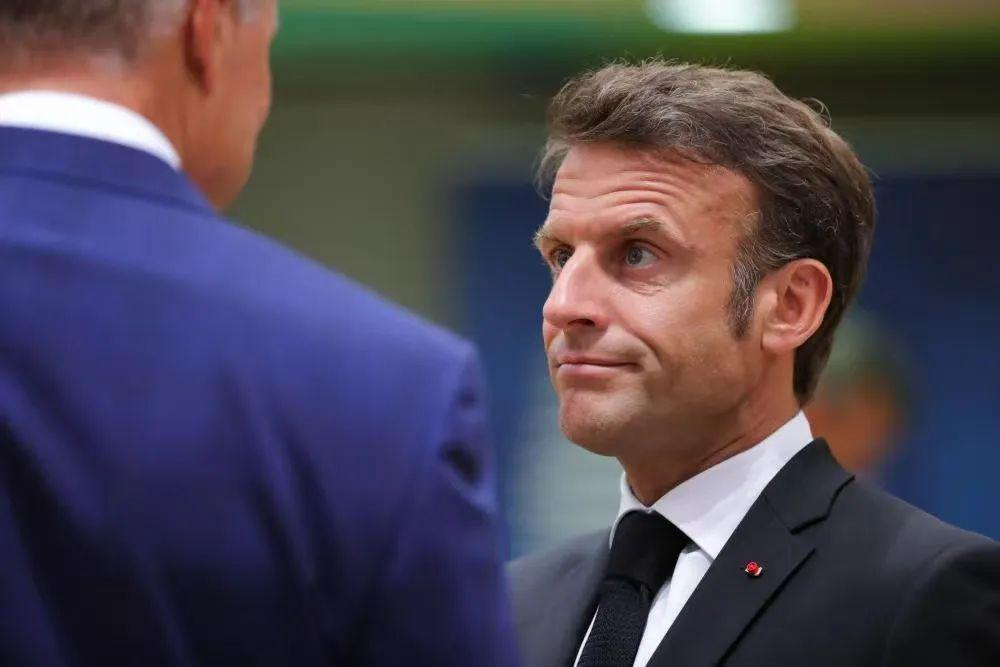
French President Emmanuel Macron has recently come under fire from the United States, Israel, and Italy, as Paris becomes entangled in a series of diplomatic disputes. The tensions revolve around both the Israel-Palestine conflict and the Russia-Ukraine war, highlighting deepening fractures within the Western bloc.
Palestine Recognition Sparks U.S.–Israel–France Rift
France’s decision to recognize the State of Palestine triggered strong backlash. Israeli Prime Minister Benjamin Netanyahu accused Macron of “fueling antisemitism.” The Élysée Palace quickly rebuked his remarks as “vile and false.”
The United States soon joined in. U.S. Ambassador to France Jared Kushner criticized France for “failing to curb antisemitic violence.” In response, the French Foreign Ministry summoned Kushner, stressing that his comments violated the Vienna Convention on Diplomatic Relations and amounted to interference in France’s internal affairs.
Analysts note that France’s move sparked more uproar than similar actions by Spain or the UK due to France’s greater international weight. Washington and Tel Aviv’s strong reaction reflects not only geopolitical concerns but also personal and political ties. Kushner, a Trump appointee with close connections to Israel, has added further sensitivity to the issue.
Italy Mocks France Over Troop Deployment to Ukraine
On the Russia-Ukraine front, France and Italy clashed openly. After Paris suggested the possibility of deploying European troops to Ukraine, Italian Deputy Prime Minister Matteo Salvini mocked Macron: “If he insists, let him go himself. Not a single Italian soldier will be sent.”
France swiftly summoned Italy’s ambassador in protest, calling the remarks “unacceptable” and contrary to the spirit of Franco-Italian cooperation.
Observers argue that Italy’s far-right, populist-led government leans pro-Russian, and its rejection of France’s policy reflects both domestic political positioning and alignment with U.S. foreign strategy.
A Fragmented Western Alliance
Both disputes reveal that the Western alliance is facing multiple fractures:
- U.S.–Europe divergence: The U.S. continues strong support for Israel, while France pushes for a more independent path.
- Intra-EU rifts: France and Italy’s quarrel over Ukraine shows the EU’s struggle to present a unified front.
- Domestic political limits: Macron’s constrained power in a divided parliament pushes him to pursue bold foreign policy for international influence.
Analysts believe Macron’s assertive diplomacy may boost France’s visibility, but it has also fueled tensions with allies. These differences in values and interests are widening, adding instability to global relations.
Conclusion:
From recognizing Palestine to raising the prospect of sending troops to Ukraine, Macron’s policies have put France at odds with allies. The criticism from the U.S., Israel, and Italy is not just a series of isolated disputes—it is a symptom of a Western alliance in visible disarray.