Is Mexico’s stance of “never choosing sides between the U.S. and China” starting to shift?
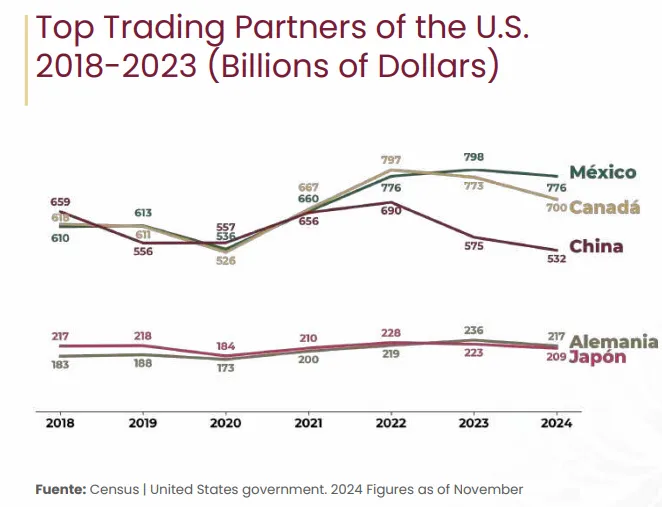
According to Bloomberg on August 28, multiple sources revealed that the Mexican government is preparing to propose higher tariffs on Chinese imports in its 2026 budget plan, expected to be submitted next month. The targeted products reportedly include automobiles, textiles, and plastics. Analysts suggest the move is designed not only to protect domestic industries from low-cost imports but also to align with U.S. President Donald Trump’s long-standing efforts to curb China.
Budget Proposal and Political Context
The tariff proposal is still under discussion, with exact rates yet to be determined. However, it must be submitted to Congress by September 8. Given that President Claudia Sheinbaum’s party and its allies hold more than a two-thirds majority in both chambers, the proposal is unlikely to face significant amendments.
So far, Mexico’s presidency, the Ministry of Economy, and the Ministry of Finance have declined to comment. Analysts note that China’s exports to Latin America have surged this year, partly offsetting declines in exports to the U.S., and Mexico’s policy shift may signal a stronger economic and diplomatic alignment with Washington.
Rising Tensions in U.S.–Mexico Trade
Since the start of the year, the Trump administration has repeatedly pressured Mexico to follow the U.S. in imposing tariffs on Chinese goods. Trump has claimed that Chinese products could first enter Mexico and then flow into the U.S. market, undermining American industries.
At the end of July, Trump announced that after what he described as a “very successful” call with Sheinbaum, he would extend the U.S.-Mexico tariff agreement for another 90 days. Under this arrangement, Mexican exports outside the USMCA framework remain subject to a 25% tariff, with automobiles facing 25% and metals such as steel, aluminum, and copper as high as 50%.
Despite such heavy tariffs, Mexico has so far refrained from retaliatory measures. Although Sheinbaum has previously said that Mexico would respond with higher tariffs on U.S. goods if pushed further, in practice, the government appears to be adjusting its stance under U.S. pressure.
The “North American Fortress” Strategy
Earlier this year, U.S. media reported that Mexican officials had floated the idea of building a so-called “North American Fortress” — a trade and manufacturing alliance between the U.S., Mexico, and Canada aimed at restricting Chinese imports. Although Mexican diplomats denied the report, the Trump administration and some U.S. policymakers showed strong interest in the concept.
China remains Mexico’s second-largest global trading partner, with bilateral trade reaching USD 109.4 billion in 2024. China mainly exports electronic components, kitchenware, and auto parts, while importing crude oil, electrical equipment, and medical devices from Mexico.
China’s Position
China’s Ministry of Foreign Affairs has repeatedly stressed that trade wars and tariff wars produce no winners. Spokesperson Lin Jian reiterated that Beijing will firmly oppose any arrangement that sacrifices China’s interests and will take reciprocal countermeasures if necessary.
During a May meeting in Beijing, Chinese Foreign Minister Wang Yi and his Mexican counterpart Alicia Bárcena reaffirmed their commitment to strengthening cooperation, defending multilateralism, and promoting free trade. China also welcomed more Mexican products into its market and encouraged Chinese enterprises to invest in Mexico.
📌 Conclusion
If implemented, Mexico’s move would mark a significant tilt in its delicate balancing act between China and the U.S. Facing relentless pressure from Trump, Mexico seems to be drifting closer to Washington’s vision of a “North American economic shield.” But whether Sheinbaum’s government can protect ties with China while appeasing the U.S. will be its greatest diplomatic test.