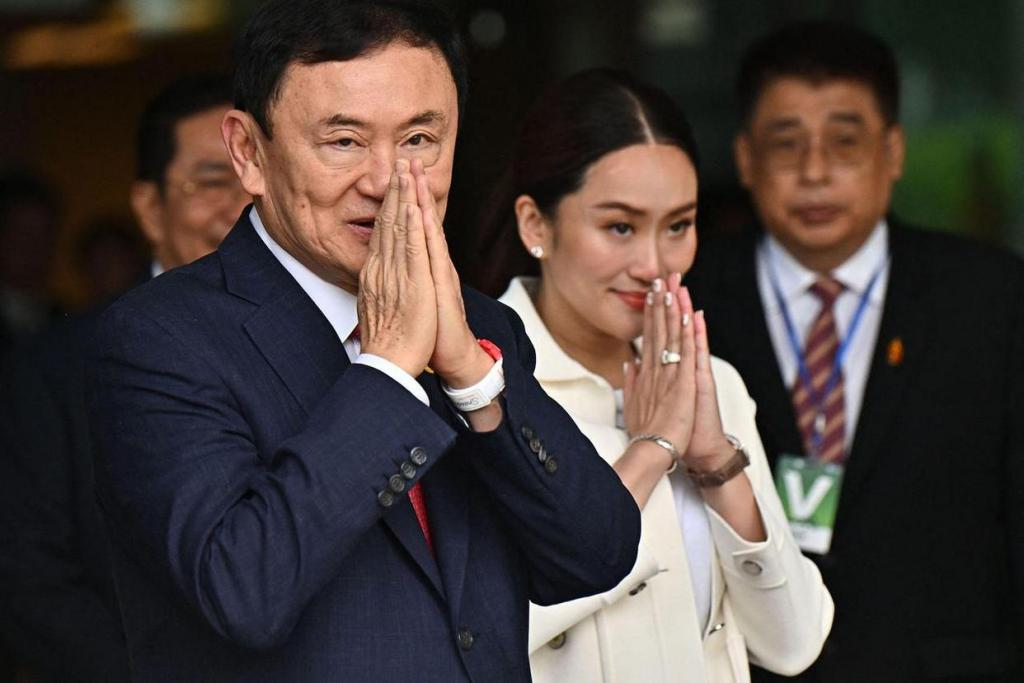
On August 29, Thailand’s Constitutional Court ruled that Prime Minister Paetongtarn Shinawatra had violated constitutional provisions and ordered her removal from office with immediate effect. At just 39 years old, Thailand’s youngest and second female prime minister lasted little more than a year in power before being forced to step down. She is now the third member of the Shinawatra family to be ousted from Thailand’s top job.
A Family of Four Prime Ministers – Three Forced Out
Paetongtarn, born in 1986, is the daughter of former Prime Minister Thaksin Shinawatra and current leader of the Pheu Thai Party. Her father Thaksin, uncle Somchai, and aunt Yingluck have all held the prime minister’s post. With her dismissal, the Shinawatra family has produced four prime ministers, three of whom have been driven from office amid political crises.
The “Recording Scandal” That Sparked Her Downfall
The crisis stemmed from a leaked phone call in June between Paetongtarn and Cambodia’s former prime minister Hun Sen. In the recording, she addressed Hun Sen as “uncle,” sought his help on border issues, and criticized a top Thai military commander, calling him a “political opponent.”
Hun Sen later admitted he had recorded the call for transparency and shared it with senior Cambodian officials, one of whom leaked it. The recording quickly spread in Thailand, triggering a political storm. Paetongtarn apologized, but 36 senators filed a petition accusing her of dishonesty and serious constitutional violations. The Constitutional Court suspended her powers in July and ultimately ruled to dismiss her in August.
The Constitutional Court: A Guardian of Conservative Power
In Thailand, Constitutional Court judges are nominated by a selection panel and formally appointed by the king. The Senate, closely tied to the monarchy and military, plays a decisive role in this process. As a result, the court is widely regarded as an extension of royal and military influence.
Analysts note that the monarchy and military are deeply intertwined. The king is commander-in-chief of the armed forces, while military leaders rely on royal endorsement for legitimacy. This alliance of conservative power has repeatedly curtailed the ambitions of elected governments.
Cabinet Reshuffle or Snap Election?
Paetongtarn’s removal also nullifies her role as Minister of Culture, dissolving the current cabinet. Parliament must now convene to elect a new prime minister.
Potential candidates include Pheu Thai’s Chaikasem, Bhumjaithai’s Anutin, United Thai Nation’s Pirapan, and Democrat Party’s Jurin. While Pheu Thai’s popularity has declined, it remains the largest party in the ruling coalition and may still lead a cabinet reshuffle rather than trigger an early election.
Wider Impact: Politics and Economy Intertwined
Her ouster not only deepens Thailand’s political uncertainty but also risks slowing economic recovery. Ongoing Sino-Thai cooperation projects may face renegotiation, while the next government is expected to act more cautiously in balancing ties with both China and the United States.
Analysts warn that prolonged instability could dampen investor confidence and weaken Thailand’s fragile recovery.
Conclusion
Paetongtarn’s fall, sparked by the “recording scandal,” reflects more than just a personal misstep—it highlights Thailand’s enduring struggle between conservative elites and reformist forces led by the Shinawatra family. Whether Thailand can stabilize after this latest upheaval will depend on the choice of the next prime minister and the balance struck among competing political factions.