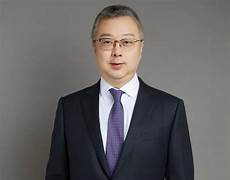
SAIC Motor’s transformation is accelerating, and President Jia Jianxu is taking an unprecedented hands-on approach. Following the integration of SAIC’s major passenger vehicle division, Jia has become deeply involved in critical product decisions for four flagship models—MG4, Shangjie H5, Roewe M7, and Zhiji LS9—personally overseeing their development from concept to market.
According to a source close to the passenger vehicle division, Jia monitors the progress and status of these models every week, scrutinizing problems and driving swift solutions. He has offered many detailed suggestions—such as adding greater seat adjustment angles and interior refinements—and these have been implemented quickly. To allow time for these improvements, both the MG4 and Roewe M7 had their launches postponed.
Another insider revealed that beyond the debut Shangjie H5, Jia is also steering two more upcoming Shangjie models, reviewing project progress and resolving key issues weekly. This direct involvement marks a sharp departure from SAIC tradition, where presidents historically focus on group-level business rather than individual passenger car programs. Now, each model is getting significant attention and promotion, signaling a more serious approach to product strategy.
Tackling a Sales Crisis Head-On
When Jia—one of SAIC’s youngest presidents—took office in July 2023, he inherited a daunting challenge: years of declining sales. SAIC Volkswagen and SAIC-GM had both lost nearly half their peak volumes, and for the first time in 18 years, SAIC surrendered its crown as China’s top-selling automaker, overtaken by BYD.
Rather than stand back, Jia jumped into the trenches. Known internally as decisive, outspoken, and tireless, he openly addressed internal weaknesses at the mid-year executives’ meeting just one month into the role. He spearheaded a partnership with Huawei under the “Smart Selection Car” model, ensuring Shangjie became the latest brand to join Huawei’s fast track. At the same time, he promoted young managers, integrated the passenger vehicle division, and took on the additional role of general manager himself—calling it a move to leave “no retreat” and full accountability.
Product-Centric Reform at the Core
For SAIC, the product side is pivotal to recovery. Jia has acknowledged that years of joint venture culture have eroded the company’s ability to define products and anticipate consumer needs. To close that gap, SAIC is adopting Huawei’s IPD (Integrated Product Development) and IPMS (Integrated Product Marketing & Sales) processes—shifting from vertical to cross-functional project teams with more agile, target-driven decision-making.
The transition is far from easy. “We used to benchmark competitors instead of defining our own products,” said one SAIC R&D employee. “Now we’re defining them, but ensuring those ideas materialize in the final vehicle is the real challenge.” The new processes require reconciling diverse departmental priorities—product managers pushing innovation, engineers aiming for platform efficiency, and project managers focused on deadlines and harmony.
While the system is still maturing, insiders agree: in this transitional period, the president’s direct involvement is the most effective short-term solution.
Navigating a Product Gap and Creating Market Buzz
The passenger vehicle division, comprising core domestic brands MG, Roewe, Feifan, SAIC International, R&D institutes, and overseas mobility units, is central to SAIC’s self-owned brand strategy. Sales of domestic brands are steadily catching up with joint ventures—January to August 2025 saw SAIC’s passenger vehicle company sell 502,300 units, up 17.65% year-on-year.
However, MG and Roewe are both experiencing partial product gaps. MG currently offers only three new energy models: the MG4 and ES5 compact SUVs, and the Cyberster roadster. Roewe has several new energy sedans but only one mid-to-large SUV, the R7. New-generation products from the revamped leadership won’t hit the market until next year, making the success of current models crucial.
To make the MG4 stand out, SAIC introduced the industry’s first mass-produced semi-solid-state battery—also the first in China under the RMB 100,000 price range. Paired with a “big car versus small car” pricing strategy, MG4 secured over 10,000 pre-orders within 40 minutes of its Chengdu Auto Show debut. The Roewe M7 boasts the largest battery in its class for extended EV range, plus smart interconnectivity and flexible seating, achieving over 10,000 pre-orders in its first week.
Strengthening Sales Channels and Huawei Partnership
SAIC’s sales reforms are also paying off. Leveraging aggressive promotional policies and new media outreach, the passenger vehicle sales network has achieved steady growth without relying on a single blockbuster model, gradually restoring dealer confidence.
For the Shangjie H5, Jia’s leadership was pivotal in smoothing potential friction with Huawei. In a joint livestream with Huawei’s Yu Chengdong in late August, Jia stated, “If conflicts arise in our first collaboration and I don’t step in, the entire team’s work could stall. My involvement means SAIC and Huawei will resolve issues at the root.” The H5 opened pre-orders on August 25, drawing over 80,000 small deposits within two weeks.
SAIC has stationed hundreds of young managers within the Shangjie project team to learn directly from Huawei’s methods, with Jia revealing plans to grow the team to 5,000 members. While reforms are still evolving, both internal and external collaboration are injecting fresh momentum into SAIC’s transformation.