“When used properly, he could become the best player in the world.”
That was Xavi’s bold prediction back in 2021 about Ousmane Dembélé—a statement many dismissed as wishful thinking. At the time, the mercurial French winger was seen more as a cautionary tale than a future Ballon d’Or winner. Injuries, inconsistency, and lingering doubts about his attitude had clouded the promise of the £135.5m man who joined Barcelona from Borussia Dortmund in 2017.
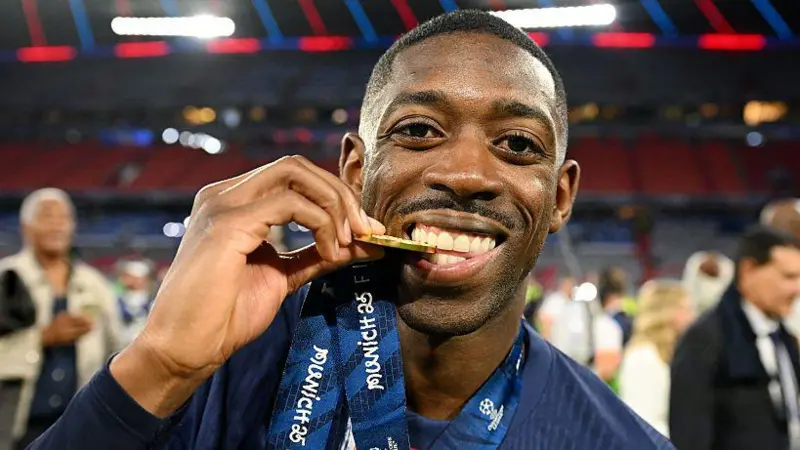
But today, the prophecy has finally been fulfilled. At 28, Dembélé has been crowned Ballon d’Or winner in Paris, breaking down in tears as he thanked his family for their sacrifices. It was a moment that encapsulated his long, turbulent road to the pinnacle of world football.
A Season for the Ages
Dembélé’s 2024–25 campaign with Paris Saint-Germain was nothing short of spectacular. He spearheaded the French giants to an historic treble—Ligue 1, Coupe de France, and Champions League—before helping them reach the Club World Cup final.
The numbers were staggering: 35 goals, 14 assists, and a blistering run of form that made him Europe’s most lethal forward from January onward. Along the way, he outshone Mohamed Salah’s unmatched goal involvements, Kylian Mbappé’s scoring feats, and the rising brilliance of Barcelona duo Lamine Yamal and Raphinha.
Thriving After Mbappé’s Exit
Ironically, Mbappé’s departure to Real Madrid was the catalyst Dembélé needed. Signed by PSG in August 2023 for just £43.5m, he had initially played a supporting role, contributing six goals and 14 assists in his debut season while Mbappé dominated the spotlight with 44 strikes.
But when Mbappé left, PSG needed a new talisman. Enter Dembélé.
Manager Luis Enrique challenged him to take more risks, be more selfish, and focus on goals. The message was clear: “Ballon d’Or, Ballon d’Or, Ballon d’Or.” Dembélé responded with the best season of his career, more than doubling his previous goal involvement record and finally embracing his potential as a false nine—operating centrally, dictating play, and finishing ruthlessly.
From Fragile Talent to Mature Leader
To credit Mbappé’s exit alone would oversimplify the story. Dembélé’s transformation began earlier. During his Barcelona years, he endured 14 muscle injuries, nearly 800 days sidelined, and frequent disciplinary issues. He was fined repeatedly, notorious for gaming late into the night, and often needed the club to assign chefs to manage his diet.
Yet, glimpses of brilliance—his pace, his dribbling, his ability to unlock defenses—hinted at greatness.
The turning point came off the pitch. In December 2021, he surprised teammates by marrying Rima in Morocco, and soon after becoming a father. Those close to him say he matured almost overnight. He started working with personal physiotherapists, sought preventative treatments in France, and committed to proper nutrition under the guidance of a specialist.
Fatherhood gave him perspective. Professionalism gave him consistency. And PSG gave him the platform.
The New King of Paris
For years, many believed PSG’s Champions League glory would depend on a French superstar finally delivering. They were right—but it wasn’t Mbappé. It was Ousmane Dembélé, reborn, redefined, and ready to wear football’s crown.