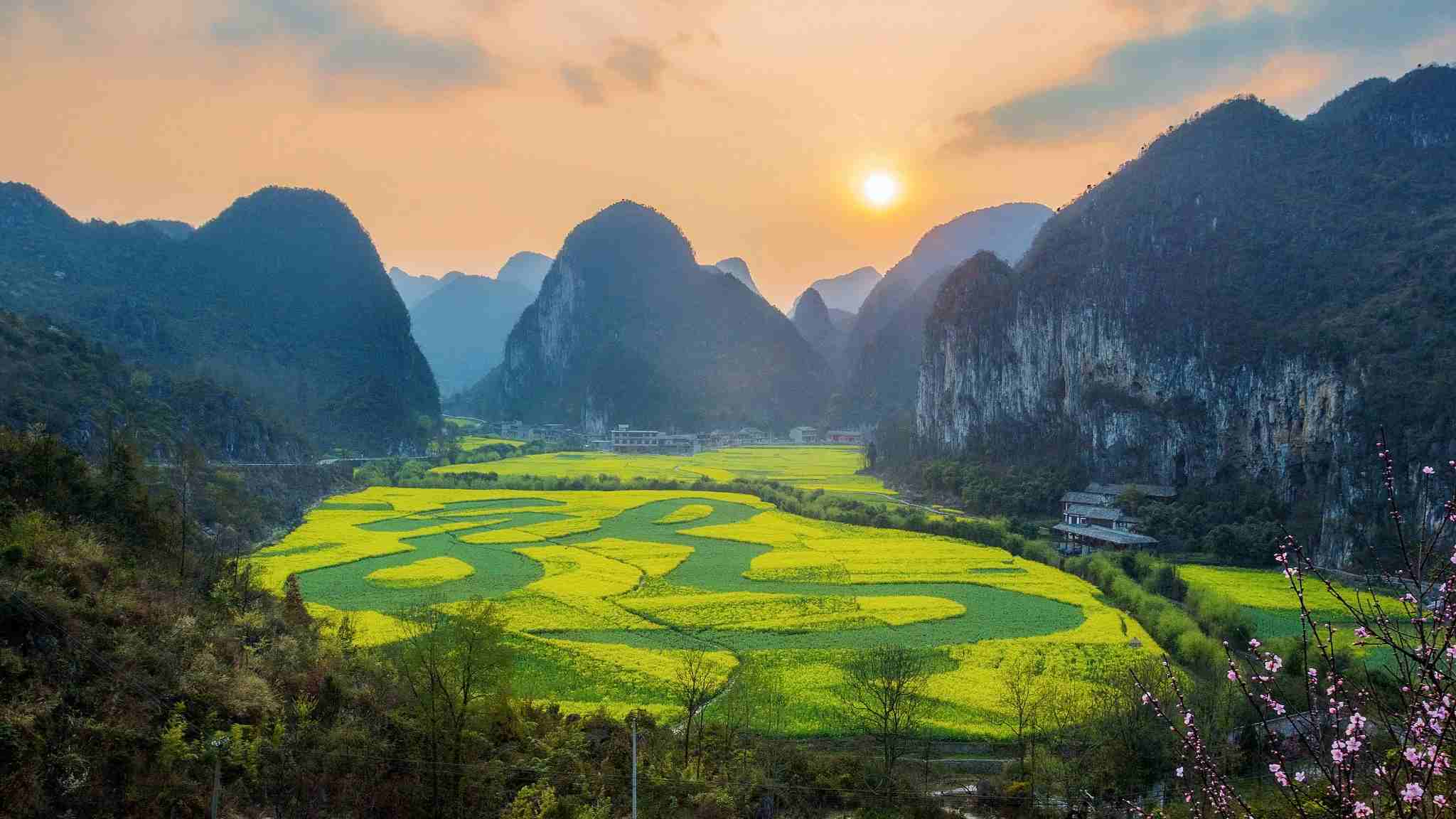
Japan has long been a favorite destination for travelers, and for many, a trip there isn’t complete without tasting its signature delight: matcha. But here’s a surprising truth—much of the matcha sold in Japan today doesn’t actually come from Kyoto or Shizuoka, but from a small mountainous county in China’s Guizhou province called Jiangkou. This quiet town, nestled at the foot of Mount Fanjing, has become one of the world’s most important matcha suppliers. Even Kyoto’s renowned Uji tea brands now list “Jiangkou, Tongren, Guizhou” as the origin of some of their ingredients. As one netizen joked, “It’s like selling chili sauce to Sichuan or hot dry noodles to Wuhan.” In less than a decade, Jiangkou transformed “Made in Guizhou” from an unknown label into a global powerhouse for premium matcha. In 2024 alone, it produced 1,300 tons of matcha, worth more than 300 million yuan. So how did a once-impoverished mountain county manage to dominate a field long considered Japan’s cultural treasure? The answer lies in a perfect blend of natural advantages, local determination, and innovative thinking. The next time you sip a matcha latte or bite into a matcha cake, there’s a good chance the flavor came from these green hills. According to China Central Television, one out of every seven cups of matcha consumed worldwide originates from Jiangkou. It’s a stunning achievement for a county once listed among China’s poorest regions, where nearly 20% of the population once lived below the poverty line. Everything changed in 2018, when Guizhou Tea Group invested 600 million yuan to build a world-class “super matcha factory.” Covering the size of 31 football fields, it houses the world’s largest single matcha processing workshop with an annual capacity of 4,000 tons. Inside, the factory hums with intelligent automation—gleaming machinery, spotless production lines, and the faint scent of freshly ground tea leaves. Yet despite its scale and technology, Jiangkou’s matcha still retains the soul of craftsmanship. The process remains meticulous: fresh leaves are steamed, cooled, dried, and stripped of veins before being stone-ground into fine, fragrant powder. Every batch is swiftly packaged, refrigerated, and shipped across the globe—to cafés, bakeries, and ice cream makers alike. Today, China accounts for 60% of global matcha production, and one in every four batches comes from Jiangkou. But the county isn’t content to remain just a supplier—it’s building a brand, “Fanjing Matcha,” with identity, culture, and pride. Annual cultural festivals like the Matcha Elegance Fair, creative “Matcha × Cuisine” events, and plans for a full-fledged “Matcha Town” all reflect Jiangkou’s ambition to bring its green story to the world. China has grown and loved tea for over a thousand years, yet Guizhou long lacked a brand that stood out. Much of its tea was sold in bulk and rebranded elsewhere. That changed in 2017 when Jiangkou and Guizhou Tea Group made a bold decision: they would no longer be just a raw material supplier—they would lead a new frontier in tea. Their choice of matcha wasn’t random. It was a strategic breakthrough. While traditional tea markets were crowded, matcha offered a fresh path—a segment where quality, innovation, and international appeal mattered more than history alone. And Jiangkou had all the right conditions. Sitting along the 27°N golden tea belt and sheltered by Mount Fanjing, it boasts high altitudes, misty weather, and rich biodiversity—perfect for growing tea with complex flavors. Its fragmented karst terrain, once seen as a disadvantage, became a blessing; small, scattered plots prevented pests and allowed for natural, pesticide-free cultivation. This ecological purity became Jiangkou’s competitive edge. The arrival of Guizhou Tea Group provided the missing link—capital, technology, and a modern, end-to-end supply chain. Farmers adopted strict EU-level standards, banning chemical pesticides and relying on manual weeding. The cost was high, but so were the rewards. “Growing tea is like raising a child,” one farmer said. “It’s hard, but you can’t give up.” Their persistence paid off. Today, Jiangkou’s matcha doesn’t just flow through global trade—it also reaches consumers directly through e-commerce, connecting mountain farmers to urban kitchens in record time. But Jiangkou’s ambition doesn’t end with exports. It wants the world to remember its name. While much of its matcha still leaves the factory under other brands, local entrepreneurs are now redefining how people experience it. Visit Jiangkou’s Matcha Festival, and you’ll find matcha beer, matcha chocolate, noodles, and even tofu and sturgeon infused with matcha. At Guizhou Tea Group’s innovation labs, new “Wu Cha Bai” products are rolling out through livestreams and retail stores nationwide. Beyond beverages, matcha is becoming a lifestyle ingredient, extending into skincare, wellness, and tourism. Travelers to Mount Fanjing can now join Song Dynasty-style tea ceremonies or explore tea villages that blend culture and sustainability. From following Japan’s standards to surpassing EU benchmarks, from exporting ingredients to creating a global brand, Jiangkou’s rise is a modern legend in green. Here, matcha is more than a drink—it’s the story of how a once-forgotten mountain county turned its hills into gold, showing the world what happens when tradition meets innovation. As “Fanjing Matcha” continues to make waves, one thing is certain: the next global taste of matcha excellence may very well begin in the heart of China.
The matcha you drink in Japan may very well come from this small county in Guizhou
Japan has long been a favorite destination for travelers, and for many, a trip there isn't complete ...
Source: https://www.myzaker.com/
Keep a little curiosity for the next story.
Back to reading