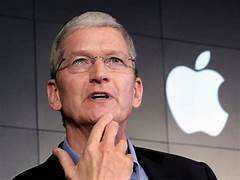
Tim Cook simply can’t let go of the Chinese market.
On October 18, during the Shanghai Global Wealth Management Forum · 2025 Suhewan Conference, Cook made another trip to China—this time bringing a clear message: Apple Intelligence is working hard to enter the Chinese market. He emphasized that artificial intelligence has the power to change lives and even save them.
It’s easy to see Cook’s ambition: he’s targeting China’s massive base of 250 million Apple users. After all, Apple once achieved legendary success in China.
Back in 2015, iPhone sales in China soared to record highs, with millions of units shipped. Armed with a tightly integrated iOS ecosystem and a premium brand image, Apple nearly monopolized the high-end smartphone segment—owning an iPhone became synonymous with wealth. It was, quite literally, the “luxury symbol” of its time.
Many still remember the craze when iPhones first arrived. Internet jokes about people “selling a kidney for an iPhone” went viral, perfectly capturing how intense the demand was. Even today, some people nostalgically use old iPhones for their uniquely “aesthetic” photos.
And who could forget the iconic iPhone 5s? Its golden edition turned heads everywhere. At one point, prices skyrocketed to nearly 20,000 RMB, earning it the nickname “Tuhao Gold.” People joked that the slogan “forward-thinking” didn’t just describe the product—it described the price too. The craze was real.
Then came the iPhone 6 series with its larger screen design, sparking another buying frenzy. People lined up to upgrade, and even those short on cash found ways to join the hype.
But that golden era didn’t last. After 2015, Apple’s shipments in China started to decline year after year, only bouncing back temporarily with the iPhone 12 series in 2020, largely due to restrictions placed on competitors like Huawei.
Today, China’s domestic brands—Huawei, Xiaomi, OPPO, vivo—have grown stronger than ever, pushing boundaries in battery life, processors, and AI technology. The competition has become fierce, while Apple’s AI progress has lagged behind.
Once a pioneer with Siri, Apple has since been criticized for “toothpaste innovation,” making only incremental updates.
Now, as Apple tries to bring Apple Intelligence to China, the challenges ahead are substantial. Government approvals and regulatory compliance are a must, and for a foreign company like Apple, the process could take even longer. Issues like data security and content regulation remain major concerns.
Apple has reportedly partnered with Alibaba and Baidu for AI integration, with each focusing on different areas. But whether the final product will meet Chinese users’ expectations is still uncertain.
Internally, Apple also faces its own struggles. Apple Intelligence was first announced in June last year, with promises of a smarter, more capable Siri to launch by April this year. However, the release has since been postponed to next year—and even that timeline remains unclear.
For Cook, bringing AI into China isn’t optional—it’s essential. With 250 million Apple devices already in the hands of Chinese consumers, AI could become the company’s lifeline to regain momentum and influence in this market.
It’s no longer about whether Apple should do it—it’s about doing it right. Whether Apple can reclaim its dominance in China’s high-end segment now depends on how consumers respond. After all, great products never struggle to find buyers.
So, which generation of iPhone impressed you the most?