China is the world’s most complete industrial powerhouse, holding an unmatched edge in global manufacturing. From the tiniest button to an entire high-speed train, Chinese-made products are growing not only in quantity but also in sophistication and technology. Yet, there’s one surprising export few people know about — money itself.
Yes, China has printed banknotes for more than ten countries. Behind this lies the country’s exceptional printing technology and its growing role in global finance. But why do these nations entrust China with something as sensitive as their currency? And how did China’s printing technology rise to global prominence?
China’s printing of foreign currency falls mainly into two categories — humanitarian assistance and commercial cooperation. In the early years, China helped nine countries print their banknotes as part of foreign aid: Vietnam, Cuba, Albania, Laos, North Korea, Guinea, Cambodia, Mongolia, and Nepal.
Vietnam was the first. In 1950, during its war against France, Vietnam lacked the capability and resources to print money. China stepped in, designing and producing the first Vietnamese đồng, which even featured Chinese characters. Over the next two decades, China printed four sets of Vietnamese currency totaling 31 denominations. Mongolia’s money was initially printed by the Soviet Union, then Europe, before China began producing its treasury bonds and coins in 1991.
Entering the 21st century, China’s banknote printing industry evolved into a commercial enterprise. In 2015, the China Banknote Printing and Minting Corporation (CBPM) won an international bid to print Nepal’s 100, 1,000, and 5 rupee notes — its first-ever foreign commercial order. China printed 210 million 100-rupee notes with improved color, design, and anti-counterfeiting features, including embossed markings for the visually impaired — Nepal’s first “blind-friendly” currency. The project was a huge success, followed by another 260 million 5-rupee notes in 2017.
Since then, China has printed money for Thailand, Bangladesh, Sri Lanka, Malaysia, India, Brazil, and Poland. In 2018, CBPM even produced 220 million Thai 2-baht coins featuring the new King Rama X — the first coins to bear his portrait. Beyond banknotes and coins, China also exports materials and equipment. In 2015, it sold Thailand its self-developed large-scale inspection machine, breaking the long-held monopoly of Germany and Japan. Two years later, it signed a deal with the Polish mint to supply coin blanks. Step by step, China gained a solid foothold on the global stage of currency production.
But why do these countries outsource such a vital symbol of sovereignty? The answer is simple — most can’t print their own money. Out of roughly 200 nations, only about 50 have independent printing capabilities. Printing currency is not just printing on paper; it’s a high-security national project, often called “the secret second only to nuclear weapons.”
To print money, three standards must be met: durability, security, and economy. Banknotes must withstand folding, moisture, and friction. They are made of cotton fiber paper — not ordinary pulp — giving them flexibility and resistance to wear. Special inks are also used, bright in color yet resistant to fading and corrosion.
Security is crucial. Modern banknotes use advanced anti-counterfeiting technologies such as watermarks, intaglio printing, and color-shifting inks. The latter change colors at different angles and are nearly impossible to copy with standard machines. Developing such materials requires expertise in chemistry, optics, and materials science — fields in which many countries lack resources.
Finally, there’s the issue of cost. For smaller economies with limited currency circulation, building their own printing facilities isn’t cost-effective. It’s cheaper to outsource production to established partners like China. In some cases, even countries with their own facilities turn to China to meet urgent needs. For example, Argentina — facing inflation and massive currency demand — commissioned China to print 770 million of its new 10,000-peso notes in 2024, despite having a mint of its own.
Interestingly, China itself once relied on others for printing money. Before 1949, the Republic of China outsourced its banknote printing to companies in the UK and the US. After the founding of the People’s Republic, China relied on the Soviet Union for help printing its early currency. When relations later deteriorated and Soviet experts withdrew, China was forced to develop its own capabilities — and that challenge became the turning point.
Chinese engineers worked tirelessly to overcome technological barriers, eventually mastering and even surpassing global standards. Two breakthroughs defined China’s rise: intaglio printing and security thread technology. The fine lines, depth, and texture of intaglio printing make counterfeiting nearly impossible, while the raised texture helps ordinary people verify authenticity by touch. China’s self-developed double-sided intaglio printing machine earned a National Technological Invention Award in 2010.
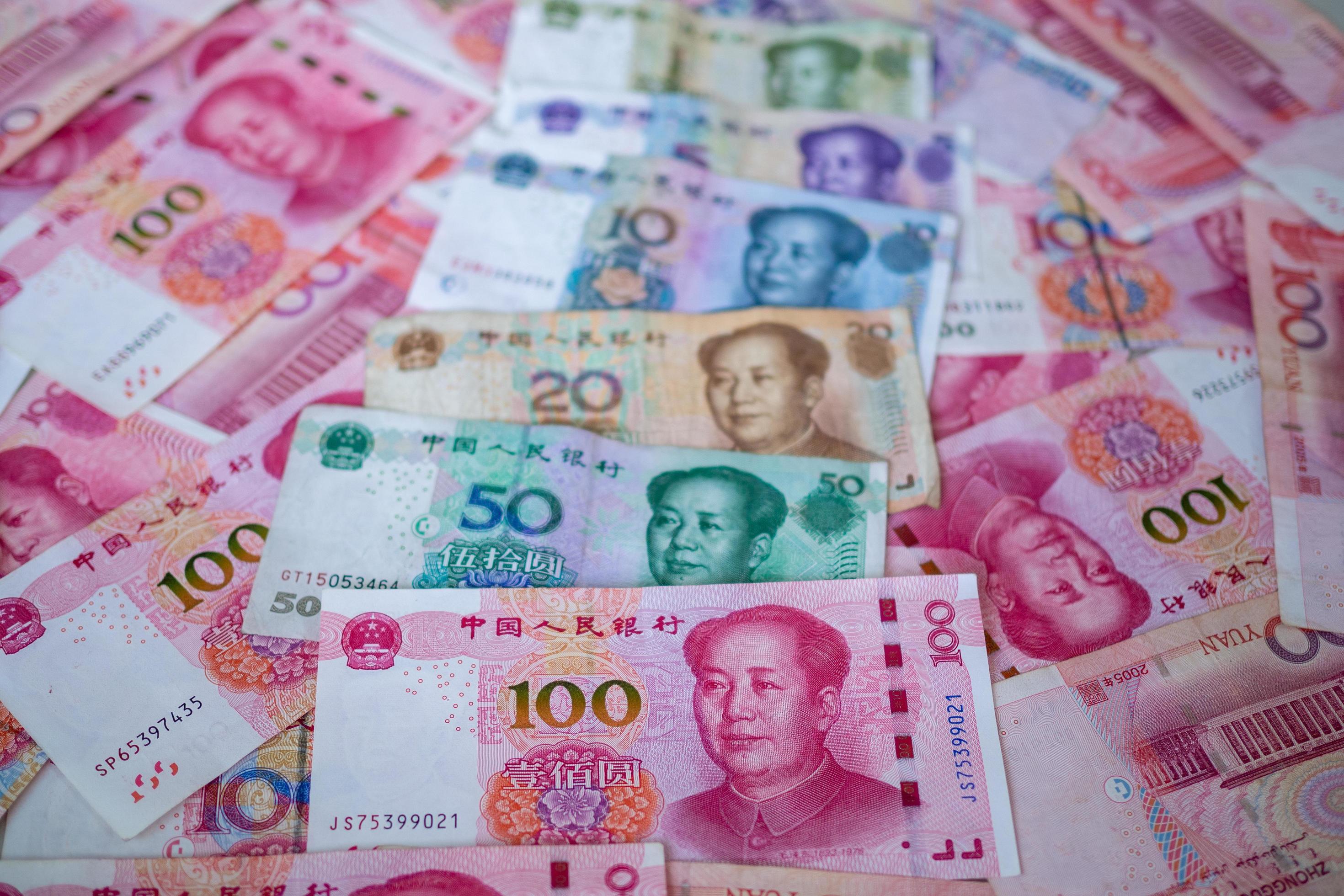
The security thread, seen on modern 50-yuan notes, is another Chinese innovation. It changes color when tilted and displays characters under light, combining aesthetic beauty with high security. Once reliant on imports, China now produces its own threads and materials, achieving a major leap forward.
Today, the China Banknote Printing and Minting Corporation has become the world’s largest enterprise of its kind. Compared to European giants like G&D (Germany), De La Rue (UK), and Oberthur (France), China offers stronger production capacity, consistent quality, and lower prices — often saving clients 30–50% in costs.
When Nepal sought printing bids, China’s price was 2.15 rupees per note compared to 2.69 from competitors. Even including shipping, China saved Nepal around 3 million US dollars. Yet cost is only part of the story. China’s industry has evolved from simply printing for others, to exporting inks, paper, equipment, and even technical standards — marking its full integration into the global supply chain.
From “Made in China” to “Created by China,” the nation’s journey in banknote printing reflects the larger story of China’s industrial evolution — moving from follower to leader, from producer to innovator, from manufacturer to global standard-setter.