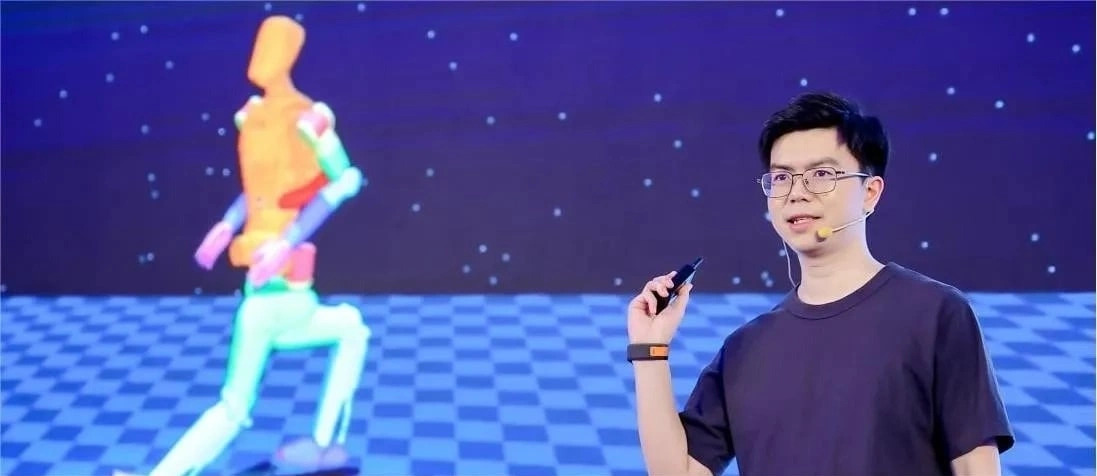
On November 25, Shangwei New Materials announced that 32-year-old Peng Zhihui had been elected Chairman of the company’s Fourth Board of Directors. According to reports, he will lead the company in exploring the integrated development of new materials and robotics—marking a bold new chapter in both his personal journey and the company’s strategic direction.
From Huawei’s celebrated “Genius Youth,” to the Bilibili tech creator known as “Zhi Hui Jun” with 2.8 million followers, and now to the founder of an embodied robotics company—just as the public was getting used to seeing him as a “tech influencer,” Peng Zhihui once again completed a remarkable transformation of identity.
The Rise of “Zhi Hui Jun”
Peng Zhihui first became widely known under the name “Zhi Hui Jun,” his Bilibili username. Starting in 2017, he appeared in the public eye as a hardcore tech creator, inventing and building various smart devices and sharing the process through short videos. His projects ranged from game-themed power banks and modular mechanical keyboards to mini televisions.
Many of his inspirations came directly from everyday life. In 2021, after slipping and injuring his face while cycling in the rain, he was inspired to build an autonomous self-balancing bicycle using gyroscopes, servos, brushless motors, depth cameras, and LiDAR. The bike could balance itself, plan routes, avoid obstacles, and even drive without a rider—all at a cost of less than 10,000 yuan. The video quickly went viral, approaching five million views.
One of his most iconic creations was a high-precision six-axis robotic arm named “Dummy.” In pursuit of what he called the “ultimate interactive form,” Peng designed a handheld controller using parts from a game joystick and equipped the robotic arm with a claw. The controller transmitted movements in real time and even allowed users to feel the tactile sensation of gripping objects. In one unforgettable scene, he demonstrated the robotic arm performing an ultra-fine “surgical” task—threading a needle through a grape.
What impressed viewers even more was his astonishing development speed. According to his uploaded videos, it took him just four months to build the autonomous bike, and another four months to complete the grape-suturing robotic arm. Computer science creator Liu Xiaoxi once commented that while Peng’s inventions might not solve world-changing problems, what truly set them apart was that he completed everything entirely on his own.
Behind these impressive hobbies, however, lay a far greater ambition.
From “Genius Youth” to Entrepreneur
In real life, Peng Zhihui had always been an academic standout and technical prodigy. After completing his master’s degree in 2018, he joined the AI Lab at the OPPO Research Institute. In 2020, after finishing key projects at OPPO, he chose to apply for Huawei’s highly selective “Genius Youth Plan.”
After seven rounds of interviews, he joined Huawei’s Ascend computing division with a top-tier annual salary of 2.01 million yuan, focusing on research in AI edge heterogeneous computing. Yet after just over two years at Huawei, Peng made a decision that surprised many—he resigned from his stable, high-paying job to start his own business.
In a farewell post on Weibo, he wrote that he wanted to pursue even greater challenges that aligned with his lifelong passion and dreams. “Young, hot-blooded, and a little reckless—maybe this is my final act of stubbornness,” he said.
In February 2023, Peng co-founded Zhiyuan Robotics, taking on the roles of President and Chief Technology Officer. The name “Zhiyuan” reflects his vision: “Zhi” stands for embodied intelligence, while “Yuan” symbolizes the two legs of a humanoid robot. His goal was to create world-leading embodied intelligent robots.
From the very beginning, he adopted an aggressive high-standard strategy. Just six months after founding the company, Zhiyuan launched its first humanoid robot, the “Expedition A1.” By December 2024, general-purpose robots had entered commercial mass production, and by January 2025, the company’s 1,000th general embodied robot rolled off the production line.
In less than two years, the company’s valuation soared past 15 billion yuan, attracting investments from powerhouses including Tencent, JD.com, Sequoia China, and BYD. In March 2025, Zhiyuan unveiled its next-generation robot, the “Lingxi X2.” In a symbolic callback to Peng’s early creator days, the promotional video once again showed a robot delicately suturing the skin of a grape.
Engineering the True Romance of a Geek
Peng Zhihui was never born with a halo. Born in 1993 in a rural village in Ji’an, Jiangxi, he grew up in a modest family—both of his parents were chefs, and he has a younger brother. His father once recalled that Peng had shown an exceptional fascination with electronics from a young age, constantly disassembling gadgets. While other children focused on clearing game levels, Peng was curious about how the games actually worked—how images appeared on the screen and how controllers moved characters. To find out, he took game consoles apart piece by piece.
In high school, his talent in science and hands-on engineering became even more apparent. In 2010, he passed the key university entrance scoreline but chose to repeat a year so he could enter his dream school and major. He eventually enrolled in the Biomedical Engineering program at the University of Electronic Science and Technology of China. Later, while preparing for graduate school, he taught himself computer science and successfully entered the Information and Communication Systems program that truly captured his interest.
Despite being labeled a “genius,” Peng humbly insists he is not one. He believes his achievements come from pure curiosity, a willingness to get his hands dirty, and the fortune of living in a remarkable era. For him, passion has always been the driving force.
He once shared in a podcast that in the week leading up to a product launch, he and his entire team practically lived at the venue. Even 20 minutes before the livestream began, they were still debugging programs under intense pressure.
In his view, so-called genius is simply the result of devoting one’s entire life—without fatigue or hesitation—to the pursuit of true interests. And for him, robotics is exactly that pursuit. As he puts it: “Giving robots a physical body with your own hands, and then using AI to give them a soul—that is the true romance of a real geek.”