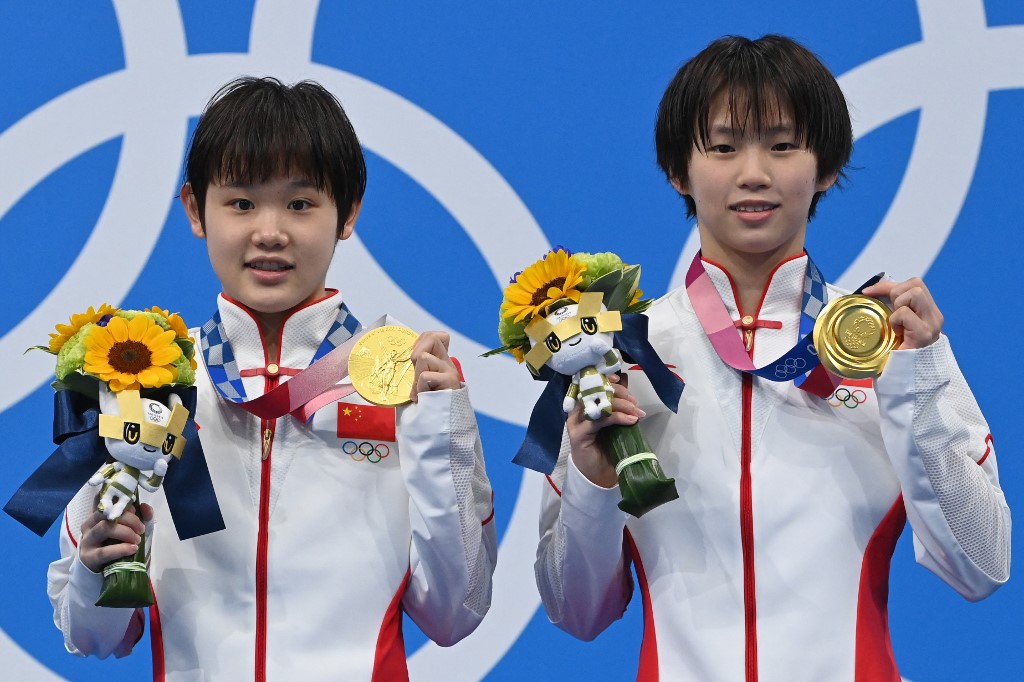
On November 22, 21-year-old Chinese diving star Zhang Jiaqi officially announced her retirement, closing her competitive career with both remarkable honors and lingering regrets. In a recent in-depth interview, she spoke candidly about her journey, her relationship with diving, and the twists of fate that shaped her path.
Zhang Jiaqi’s talent emerged early. At just 12 years old in 2016, she captured a national championship, becoming one of China’s brightest young prospects. However, because she had not yet turned 14, she missed the chance to compete at the Rio Olympics. Later, the Tokyo Olympics were postponed by a year, and during that crucial growth period, Zhang faced significant physical and developmental challenges. In the fierce internal competition with Quan Hongchan, she ultimately lost the battle for the individual event and could only participate in the synchronized discipline. By the 2024 Olympics, she was once again relegated to a substitute role in the team event and did not get the opportunity to compete.
With the rise of Quan Hongchan and Chen Yuxi, Zhang Jiaqi inevitably saw many of her chances slip away. Looking back, she admits to feeling a sense of regret. “The competition is just too intense. In the national diving team, almost no one makes mistakes. Of course, there’s a feeling of bad timing,” she said. “But I accept it. I believe everyone who comes into this world has their own mission to complete.”
“Geniuses being born in the same era can be a kind of tragedy,” she added. “It’s like a cruel ballet in the air.”
During the interview, the reporter also brought up a topic rarely discussed so openly in sports: menstruation and its impact on athletes. Zhang answered without hesitation. “It means the nightmare is starting,” she said. “It affects both your mind and your body. During training, your mood can be very unstable, you get irritable easily, and you often feel physically drained.”
“For ordinary people, it’s a completely normal process,” Zhang continued. “But for us, we have to think about what to do if it happens during a major competition.”
When asked whether she had ever experienced this during a contest, her answer surprised many. “Every time,” she said. “Ever since the Tokyo Olympics, it feels like I’ve encountered my period during almost every competition. I’ve had no choice but to push through and keep diving. It definitely affects my condition. My body feels heavier, and there’s a strong sinking sensation in the lower half.”
As for whether medication could be used to adjust the timing, Zhang explained that while it is possible, she never chose that option. “There are ways to delay it, but I’ve never used them. Once it comes, I just accept it. It might be related to my physical condition since childhood, and also closely linked to emotions and pressure.”
Through her honest reflections, Zhang Jiaqi not only revealed the intense competition and emotional weight behind elite sports, but also shed light on the hidden physical challenges that female athletes endure in silence.