To be fair, “Neck Bro” has been feeling a little too confident lately.
On one hand, yesterday’s 10-yuan scratch card somehow turned into a 50-yuan “fortune.” On the other, the shared bike I ride all the time just launched a discounted monthly plan. Life, which used to feel a bit tight, suddenly looks… suspiciously comfortable.
So if you’ve driven—or even just ridden in—any genuinely impressive luxury cars, drop your recommendations.
Just don’t give me too many, alright? Decision paralysis is real.
Jokes aside, for a long time, choosing a luxury car has basically been a guaranteed “easy question.” If I told you I had close to a million RMB and wanted to buy a luxury vehicle, I don’t even need to read the comments to know what you’d say.
It would be the same handful of familiar European names.
And that’s what makes this phenomenon so interesting. Because in the past few years, plenty of new players have pushed aggressively into premium and luxury territory—releasing models with wild pricing, wild specs, and wild feature lists.
Yet even with these “everything-in-one” new cars, it’s been surprisingly hard to shake the authority European brands hold in the luxury—and ultra-luxury—market.
Have you ever wondered why?
With my “winning” scratch card in my pocket, I jumped into Forza Horizon 5 and test-drove nearly every top-tier car in the garage, trying to figure out the answer. And the moment I blasted a Koenigsegg Jesko to 500 km/h, something clicked—at least a piece of the puzzle.
For many people—and for many new EV brands—what counts as “luxury” is simple: luxury means matching what the legacy fuel-era luxury brands represent.
Because those brands, shaped by history and different technical foundations, each reached the ceiling in specific dimensions—performance, quietness, handling, presence—and turned that into brand value.
When you buy one of those brands, you’re not just buying a car. You’re buying a slice of what that brand stands for, and by extension, becoming a certain kind of person.
If I’m blasting through the map in a Koenigsegg, I’m the performance addict.
If I switch to a Rolls-Royce and cruise, I’m the calm, composed business elite.
If I hop into a Land Rover Defender, I’m suddenly the outdoors-minded off-road executive.
In other words: in the fuel era, luxury was product-led.
And because internal combustion technology evolves slowly and carries massive barriers, “who you are” often gets expressed through the car you choose. The vehicle speaks for you.
A large share of today’s new luxury EV efforts, in my view, are still following that same fuel-era logic.
Yes, they’re loaded with features. Yes, the specs and capabilities can be rare and impressive. But they haven’t truly escaped the old pattern of “pick a car to match a personality,” where the product acts as your identity narrator.
In many cases, these “new luxury EVs” are essentially fuel-era luxury cars with a new powertrain.
That approach isn’t wrong. But it creates two problems.
First, competing head-on with traditional luxury brands using their own playbook is inherently disadvantageous.
Second, within the new-player camp itself, battery and electric tech iterates fast, and top-tier supplier solutions are relatively concentrated. So the “brand value” of many so-called luxury models ends up feeling similar—nothing like the sharp, distinct identities fuel-era luxury managed to build.
So yes, the cars may be good.
But it’s still extremely hard to dethrone traditional luxury brands in reputation and market position.
Which leads to a clear conclusion: if new players want to truly hit legacy luxury brands where it hurts, they need to stop fighting inside the old definition of luxury—and compete on a new track.
The catch? That’s actually harder than competing with traditional automakers. Because honestly… even the European brands themselves may not have fully figured out the next definition of luxury.
That night, while thinking through this messy problem and comparing monthly bike plans across different apps, I saw a piece of news out of the corner of my eye:
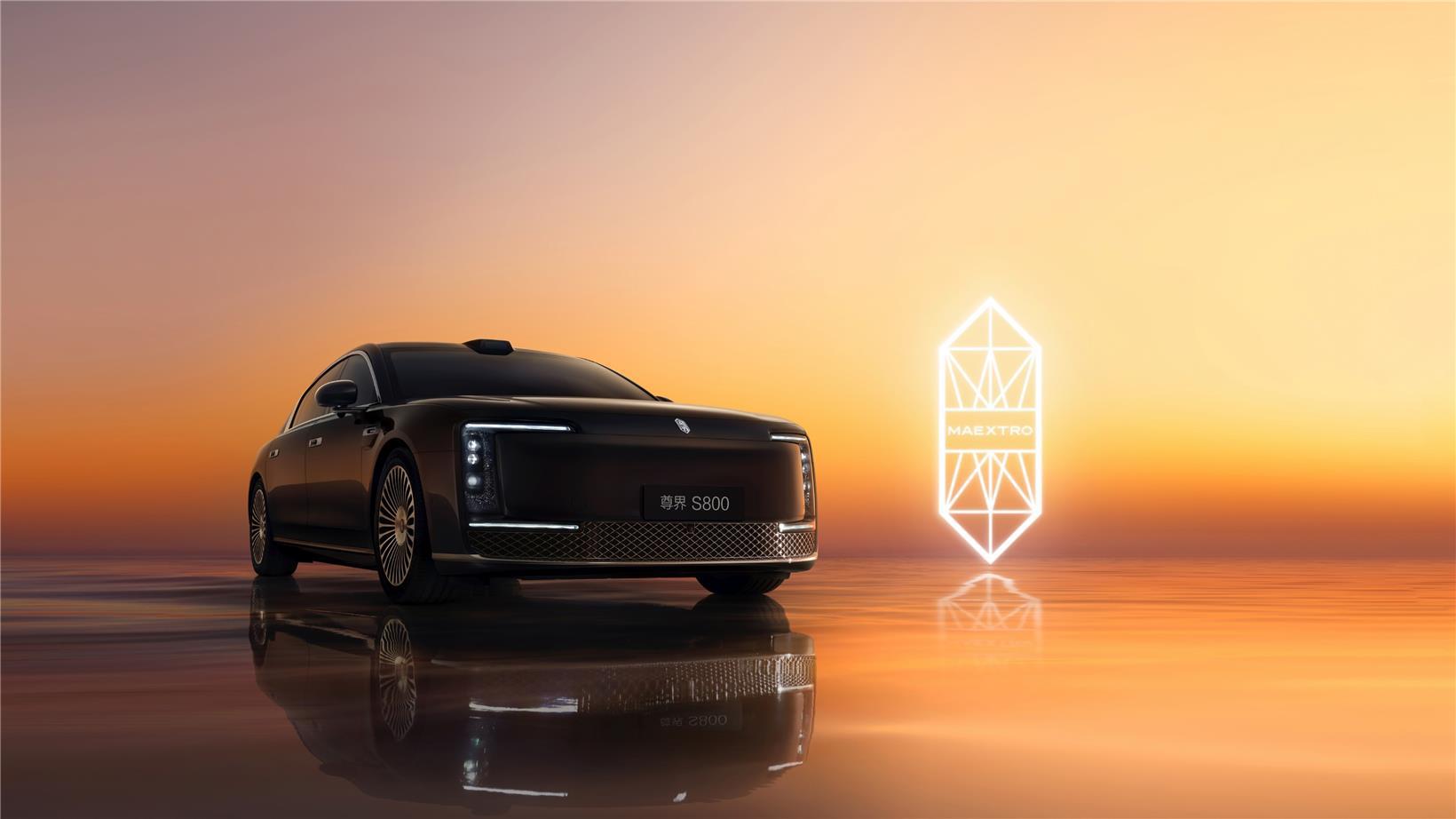
From the launch of the Zunjie S800 to December 16, it had already delivered over 10,000 units.
And this ultra-luxury model—priced at 708,000 to 1,018,000 RMB—delivered 2,145 units in November alone, beating the combined deliveries of the #2 Porsche Panamera and #3 BMW 7 Series.
As more owners started taking delivery, I noticed something else: a lot of them weren’t just showing off—they were actively recommending friends to buy one too.
Wait… isn’t this exactly what people have been waiting for? A brand that can genuinely compete with European luxury players not just in sales, but in word of mouth?
So the real question becomes:
How did Zunjie convince so many buyers to pay luxury-level prices for a new-energy vehicle?
After spending a few days “studying” Zunjie owners (purely for research, of course), I got it.
If fuel-era luxury—and many new luxury EVs—are pursuing luxury defined by the product, then Zunjie is pursuing luxury defined by the user.
This shows up everywhere. Let me give you a few concrete examples.
Unlike other luxury EV sedans that simply pile on materials and show off tech, the S800’s features don’t feel like isolated “modules.” They’re designed along the owner’s movement and behavior flow—more linear, more integrated, more situational.
Take a detail most people wouldn’t even think to mention: the S800 has 13 separate lighting sources across the ceiling. But instead of blasting them all on the moment you open the door, it lights up only the zone you’re actively using.
Even more precise: if you’re reading with a light on, then change posture by activating the zero-gravity seat, the illuminated zone adjusts to keep lighting aligned with the book—still focused on what you’re doing.
Another example: many luxury sedans have a front-rear partition, usually achieved with a screen and a simple divider.
On the S800, rear-seat privacy is something the passenger chooses. With one-tap privacy mode, the projection screen drops, window transparency dims, and sunshades rise. Then the passenger can activate a “privacy sound shield,” using active noise control principles so others can’t clearly hear private rear-seat conversations.
And it doesn’t stop there.
Yes, there’s a car fridge in the rear center—common enough. But inside that fridge is a deeper, separate compartment designed specifically for low-temperature storage of medicine that owners may need to carry with them (marked by the silver handle).
It’s honestly… extremely thoughtful.
And if you look at owners’ delivery posts, many mention the same thing: they bought Zunjie because these “linear,” scenario-driven details match their personal preferences in real use.
That’s the core shift.
Zunjie isn’t trying to give you a label.
It’s acting like an assistant that continuously responds to you.
If old luxury was “your car speaks for you,” then Zunjie’s luxury is closer to “your car becomes an extension of you.”
The car isn’t what’s “high-end” anymore.
The user is.
Even beyond the product, the brand itself carries strong “user-first” DNA—because it sits right at the turning point of China’s evolving elite consumer structure.
One trend you may know: the average age of luxury car owners in China has been falling for years. By November this year, it reached 35—far younger than the roughly 55 in major Western markets.
What you may not realize is how much that youth shift changes consumption preferences.
According to the TMI x BCG China Elite Lifestyle Insights Report (2025 edition), the Z-generation “super elites” have the most diversified spending categories.
Traditional luxury goods make up only about 35% of their spending, while the largest share goes to newly released cutting-edge smart devices.
At the same time, the older “old money” group—people who already owned fuel-era luxury cars—has entered a new replacement cycle.
Zunjie’s own early data showed that among S800 buyers, 50% were additional purchases and 30% were replacements—and most already owned luxury brands like Maybach and Porsche.
For them, intelligent features are a must—but classic, old-school luxury cues are non-negotiable too.
And that’s exactly what the S800 delivers: leather nearly everywhere, continuous-grain real wood panels, and finely executed crystal-and-metal craftsmanship.
Look at it that way, Zunjie isn’t abandoning traditional luxury—it’s preserving the essence, while redefining the center of gravity.
Young new elites want more advanced technology and smarter experiences.
Established elites want something that goes beyond legacy luxury—something that understands them better.
With Huawei’s technology backbone and a user-defined approach to luxury, it’s honestly hard for Zunjie not to win the recognition of this crowd.
At that point, everything suddenly made sense. I stood up—too excited—and the scratch card slid right out of my pocket onto the floor.
Luxury has never been just about how powerful the product is. It’s about how the people buying it extend their identity, their preferences, and their daily life through it.
Chasing “upper limits” on specs while ignoring the tiny real-world scenes where users actually feel cared for—that’s missing the point.
And now that Zunjie seems to have figured out what luxury really means in this new era, I suspect domestic luxury brands will increasingly move in the same direction.
I picked up the scratch card from the ground.
And for future elite car owners, the best part may be this:
They’re about to experience things the fuel era never offered at all.
Written by: Zhìmìng Kōngqiāng
Edited by: Neck Twist Right & Noodles
Design: Huànyán
Sources:
Tencent Marketing Insights: China Elite Lifestyle Insights Report (2025 edition)
“S800 delivers 10,000+ in 202 days…”
“China luxury owners average age 35…”
“China elites reshaping premium markets…”
Zunjie Auto – HarmonyOS Mobility
Xiaohongshu