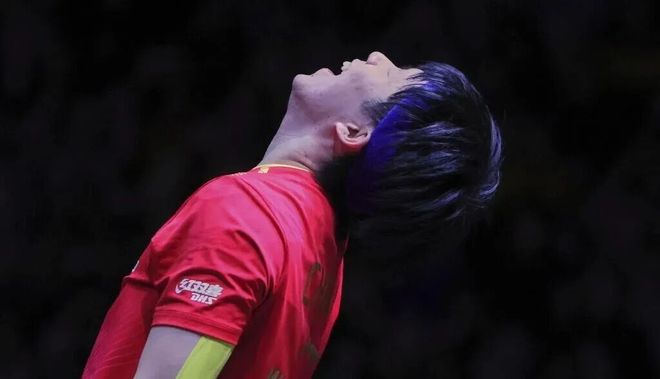
Recently, the debate over “who is stronger, Wang Chuqin or Tomokazu Harimoto” has reignited in the ping pong community. During a live broadcast, a prominent commentator suggested that “Wang Chuqin’s singles level is slightly below Harimoto,” sparking heated discussions. Some questioned Wang’s Olympic performance, while others defended him. This debate reflects the pressure and expectations facing new-generation players.
Technical Comparison: Versatility vs. Explosiveness
Wang Chuqin’s left-handed shakehand style combines power with precision. His backhand spin is deceptive, forehand loops are stable, and his short game is textbook-level. In the 2025 WTT US Grand Slam final, Wang swept Harimoto 4-0, dominating the backhand exchanges. According to ITTF stats, Wang has won 11 of 13 encounters with Harimoto.
Harimoto excels with fast close-to-table attacks and high-speed backhands up to 87 km/h, with varied serves. However, his forehand consistency is lower, and he is prone to mental fluctuations in key points. In the 2025 Yokohama final, he lost a 3-0 lead due to impatience.
Big-Stage Performance: Pressure Handling
After failing in men’s singles at the 2024 Paris Olympics, Wang rebuilt confidence by winning the Doha World Championships and sweeping Harimoto at the Fukuoka Grand Finals. His consecutive victories at the 2025 Asian Cup and Chongqing Open confirmed his improved pressure-handling ability.
Harimoto, while ending Wang’s eight-match winning streak in Yokohama 2025, struggles with overall consistency. High-pressure matches, such as the US Grand Slam semifinals, exposed his weaknesses.
Controversy: Olympic Strategy and Withdrawal
Wang has been criticized for relying on mixed and men’s doubles, yet this aligns with team strategy. His withdrawal from the WTT Hong Kong Grand Slam was due to a recurring back injury, not fear of Harimoto. Competitive sports have no permanent “number one.” The rivalry between Wang and Harimoto represents both skill and growth.
“Losing doesn’t mean failing; growth takes time. Without room for error, how can we talk about the future?”