“This cocktail looks great and tastes good, perfect for gatherings with friends,” said Zhang Qiqi (pseudonym), a post-2000s consumer, shopping with friends at Hema, Beijing, on December 29 for New Year’s celebrations. Similar scenes have played out nationwide, with low-alcohol beverage promotional zones prominently displayed in supermarkets, attracting young shoppers.
The low-alcohol market has expanded rapidly. According to the “Low-Alcohol Trend Report” by TMIC and Kantar, China’s market grew from 20 billion CNY in 2020 to over 57 billion CNY in 2024. Globally, the market reached 634.17 billion CNY in 2023 and is projected to surpass 740 billion CNY by 2025.
New Players Enter the Market
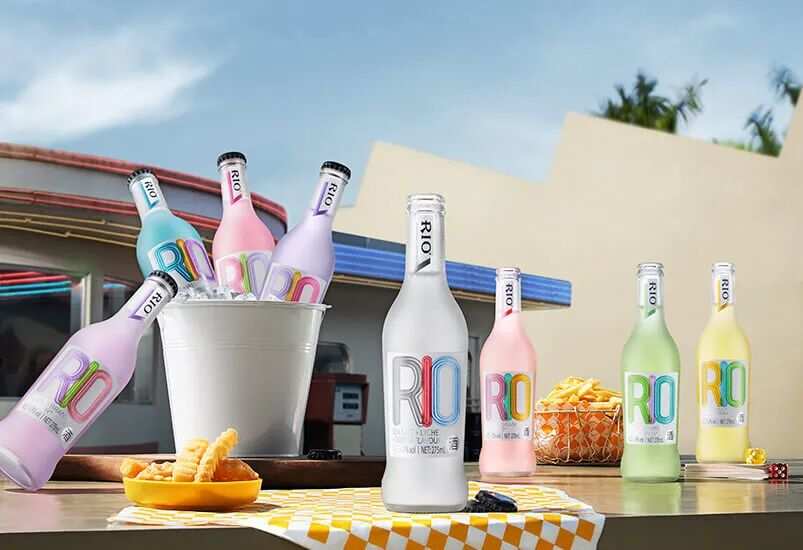
From early experiments in the 1970s-80s to today’s trendy beverages, low-alcohol drinks have undergone multiple waves of innovation. Pineapple beer emerged as a pioneer, while Bacardi “Bingrui” and RIO cocktails competed in the 2000s. RIO captured the market quickly through “young and fashionable” branding. Post-2020, brands like Meijian, Berry Sweet, and Luoyin leveraged social media and specialty bars to boost visibility.
By 2025, the market is crowded: traditional liquor producers Moutai, Wuliangye, and Luzhou Laojiao have launched low-alcohol fruit wines, while retail and dining chains like Hema and 7Fresh rolled out their own products. New launches such as Hema’s Autumn Pear Rice Wine and 7Fresh’s Cream Cheese Rice Wine sold out immediately.
Changing Consumer Trends
Young consumers’ preferences are shifting from “banquet culture” to “pleasant buzz.” Key consumption scenarios include home drinking, camping, and gatherings with friends. Adults aged 18-35 account for 68% of sales, with 62% female. Health consciousness drives the preference for low-alcohol beverages, while traditional high-proof liquors lose appeal. National statistics show China’s white liquor production fell 11.5% year-on-year for Jan-Oct 2025, marking nine consecutive years of decline.
Brand Challenges
Despite the craze, profitability is elusive. RIO’s parent company, Bailun Co., reported 22.7 billion CNY revenue in the first three quarters of 2025 (-4.89% YoY) and net profit of 5.49 billion CNY (-4.35% YoY). Analysts note young consumers face “sweet drink fatigue,” repeat purchases are declining, and innovation in health and scenarios is still needed. OEM production allows rapid iteration but leads to homogenization and limited brand differentiation.
Conclusion
While low-alcohol beverages have captured young consumers, true “star” brands that dominate mindshare and traffic remain rare. The category is lively, but brand profitability and long-term competitiveness remain challenges.