At 7:30 p.m. Beijing time on the evening of January 11 (tomorrow night), China’s U23 national team will step into its second group-stage match of this U23 Asian Cup, facing the strongest side in the group: Australia’s “Socceroos” U23s.
Even at U23 level, Australia bring the same familiar identity as their senior team—tall, powerful, direct, and intensely physical. And as history has repeatedly shown, this is exactly the kind of opponent Chinese teams tend to find the most uncomfortable. That means this clash is shaping up to be a fierce, unpredictable battle with no margin for error.
In the opening round, Australia edged Thailand 2–1 to take control of Group D at the top of the table. China, meanwhile, were held to a 0–0 draw by Iraq, leaving them in third place after matchday one. With the standings tightening quickly, China ideally need a win against Australia to seize momentum; otherwise, the final group match against Thailand could become a situation where China no longer control their own fate.
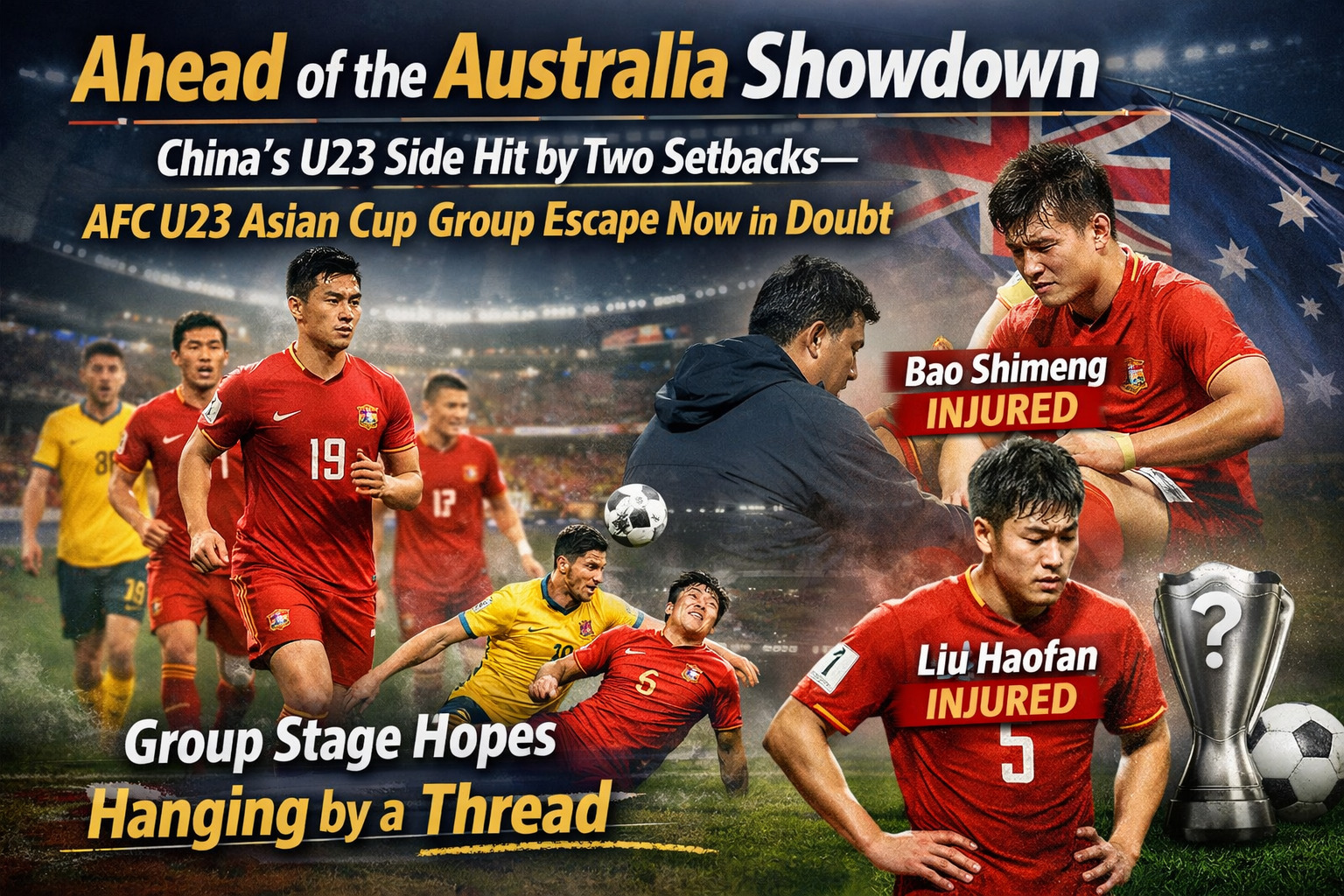
However, just as this crucial contest approaches, China have been hit by two discouraging updates on the injury front. Bao Shimeng, who was forced off early against Iraq, has suffered a serious injury and is certain to miss another match. At the same time, defensive mainstay Liu Haofan—who had already been sidelined—has still not recovered and is highly likely to remain unavailable. With two starting defenders both out of contention, it’s a painful double blow for the team’s back line.
Bao Shimeng operates as a wing-back and is a key piece in China’s 5-3-2 system, especially in protecting the flanks. His ability to shuttle up and down the touchline allows him to combine defensive pressure, interception, and cover in wide areas. His early exit against Iraq already exposed the team’s vulnerability on the wings. Against Australia’s tall, aggressive wide players, Bao’s absence could open up even larger gaps, inviting the opponent to attack down the sides, deliver crosses, and immediately threaten the penalty area. While a replacement can fill the position, matching Bao’s endurance, defensive instincts, and experience under sustained pressure will be a major challenge.
Liu Haofan, meanwhile, is a central defender and an essential barrier in the heart of the defense. Known for his composure, positioning, and strong ability to intercept and clear danger, he has proven his value in previous continental tournaments by repeatedly shutting down attacks. His physical profile and defensive awareness are exactly the qualities needed to combat Australia’s aerial strength and heavy contact in the box. With Liu still unavailable, China’s center-back depth is stretched thin, and the remaining options appear to be at a disadvantage in height and duels. Against a team that loves to attack with high balls and forceful penalty-area play, the room for defensive error shrinks dramatically.
In short, if both players are indeed unable to feature, the stability of China’s defensive structure will take a significant hit. And if the back line cannot effectively contain Australia’s direct and physical attack, defeat becomes a very real possibility. Should China lose this round, they would likely surrender control of their qualification path—leaving their hopes of progressing from the group hanging by a thread.