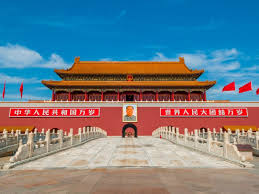
In 2025, China witnessed a major economic milestone: Shanghai’s GDP reached 5.67 trillion yuan, while Beijing’s GDP hit 5.2 trillion yuan, both growing 5.4% year-on-year and outperforming the national average. Beijing thus became the second “5 trillion yuan city” in China, trailing only Shanghai.
01. How did Beijing and Shanghai reach 5 trillion yuan?
Shanghai’s economy is supported by key industries including automotive, AI, biomedicine, finance, and trade. Beijing, in contrast, relies on high-end services, with the tertiary sector accounting for over 85% of its GDP.
- Top sector: Information technology and software services (internet industry), contributing over 1 trillion yuan and nearly one-quarter of GDP.
- Second sector: Finance, contributing over 800 billion yuan, outpacing Guangzhou by nearly 500 billion yuan.
- Third sector: Technology services, generating nearly 400 billion yuan (around 8% of GDP), leveraging universities and research institutes for high-end talent.
Despite limited industrial base, Beijing’s focus on internet, finance, and research has carved a unique path of high-quality development.
02. Why is Beijing ahead of Guangzhou and Shenzhen?
Beijing crossed the trillion-yuan GDP threshold in 2008, followed by Guangzhou and Shenzhen in 2010.
- Census adjustments: The 2018 and 2023 economic censuses added 600–700 billion yuan to Beijing and Shanghai combined, compared with only 100 billion for Guangzhou and Shenzhen.
- City status: Beijing and Shanghai are municipalities directly under the central government, benefiting from strategic and policy advantages, whereas Guangzhou and Shenzhen rely on market-driven growth.
03. Will China’s top city title change hands?
Though Beijing has reached 5 trillion yuan, Shanghai still leads at 5.67 trillion. Historically, Beijing has been catching up: in 1978 its GDP was 40% of Shanghai’s, reaching 94% by 2021. A shift in key industries could still alter the top city ranking in the future.
04. How do Beijing and Shanghai divide roles?
According to the 2035 master plan:
- Beijing: National political, cultural, international exchange, and science & innovation center.
- Shanghai: International economic, financial, trade, shipping, and global tech innovation center.
Beijing excels in capital functions and research capabilities, Shanghai in economy, finance, and trade. Their complementary roles provide strong momentum for China’s economic growth.
5 trillion yuan is not the ceiling — whether Beijing and Shanghai can surpass New York or Tokyo remains to be seen.