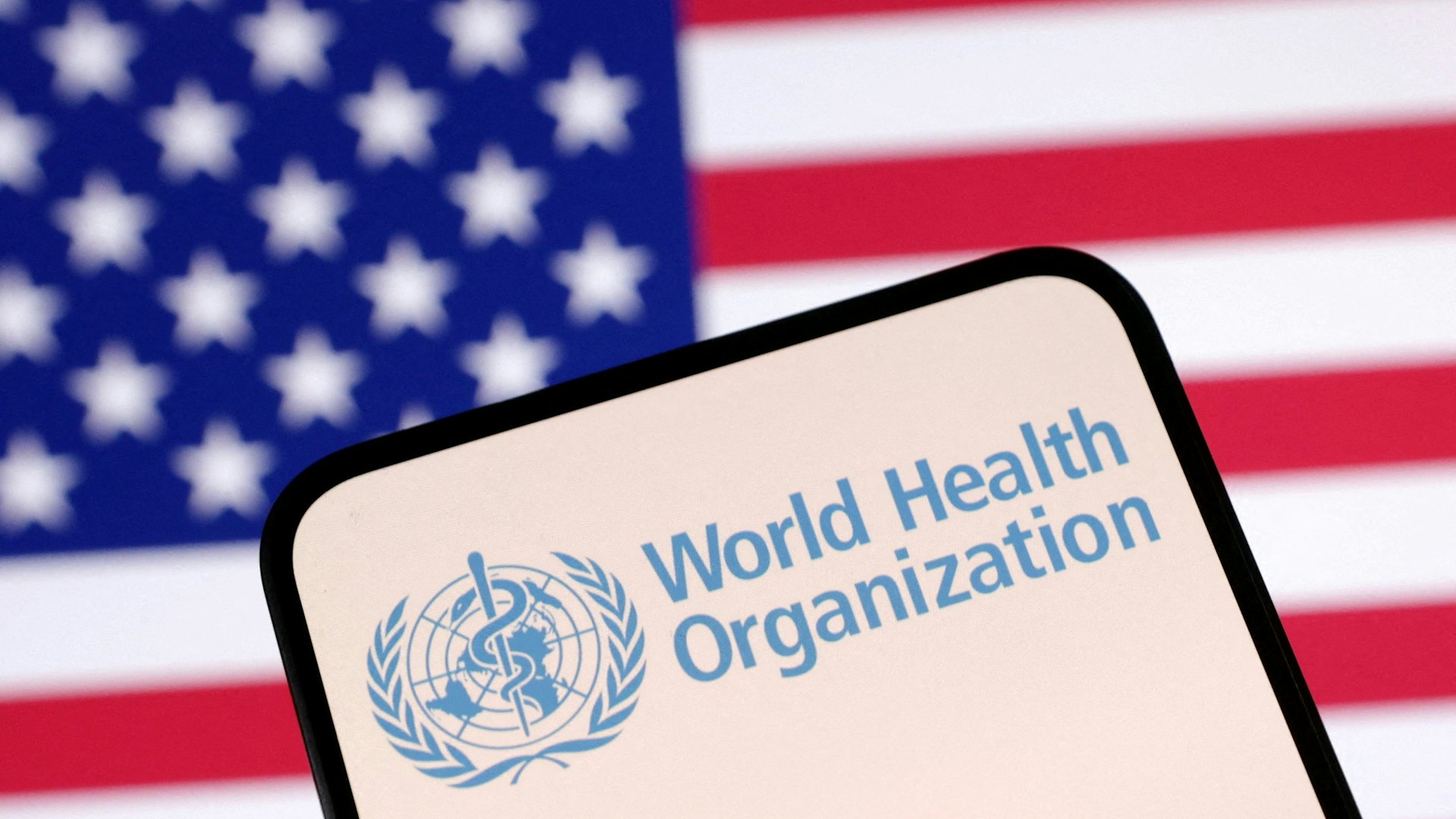
On January 22, 2026, the United States formally notified the United Nations of its withdrawal from the World Health Organization (WHO), completing the procedural step one year after President Trump signed an executive order on January 20, 2025. According to WHO rules, a member state may formally exit one year after submitting its withdrawal notice — a condition now met.
Procedural completion, however, does not eliminate practical challenges. WHO spokesperson Lindmeier emphasized that while the U.S. has the right to leave, it must settle all outstanding contributions. As of now, the U.S. has not paid its 2024 and 2025 dues, totaling approximately $260 million. This issue is scheduled for discussion at the upcoming WHO Executive Board meeting. In other words, leaving does not erase obligations; multilateral mechanisms continue to operate regardless of political decisions.
Financial considerations are cited as a key driver of the withdrawal. The Trump administration argued that contributions to multilateral institutions no longer serve “U.S. interests,” framing the WHO exit as a step toward reinforcing the “America First” policy. Analysts note this approach is part of a broader trend: the U.S. is reducing engagement with multilateral institutions, prioritizing only actions that serve immediate national interests.
Domestic politics also play a critical role. With the 2026 midterm elections approaching, amidst high inflation and public pressure, a series of “withdrawal” moves has been used to strengthen the political narrative of “sovereignty first” and “no longer paying for the world.” While such moves are visible and low-cost politically, the logic of public health does not follow election cycles. WHO repeatedly stresses the irreplaceability of global disease surveillance, information sharing, and emergency response systems.
Infectious diseases know no borders; withdrawing from these mechanisms creates structural gaps in public health. This is not merely a financial issue, but a long-term security concern. WHO Director-General Tedros Adhanom Ghebreyesus has repeatedly warned that the U.S. decision could impact global health governance and, in turn, the U.S.’s own safety. When the “smoke alarm” of global public health is cut off, the first consequences will likely be systemic failures in early warning capabilities.