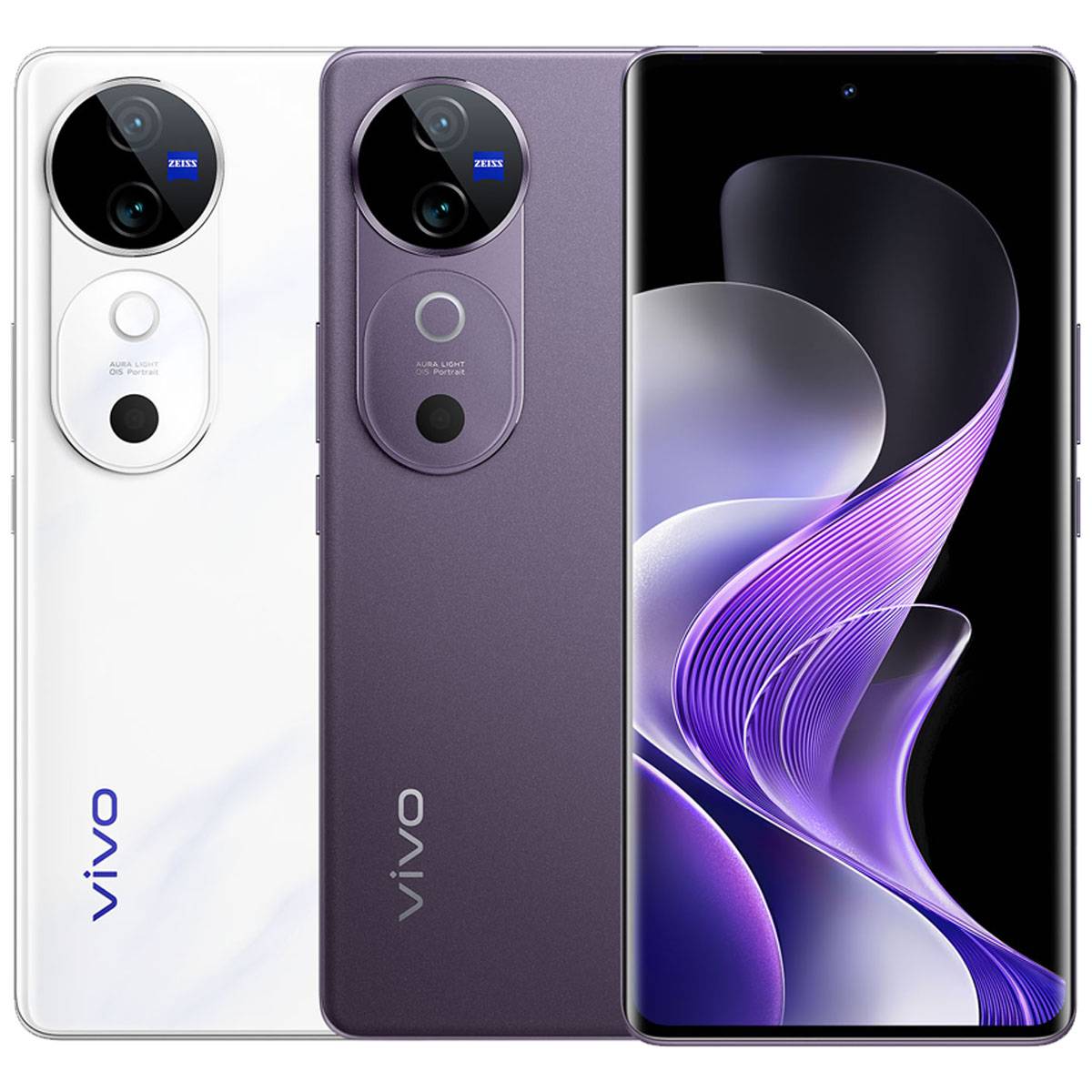
China’s smartphone market hierarchy has undergone another notable reshuffle.
According to data from IDC, China’s smartphone shipments reached 285 million units in 2025, a slight year-on-year decline of 0.6%. In an intensely competitive, largely saturated market, Huawei reclaimed the top spot in market share for the first time in several years.
For vivo, the outcome was particularly painful. With shipments of 46.1 million units and a 16.2% market share, vivo slipped from first place last year to third, while its shipments fell 6.6% year on year—the steepest decline among major vendors. Xiaomi and OPPO followed with market shares of 15.4% and 15.2%, ranking fourth and fifth respectively.
That said, the figures are not without controversy. According to BCI activation data shared by industry bloggers, vivo still leads when measured by device activations rather than shipments. What is clear, however, is just how tightly packed the top players are—underscoring the ferocity of competition in today’s stock-driven market.
Looking at the full year, China’s smartphone shipments totaled roughly 285 million units in 2025, down 0.6% year on year. The market saw a noticeable lift in the first half, buoyed by government subsidies, but momentum faded in the second half as those subsidies were gradually suspended, returning the market to a mild contraction.
Heading into 2026, the global smartphone industry will also face mounting cost pressures from sharply rising memory prices, pushing manufacturers into what is likely to become a prolonged war of attrition.
For vivo, whose leadership position now looks increasingly fragile, the question is how it can defend its existing base while continuing to move forward.
A shaky grip on the top spot
vivo’s slide from the top did not come without warning.
IDC’s first-quarter 2025 data showed vivo ranking fourth with a 14.6% market share—a stark contrast to its status as China’s top vendor just a year earlier. At that point, the ultra-premium X200U and the incremental X200S had yet to launch, while the X200 and X200 Pro series were already in the latter half of their sales cycles. vivo simply lacked fresh momentum in the high-end segment.
Its position improved gradually in the second and third quarters. By the fourth quarter, IDC data indicated that Apple—driven by the highly distinctive iPhone 17 series—returned to the top spot in China’s quarterly rankings after a one-year absence. vivo followed as the leading domestic brand, with OPPO and Huawei close behind, and Honor and Xiaomi tied further down the list.
By year-end, all major brands had rolled out their flagship models. vivo’s X300 series took a different path from rivals: while maintaining its strength in imaging hardware, it did not fully embrace the trend toward ultra-large batteries.
At a time when competitors were pushing battery capacities beyond 7,000mAh, the vivo X300 Pro topped out at 6,510mAh. Its edge lay instead in imaging, featuring a Zeiss 200-megapixel APO super-telephoto lens and vivo’s in-house BlueImage dual-chip solution, earning it a reputation as a “sports-viewing powerhouse.”
This differentiated strategy paid off in sales. According to figures from industry tracker “RD Observation,” combined sales of the two X300 models surpassed those of the previous X200 series within roughly two months of launch. Over the same period, flagship lines such as the Xiaomi 17 series, OPPO Find X9 series, and Honor Magic 8 series all saw declines compared with their predecessors.
These trends suggest that vivo’s loss of overall market leadership was driven primarily by pressure in its mid- and low-end segments.
For years, vivo—much like its close peer OPPO—has relied on a broad “model-sea” strategy, covering every price tier with dense product lineups. Under the vivo brand sit the flagship X series, the midrange S series, and the entry-level Y series, while sub-brand iQOO targets performance-focused users with its numbered, Neo, and Z series.
This multi-tiered approach has long allowed vivo to address diverse consumer needs. The X series emphasizes imaging excellence and steady iteration, prioritizing product success and reputation, while iQOO operates more independently, competing head-on in the performance and esports arena.
In 2025, vivo doubled down on this strategy. According to industry sources, vivo and iQOO together launched 81 models in China’s retail market—49 under the vivo brand and 32 under iQOO—second only to OPPO’s broader ecosystem.
Whether this approach remains viable is now an open question.
China’s smartphone market has developed two defining traits in recent years. First, premiumization: devices priced above USD 600 (or RMB 4,000) accounted for 31.1% of the market by the third quarter of 2025. Second, the shift from an expansionary to a saturated market, with shipments declining in 2025 and expected to fall further in 2026.
Both trends weigh heavily on the mid- and low-end segments. Breaking into the high end has become essential—not only to unlock new demand, but also to secure higher margins amid rising component costs.
For vivo, pushing further upmarket in 2026 is unavoidable, yet the road ahead in the premium segment remains long.
Still mastering the art of “doing the right thing”
vivo has long championed its philosophy of “benfen,” or doing the right thing—putting users at the center of its decisions.
From a hardware standpoint, vivo’s specifications are often competitive with the best in the market. Where it has struggled is in delivering consistently refined user experiences.
Despite deep investments in design, imaging, software, and performance, vivo’s proudest strength—imaging—has again highlighted a familiar dilemma: strong parameters do not always translate into effortless experience.
“The AI feel is just too heavy,” one user who switched from an iPhone 17 Pro Max to a vivo X300 Pro told local media. “The telephoto with the extender is incredible, but for everyday indoor photos it’s nowhere near as intuitive as Apple. With an iPhone, anyone can take a good photo. With vivo, you still need to tweak settings.”
He also cited shortcomings in audio performance, noting lower volume, weaker spatial sound, and limited gains from advanced audio modes.
Such peripheral experiences—often absent from spec sheets—have long been an area where domestic brands cut corners. In 2025’s flagship battles, speaker performance on the Honor Magic 8 and REDMI K90 series drew praise, while vivo and OPPO faced frequent criticism. Vibration motor quality, too, saw compromises across several brands.
vivo has also stumbled in managing user sentiment. In mid-2025, owners of the X200 Ultra noticed that newer models received camera filter updates while the most expensive “ultra” variant did not. When questioned, a senior PR executive dismissed the complaints as “childish,” triggering a wave of backlash that only subsided after a formal apology.
In an era where AI dominates the narrative, smartphones remain the most important entry point—and vivo has sought a seat at the table. The X200 launch in 2024 highlighted AI-driven features in OriginOS 5, including search, reminders, and meeting assistance powered by its BlueHeart AI.
Yet in the first half of 2025, vivo scaled back investment in large cloud-based models, shifting focus toward on-device AI. By the X300 launch in October, AI features received far less emphasis than imaging.
User feedback reflects this gap. “The scheduling assistant often misunderstands clear commands,” one X200s user noted after a system update. “It either asks unnecessary follow-up questions or distorts what I want it to remind me of.”
These challenges are not unique to vivo. According to Zhang Yi, CEO of iMedia Research, limitations in lightweight on-device models, NPU efficiency, and fragmented ecosystems have so far prevented AI from delivering truly transformative smartphone experiences. In his view, it may take at least another two years for AI value to be fully realized through technical advances and cross-device collaboration.
Disappointing experiences and missteps in public communication can significantly erode user trust. A June 2025 report from QuestMobile showed that only 39% of vivo users expressed strong brand loyalty—below Huawei, Apple, and OPPO. After experience-related controversies, that figure could fall further.
What emerges is a broader truth: as domestic brands push upmarket, unresolved issues in seemingly basic areas can become decisive factors in user confidence.
Building a business may be hard, but defending success is even harder. With costs rising and competition set to intensify in 2026, vivo will need to continue strengthening its fundamentals if it hopes to secure its place in an increasingly unforgiving market.