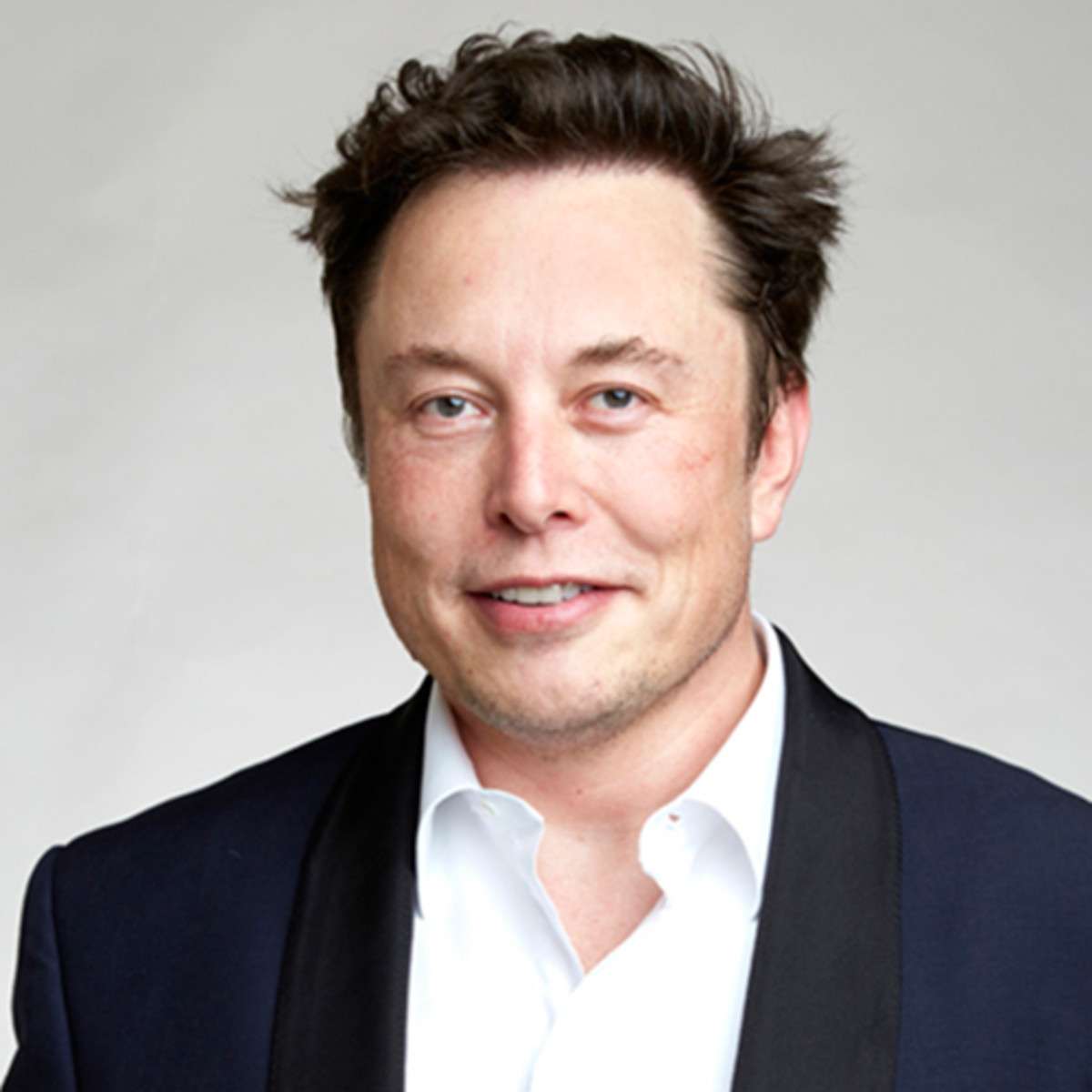
As is widely known, Elon Musk is an extreme workaholic—operating at full throttle year-round, day and night, with virtually no downtime. Jeff Bezos, by contrast, has stepped away from Amazon’s day-to-day operations, embracing a more relaxed lifestyle of global travel, luxury homes, and yachts, seemingly enjoying life to the fullest.
Bezos’s ability to semi-retire, however, rests on a foundation of trusted leadership. Since Andy Jassy took over as CEO, Amazon has continued to dominate both e-commerce and cloud computing, while remaining firmly in the top tier of the global AI arms race.
Just yesterday, another Bezos-backed venture made headlines. Blue Origin unexpectedly unveiled an ambitious satellite network plan called TeraWave, which aims to deploy 5,408 satellites in Earth orbit. According to the announcement, the network will be capable of delivering up to 6 Tbps of symmetric data transmission anywhere on the planet—far exceeding the capabilities of the current market leader, SpaceX’s Starlink. Deployment of the TeraWave constellation is scheduled to begin by the end of next year.
This announcement signals a new phase in the global satellite internet race and marks a renewed escalation in the two-decade-long space rivalry between Bezos and Musk. Once TeraWave becomes operational, Starlink will no longer enjoy uncontested dominance in this domain.
Interestingly, the relationship between the two billionaires has evolved. Today, they are no longer purely adversaries but increasingly positioned as partners in advancing space exploration. They also share overlapping political interests and, over the past year, have visibly shifted from rivals to allies, publicly praising one another on multiple occasions.
Different technological paths
From a technical standpoint, TeraWave and Starlink are pursuing fundamentally different strategies. Starlink currently has more than 9,400 satellites in orbit, with plans to expand to between 12,000 and 50,000 satellites. These operate primarily in low Earth orbit at around 550 kilometers (to be lowered to 480 kilometers by 2026), delivering 100–200 Mbps broadband service to over 9 million users worldwide, with future speeds expected to reach 1 Tbps.
TeraWave, on the other hand, plans to deploy 5,408 satellites, including 5,280 in low Earth orbit and 128 in medium Earth orbit. This dual-orbit architecture relies on laser-based optical inter-satellite links to provide ultra-high-speed connectivity of up to 6 Tbps, while its Q/V-band links can deliver up to 144 Gbps.
The most critical difference, however, lies not in raw specifications but in customer focus. TeraWave is designed to serve a maximum of 100,000 enterprise, data center, and government clients, explicitly excluding consumer users. Starlink, by contrast, already serves more than 9 million active customers worldwide.
This divergence reflects a deeper contrast in business philosophy. Starlink follows a mass-market strategy, deploying vast numbers of satellites to serve tens of millions of everyday users across the globe.
Since 2019, SpaceX has placed more than 9,400 satellites into orbit, including over 6,000 V2 Mini satellites. The company plans to begin deploying its third-generation satellites in the first half of 2026, each with downlink capacity exceeding 1 Tbps. Each Starship launch could add up to 60 Tbps of network capacity—roughly 20 times current levels. This approach embodies Musk’s signature style: scale, rapid iteration, and cost leadership.
Bezos’s TeraWave, by contrast, targets a premium, high-end market. Blue Origin CEO Dave Limp has emphasized that “TeraWave is built specifically for enterprise customers.” Its core advantage lies in satellite-to-satellite laser optical communications, which provide exceptionally high bandwidth and fully symmetric upload and download speeds. This makes it ideal for multinational data center interconnection, secure government and defense communications, high-frequency financial trading, and edge computing for AI and cloud services.
A dual-track strategy
From a commercial perspective, this differentiated competition is both a strategic choice and a practical necessity. Blue Origin’s launch capabilities still trail far behind SpaceX. New Glenn achieved its first successful flight only in 2025, whereas SpaceX’s Falcon 9 has completed thousands of launches, including 138 missions in 2024 alone.
Bezos has therefore chosen to focus on a market SpaceX has not fully penetrated, avoiding a direct confrontation in Musk’s strongest arena of large-scale deployment. This contrast mirrors their personalities: Musk prioritizes speed and scale, while Bezos emphasizes precision, patience, and quality.
At the same time, Amazon operates its own satellite broadband initiative—Amazon Leo, previously known as Project Kuiper—which is entirely separate from Blue Origin’s TeraWave. Like TeraWave, Amazon Leo satellites will also be launched using Blue Origin’s New Glenn rocket.
In practice, Amazon Leo represents the most direct competitor to Starlink. It targets consumers, businesses, and underserved regions with broadband services ranging from 100 Mbps to 1 Gbps, closely resembling Starlink’s residential and small-business offerings. Amazon Leo has already launched around 180 satellites, with a planned total of 3,236, and aims to accelerate deployment and begin commercial operations in 2026.
Taken together, Bezos is pursuing a clear dual-track strategy in satellite internet. Amazon Leo focuses on mass-market broadband integrated with the AWS ecosystem, while TeraWave targets high-end B2B, data center, and ultra-high-speed backbone connectivity. This approach avoids internal competition, challenges Starlink across different market segments, and simultaneously creates additional launch demand for Blue Origin’s rockets.
A tense dinner that set the tone
The rivalry between Bezos and Musk dates back to an awkward dinner in 2004. At the time, Musk had founded SpaceX just two years earlier and reached out to Bezos to exchange visits to each other’s space projects. Notably, Bezos had founded Blue Origin in 2000—two years before SpaceX.
Like Musk, Bezos dreamed of space exploration from a young age. His high school graduation speech focused on moving humanity off Earth and turning the planet into a national park. Shortly after Amazon’s IPO, Bezos quietly assembled top scientists and science-fiction writers to form a secret space research lab.
According to Walter Isaacson’s biography of Musk, after Bezos visited SpaceX, Musk sent him a “rather short” email complaining that Bezos had not reciprocated with an invitation to Blue Origin. Bezos later invited Musk and his wife to dinner, but the atmosphere was tense. As Bezos outlined his ideas, Musk bluntly dismissed many of them.
Musk later recalled telling Bezos, “We tried that, and it turned out to be really stupid, so don’t do what we did.” He believed he was offering tough but valuable advice, though he felt Bezos largely ignored it. That uncomfortable dinner foreshadowed more than two decades of rivalry.
Open conflict erupted in 2013, when SpaceX sought a 20-year exclusive lease of Launch Complex 39A at Kennedy Space Center. Blue Origin and United Launch Alliance opposed the plan, with Bezos proposing the pad be converted into a shared commercial spaceport rather than monopolized by a single company.
Escalation and public jabs
Musk has never been shy about criticizing rivals he dislikes. In response to Bezos’s shared-launch-pad proposal, Musk famously retorted that if Blue Origin could build a NASA-certified crewed rocket and dock with the ISS within five years, SpaceX would gladly accommodate them—adding that Blue Origin had yet to even reach orbit at the time.
In 2014, Blue Origin secured a broad patent covering sea-based rocket recovery. SpaceX challenged the patent, arguing it hindered innovation. After a review by the U.S. Patent Office, the core claims were invalidated, clearing the way for SpaceX’s ocean-landing recovery program. This patent battle became a defining moment in their long-running competition.
By 2019, the rivalry expanded into commercial strategy. Bezos criticized SpaceX’s Mars colonization plans as unrealistic, while Musk dismissed Blue Origin’s satellite ambitions as imitation, mocking Bezos for following in his footsteps. The tension spilled into autonomous driving in 2020, when Amazon acquired Zoox for $1.2 billion, prompting Musk to again label Bezos a “copycat.”
The feud peaked in 2021 after NASA awarded SpaceX a $2.9 billion Artemis lunar lander contract. Blue Origin sued NASA, claiming it had promised two awards. Musk responded with a cutting remark: “You can’t sue your way to the Moon.”
Although Blue Origin lost the lawsuit, NASA later selected it in 2023 as a second lunar lander provider, awarding contracts worth roughly $1.5 billion each—restoring a degree of balance.
In June 2024, Blue Origin filed a complaint with the FAA seeking to limit SpaceX’s Starship launch frequency on environmental grounds. Musk responded by dubbing the company “Sue Origin,” calling the move hypocritical.
A political rapprochement
Surprisingly, relations began to thaw in 2025 following Donald Trump’s return to office. Musk and Bezos started praising each other publicly, and Amazon resumed advertising on Musk’s X platform.
Both share strong opposition to the previous administration’s antitrust policies and proposed billionaire taxes, aligning them politically. Musk reportedly spent over $250 million supporting Trump’s campaign, while Bezos restructured The Washington Post and declined to endorse a Democratic candidate during the election. After relocating to Florida, Bezos even became a neighbor and close associate of Trump’s family.
As their relationship improved, both space companies achieved major milestones. In early 2025, Blue Origin’s New Glenn successfully completed its maiden flight and booster recovery in Florida, breaking a decade-long cold war between the two camps. Musk publicly reposted the launch video on X, welcoming Blue Origin to the “reusability club,” while Bezos replied with rare public thanks.
Later that year, during Artemis program coordination meetings, mutual respect became more visible. With Starship and Blue Origin’s Blue Moon lander complementing each other, Bezos praised SpaceX’s rapid iteration, while Musk acknowledged Blue Origin’s long-term vision.
Research from the University of East Anglia suggests their rivalry is not zero-sum. Bezos envisions massive space stations, while Musk aims to colonize Mars—goals that can coexist. By effectively dividing the space economy, they avoid direct conflict, though competition in Earth-orbit satellite networks remains very real.
The risks of unchecked competition
Satellite internet is increasingly becoming a geopolitical tool. Beyond the U.S., China, the EU, Russia, and Canada are all accelerating their own constellations, introducing new risks.
Space debris and collision hazards are among the most pressing concerns. Starlink alone accounts for about 65% of all active satellites in orbit. In December 2025, a malfunctioning Starlink satellite released propellant vapor and debris, highlighting the challenges of managing constellations at such scale.
In January 2026, SpaceX announced plans to lower 4,400 satellites from 550 km to 480 km to improve safety, enabling failed satellites to burn up in the atmosphere within months instead of years. Such unprecedented orbital maneuvers demonstrate SpaceX’s technical dominance—but also its ability to reshape orbital dynamics at will.
Astronomical interference is another growing concern. Scientists warn that by the late 2030s, satellite constellations could obscure large portions of telescope observations permanently. Despite mitigation efforts, sheer numbers remain a problem, as do spectrum and orbital resource disputes.
Ultimately, regulation is the weakest link. Existing treaties ban weapons in space but place few limits on commercial satellites. The International Telecommunication Union manages spectrum, not collisions or debris. Without coordinated oversight, Earth orbit could soon be crowded with hundreds of thousands of satellites.
If this race continues unchecked—driven by national rivalry and profit rather than science—we may risk losing the safety and sustainability of Earth orbit long before humanity ever sets foot on Mars.