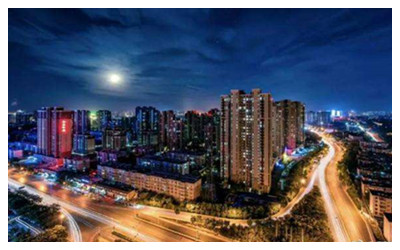
Many people may not be familiar with Nanhe District in Xingtai, Hebei.
But mention that it is the hometown of Wang Baoqiang, and many will instantly nod in recognition.
Today, Nanhe carries an even louder title:
China’s Capital of Pet Food.
This small northern district has quietly become the “central kitchen” for cats and dogs across the country.
According to industry data, Nanhe accounts for around 60% of China’s annual pet food production and sales, and over 30% of the nation’s cat litter output.
Pick up a bag of cat litter or dog food nearby and check the label—you have roughly a 50% chance of seeing Nanhe listed as the place of origin.
From a Poverty-Stricken County to a Pet Food Powerhouse
So where exactly is Nanhe?
Located next to Handan and just steps away from downtown Xingtai, Nanhe is the city’s closest satellite district.
It covers 405 square kilometers and is home to 413,000 people.
By size and population, it is hardly large. In fact, Beijing’s Tiantongyuan residential area alone houses a population comparable to the entire Nanhe District.
For years, Nanhe was small not only in scale but also in economic strength. It was once designated a provincial-level poverty county in Hebei, with 1,974 impoverished households—224 of them concentrated in a single village in Jiasong Town.
Historically, Nanhe relied heavily on traditional agriculture. Its industrial base was weak, with coal transport and conventional manufacturing forming the backbone of its economy. Simply put, it had very few strong cards to play.
Some might question this narrative. After all, Nanhe is encircled by major highways—the Beijing–Shenzhen, Beijing–Guangzhou, Xingtai–Hengshui, and Xingtai–Linfen expressways—and intersected by key rail lines including the Beijing–Guangzhou Railway, high-speed rail, and the Handan–Huanghua Railway.
So why didn’t development take off earlier?
Despite its transport links, Nanhe sits outside the core of the Beijing–Tianjin–Hebei economic zone. Logistics costs remained relatively high, and the district struggled to attract large-scale industrial transfers.
In September 2018, Nanhe officially exited the list of poverty counties.
The driving force behind this transformation was clear: a fully integrated pet industry value chain, covering everything from food and supplies to healthcare and logistics.
Young pet owners may hesitate over discounts when ordering takeout for themselves, but willingly pay premiums for grain-free food, functional snacks, and eco-friendly cat litter for their pets.
This “never cut corners on the fur kids” mindset has flowed straight into Nanhe’s factory lines, forming an industrial cluster worth nearly RMB 200 billion.
From feeding people to mastering pet palates, how did this northern district rise to become a hub of the pet economy?
Nanhe now ranks first nationwide in pet food and cat litter production, hosts tens of thousands of market entities, supports over 60,000 jobs, and attracts upstream and downstream companies to cluster locally.
Thirty years of persistence have paid off. By focusing on a niche market and earning the trust of devoted pet owners, Nanhe has secured a distinctive place on China’s industrial map.
A New Track, A Wider Horizon
Back in the 1990s, Nanhe was already a seasoned player in livestock feed production—but it had hit a ceiling.
More than 50 feed manufacturers competed fiercely across the district, trapped in homogeneous competition. Margins shrank relentlessly, with profits reduced to mere cents per kilogram.
History shows that many successful transformations begin with “seeing the world beyond.” Nanhe did exactly that.
During external investment inspections, local officials discovered a crucial insight: although both industries fed animals, pet food carried far greater value than traditional feed. A ten-kilogram bag could sell for hundreds of yuan, revealing an entirely different profit outlook.
Serving pets versus serving livestock was not just a semantic difference—it was a fundamentally different economic model.
More than 20 years ago, under active government guidance, several leading local enterprises took the first leap into pet food manufacturing.
When the first pet food production lines started running, the entire industry watched closely.
Those who dared to move early were rewarded quickly. The initial success created a powerful demonstration effect, prompting feed producers and related businesses to follow suit and enter this promising blue ocean.
In hindsight, Nanhe’s timing was impeccable. It aligned perfectly with the rise of pet ownership in China.
From a policy perspective, urban pet restrictions gradually eased from the 1990s onward. Pets shifted from functional animals to emotional companions.
In simpler terms, urban young people began treating cats and dogs as family members rather than watchdogs.
At the time, the pet food market was still awkwardly positioned. Imported brands, burdened by transportation and customs costs, were unaffordable for most consumers, creating a clear demand for cost-effective domestic alternatives.
As China’s per capita GDP surpassed USD 3,000 in 2008, pet ownership awareness surged. More households recognized that pets should no longer subsist on leftovers.
This laid the groundwork for Nanhe’s transformation.
The true turning point came after 2010.
Pet food output in Nanhe grew explosively, with thousands of tons shipped nationwide every day and exports expanding into Southeast Asia.
When per capita GDP exceeded USD 8,000, China’s pet market entered rapid growth. By 2015, the number of pet cats grew by 30%, and owning both cats and dogs became a new lifestyle aspiration.
Nanhe seized this historic opportunity, upgrading its feed-industry expertise—raw material sourcing, extrusion technology, and distribution networks—into competitive advantages for pet food.
By then, Nanhe controlled around 60% of China’s pet food market, and in 2017, it was officially awarded the title “China’s Capital of Pet Food.” The leap to a new track truly opened boundless possibilities.
Feeding the Nation’s Most Demanding Appetites
Producing pet food in Nanhe requires both solid expertise and sharp thinking.
The district has fully integrated upstream and downstream resources. In Nanhe, everything needed is available locally.
From corn and soybeans to packaging bags and cartons, from livestream sales to logistics dispatch, the entire ecosystem operates seamlessly within the district.
Today, Nanhe hosts over 11,000 pet-related market entities, including 47 large-scale pet food producers, 44 cat litter manufacturers, 150 pet supplies companies, and 95 upstream and downstream enterprises.
Inside the pet industry parks, collaboration across every link of the value chain is evident.
The ecosystem even gave rise to rare “new professions” for pets.
At Huaxing Pet Food, for example, an experimental base houses over 1,300 cats and dogs serving as professional “taste testers,” sampling new products daily while humans record their reactions.
Pet food R&D in Nanhe has long moved beyond basic nourishment into the realm of precision nutrition.
Every detail of a Labrador named “Xiao Q” is tracked—daily intake, coat shine, tear stains, and digestion patterns—forming data profiles that guide formula refinement.
Developing a functional pet food often requires dozens of iterations, rivaling the rigor of Michelin-level recipe development.
Unlike humans, pets do not compromise. If the food is unappealing, they simply stop eating. Their honesty makes them the world’s most demanding food critics.
Global Vision for a Growing Industry
As the pet economy enters a phase of intense competition, Nanhe’s ambitions extend well beyond the domestic market.
Local entrepreneurs put it succinctly: the era of simply producing food is over—now comes the need to read the map and understand the road ahead.
In a smart warehousing hub, a 3,000-square-meter facility is split into two zones: livestream studios in the front and automated sorting areas in the back.
As hosts showcase freeze-dried pet food on camera, backend systems generate orders in real time. Workers sort packages via electronic labels while intelligent logistics systems optimize delivery routes.
This front-store, back-warehouse model has reduced logistics costs from 15% to 8%, with daily order volumes exceeding 3 million parcels and 98% next-day delivery rates.
Big data enables precise demand forecasting. Southern markets favor fish-based formulas, while northern regions prefer beef-based products—insights that directly guide inventory strategies.
Digitalization has not only reshaped domestic distribution but also simplified global expansion.
Where exports once relied on multiple intermediaries, today a single computer connects Nanhe directly with overseas consumers.
Nanhe pet food products are now sold in the United States, Germany, Japan, and many other markets.
Offline, the district has innovated with a “pet industry + tourism” model. The sixth Pet Industry Expo attracted 1,300 global exhibitors, generating on-site transactions exceeding RMB 200 billion.
The “Pet-Friendly Discovery Tour” links theme parks, industrial museums, and outlet malls, turning experiences into consumption.
Today, 75% of Nanhe’s pet food sales are online, reaching over 30 countries and regions worldwide.
The shift is clear: production now follows market demand, not the other way around.
From river fishing to ocean navigation, success requires understanding currents and reading the stars.
In Nanhe, the pet food industry has become a catalyst for regional revitalization. Villagers who once migrated for work now build prosperity at home, transforming from laborers into e-commerce entrepreneurs with annual revenues in the millions.
A complete value chain—spanning procurement, manufacturing, e-commerce, and logistics—supports over 11,000 market entities and creates employment for more than 100,000 people.
Every bag of pet food shipped from Nanhe carries a story of China’s manufacturing evolution—from scale to quality, from processing to innovation.
More importantly, it reflects the quiet yet powerful foundation of the country’s upward development.