The AI PC hype of the past year clearly cooled at CES 2026. Dell stood out for doing “its least AI-centric CES briefing in five years,” shifting the spotlight back to product refreshes, design, reliability, and business needs—while treating AI as a feature rather than the headline. Executives across Dell, ASUS, and HP broadly agreed: mainstream buyers aren’t purchasing laptops because of AI features, and real demand remains limited, so marketing is moving toward performance, price, and practical use cases.
Lenovo is taking the opposite approach. Instead of dialing back, it’s doubling down—pushing more aggressive AI PC form factors and elevating its strategy to a “hybrid AI platform,” aiming to make AI a system capability spanning on-device computing, private deployments, and the public cloud. This split isn’t simply bold versus cautious—it reflects different bets on how fast AI demand will truly mature.
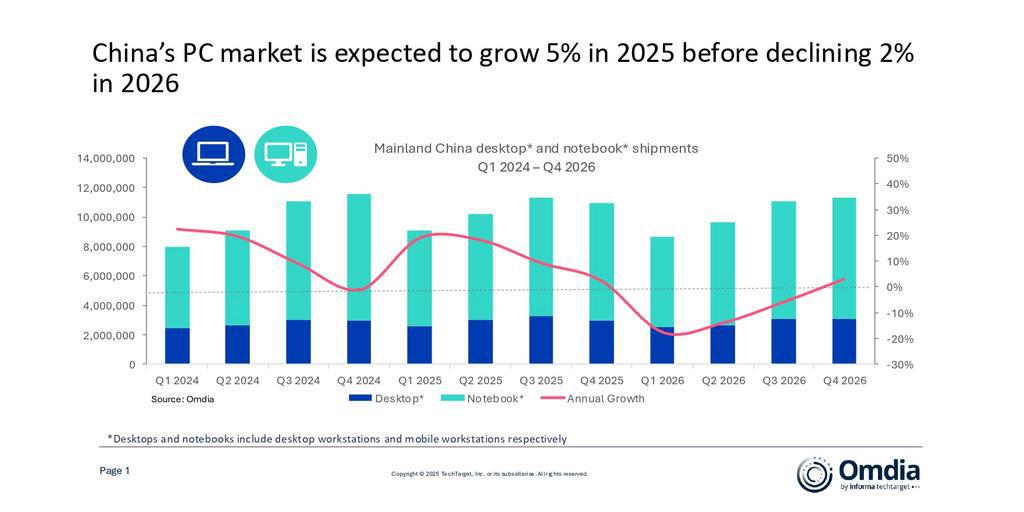
Yet much of the current “AI PC growth” may be driven less by killer AI experiences and more by policy tailwinds and measurement definitions. Many market trackers classify AI PCs by whether they include an NPU/AI accelerator, not by whether users actively benefit from AI features. Subsidies and trade-in incentives also pulled “AI-labeled” new models into mainstream price bands, encouraging upgrades even when users weren’t sure they’d use AI.
The bigger structural challenge is margin capture: AI value is concentrating upstream. Nvidia, TSMC, and memory suppliers are winning the profit crown, while downstream device makers face rising component costs and limited pricing power. Lenovo’s scale and inventory strategy may help it endure, but it can’t easily change the industry’s profit gravity. That’s why it’s betting on platform and ecosystem control—but whether hardware brands can truly claim a meaningful share of AI upside remains an open question.