In a recent interview with CNBC, Demis Hassabis, CEO of Google DeepMind, offered a rare and candid assessment of the global AI landscape, with particular focus on China’s rapid progress.
Hassabis said Chinese AI teams are now only “months behind” the global frontier, not years as previously believed. Organizations such as DeepSeek and Alibaba have demonstrated exceptional strength in engineering efficiency, inference optimization, and cost control. According to him, once a new paper or method appears, Chinese teams can often replicate it at remarkable speed—and sometimes improve on specific aspects.
This capability has eroded Silicon Valley’s traditional sense of being “one generation ahead.” The gap is shrinking month by month.
However, Hassabis also emphasized that originality remains China’s main weakness. Breakthroughs such as the Transformer architecture or AlphaGo—true paradigm shifts—have yet to emerge from China. In his words, Chinese teams excel at racing along existing tracks, but building entirely new tracks requires longer-term accumulation, risk tolerance, and foundational research.
That said, he sees strong potential. Hassabis believes that when engineering optimization reaches extreme levels, qualitative shifts often follow. With massive application scenarios, rapid market feedback, and sustained investment, China could still deliver unexpected, paradigm-changing innovation.
On the road to AGI, Hassabis highlighted the problem of “jagged intelligence”: current models excel at some tasks but fail unpredictably at complex reasoning and real-world understanding. Scaling alone, he argued, is not enough—future progress will require new paradigm-level breakthroughs.
He remains cautiously optimistic that AGI could arrive within five to ten years, noting that energy will ultimately become the “currency of intelligence.” Hassabis also stressed the importance of world models—systems capable of understanding causality, simulating environments, and planning ahead—as a core component of future AGI.
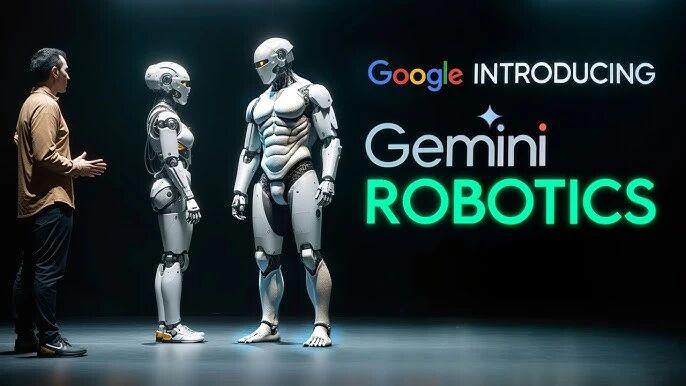
DeepMind is already exploring this direction through projects like Genie, Veo, and robotic simulation. At the application level, Hassabis is bullish on on-device AI and embodied systems, aiming to move AI from “talking” to “doing.”
In his view, China has earned its seat at the top table of AI competition. The long-term outcome, however, will depend on who dares to explore the unknown and build entirely new paths—not just who runs fastest on existing ones.