Over the past months, PC users have clearly felt how out-of-control memory prices have become. Yet smartphone prices haven’t surged as noticeably—not because phone brands are better at “holding the line,” but largely because their inventory buffers have been relatively healthier.
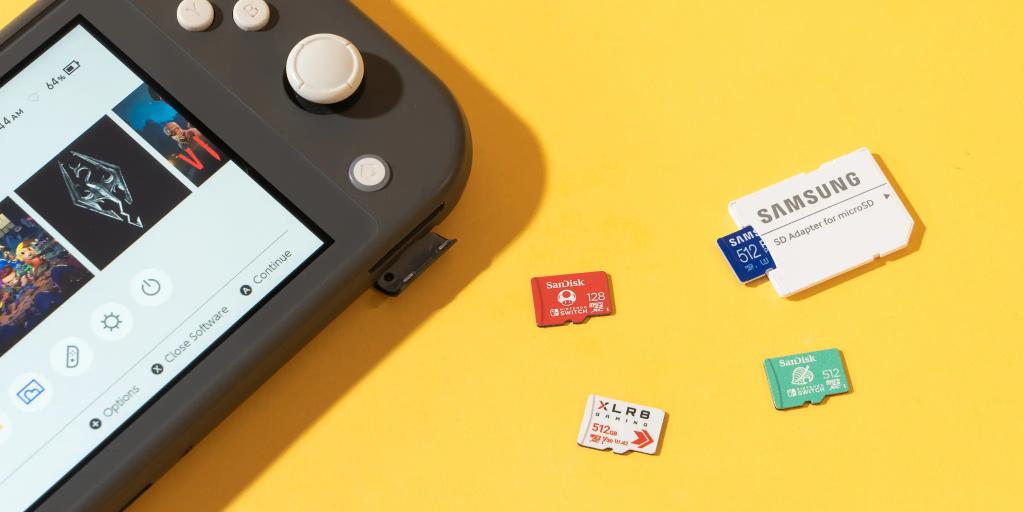
That cushion may be thinning. Reports suggest some smartphone makers are also facing tighter memory inventories, and a few are exploring ways to reduce pressure on internal storage. One of the most straightforward options is bringing back expandable storage—reviving the microSD card slot and letting users add capacity themselves.
Expandable storage used to be a near-standard feature. Over time, it disappeared as phones prioritized tighter internal packaging, larger batteries, bigger camera modules, and higher dust/water resistance with more integrated sealing. Ironically, a storage-cost crunch could be what brings it back.
Still, microSD was never meant to replace internal storage—only to relieve capacity constraints. Modern flagships use high-speed embedded flash such as UFS 4.1, which offers low latency and strong random performance—ideal for apps, OS updates, and game loading. microSD, even in its fastest form (microSD Express), still trails far behind in overall responsiveness and sustained consistency. It may deliver much higher sequential speeds than older cards, but matching the “feel” of internal UFS remains difficult.
For consumers, expandable storage is still appealing:
- Without it, buyers are forced into fixed tiers (256GB/512GB/1TB) and must accept the pricing gaps.
- If internal storage stays expensive, 1TB models may become rarer and tier gaps could widen.
- With expansion, users can buy a lower base storage model and spend the budget on the “real” hardware upgrades—display, camera, performance—often improving value for money.
It also better fits diverse needs: creators may need far more than 1TB, while light users may find 256GB plenty.
But reintroducing the slot isn’t free:
- Internal space and layout: today’s phones are densely packed, and a card slot requires connectors, shielding, reinforcement, and routing—not just “a small hole.”
- Water/dust resistance: more openings raise sealing complexity and failure risk.
- Reliability and support: frequent insertion, contact oxidation, inconsistent card quality, and the grey market of fake/overstated cards can lead to unstable performance and even data-loss scenarios. Cheap slow cards can also make the phone feel laggy.
Some issues can be mitigated—partly. microSD Express / SD Express can use PCIe/NVMe pathways and reach around the entry-level SSD range for sequential performance, making high-bitrate video capture more feasible. But random I/O, latency consistency, thermal limits, and long-write throttling still vary by controller, NAND, and device design. To deliver a good experience, phone makers would need hardware and system-level “adaptation,” and they’d likely need to enforce usage rules—external cards are great for media and archives, less so for apps and games.
From an industry perspective, memory cards have been sustained by drones, action cams, dash cams, handhelds, surveillance, and industrial devices. A smartphone-driven comeback could shift the market from “cheap capacity” toward “fast and reliable performance.” Ultimately, expandable storage returning to phones could benefit users, phone brands, and storage vendors—provided quality control and anti-counterfeit/anti-fake-speed problems are handled well.