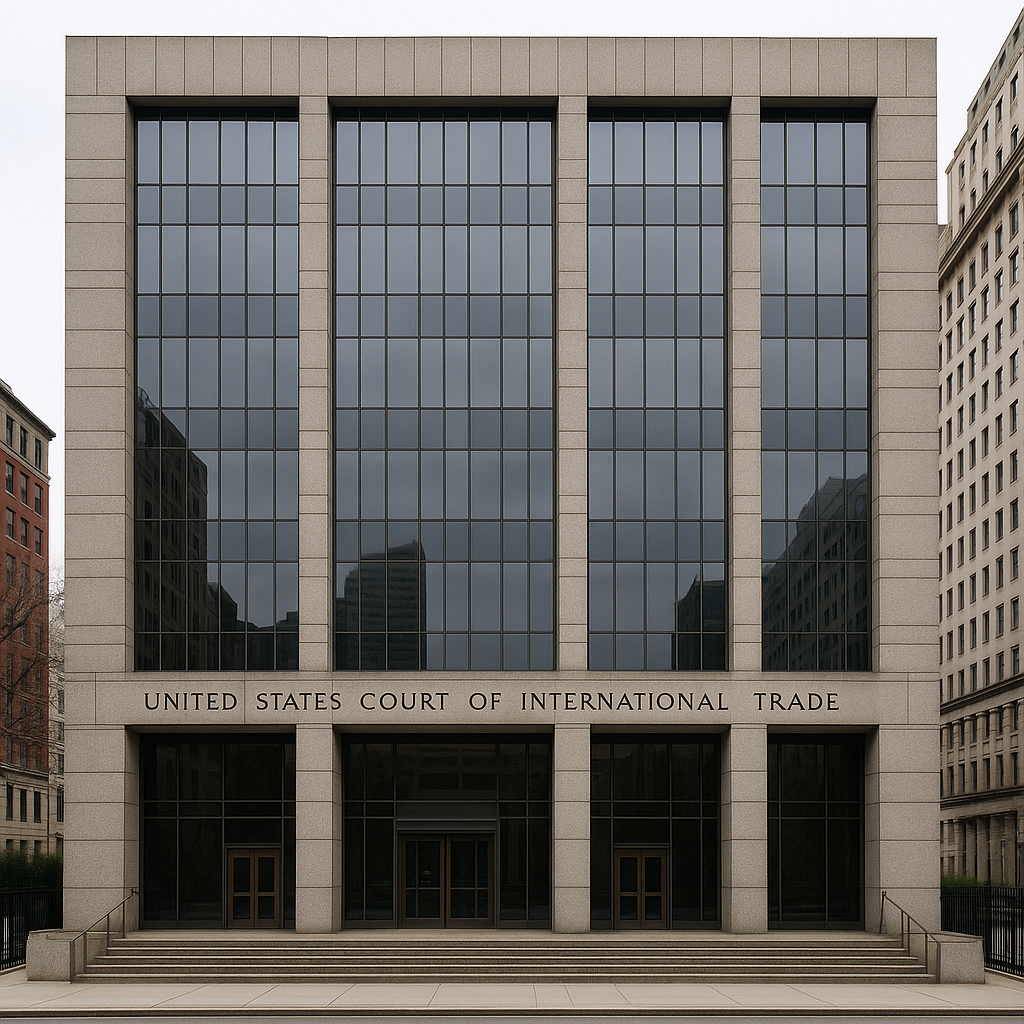
This week, the Trump administration’s global tariff policy faces its first major legal test as the U.S. Court of International Trade in Manhattan holds hearings on one of the most controversial uses of executive power under Trump.
On Tuesday, a three-judge panel will hear arguments on whether these tariffs—which have triggered trade wars with countries worldwide—should be halted. Though the court holds nationwide authority over tariff and trade disputes, it operates largely under the public radar, with limited media coverage.
Last week, the spotlight turned to the court when New York wine importer V.O.S. Selections and four small businesses filed a lawsuit claiming Trump lacked the authority to impose such tariffs. While other similar lawsuits have emerged nationwide, the V.O.S. case is currently the most prominent.
In early April, Trump announced a "Liberation Day" tariff plan, implementing a baseline 10% tariff on all countries. Higher retaliatory tariffs followed but were temporarily paused—except for China, which instead saw tariffs rise to 145%.
Trump relied on the International Emergency Economic Powers Act (IEEPA), a 1977 law that grants the president broad powers during national emergencies but does not explicitly mention tariffs. Trump claimed trade deficits threatened U.S. economic security and constituted a national emergency.
What Makes the Court Unique?
Established by Congress in 1980, the court replaced the U.S. Customs Court and now comprises 14 judges. It usually hears cases involving unfair trade practices like product dumping. In constitutional or high-impact cases, a panel of three judges is assigned.
The V.O.S. case will be heard by Judges Timothy Reif (appointed by Trump), Gary Katzmann (by Obama), and Jane Restani (by Reagan).
Liberty Justice Center, representing the plaintiffs, argues that only Congress can impose tariffs and that IEEPA was misused. They also claim the trade deficit is not a true emergency.
Meanwhile, the Justice Department argues the president has broad foreign trade authority under IEEPA and that Trump’s emergency declaration is a political matter courts shouldn't overrule.
A ruling in Trump’s favor could expand executive power, while a loss may derail much of his trade agenda.