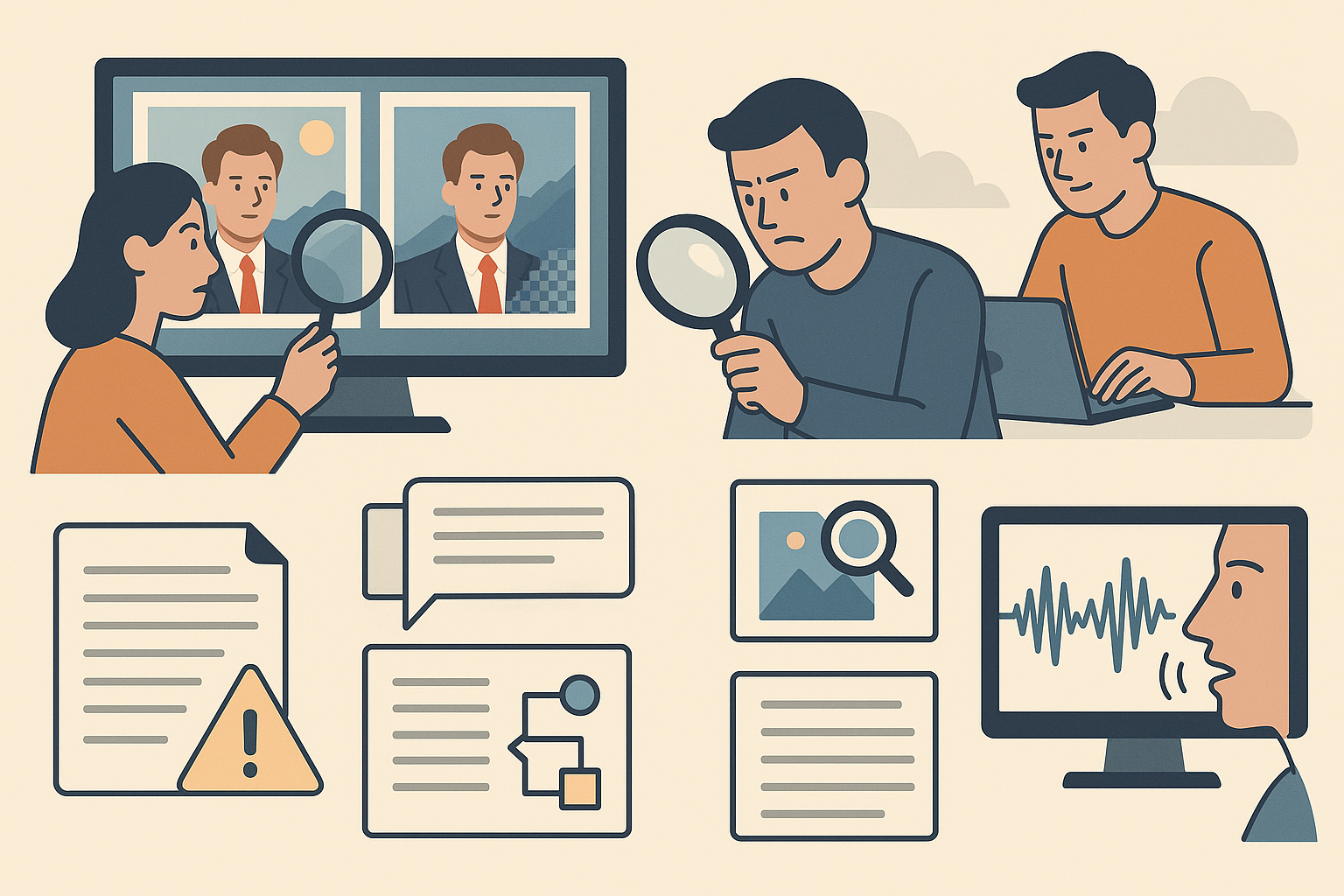
With the rapid advancement of AI technology, our lives and work styles have undergone tremendous changes, bringing great convenience. However, some malicious actors use AI to create highly realistic fake images, text, and voice, disrupting information flow and misleading the public. Mastering the skills to identify AI-generated content is crucial to build a defense and avoid being deceived by false information.
Three Key Tips to Identify AI-Generated Images:
- Observe Light Inconsistencies: Real photos have natural and consistent lighting, whereas AI-generated images often show anomalies such as conflicting light directions between subjects and backgrounds.
- Zoom in to Check Pixel Details: Real images have smooth edge transitions, but AI images may show jagged edges or pixel breaks with coarse details.
- Use Reverse Image Search: Upload the image to image recognition tools; if the source traces back to AI art platforms, its authenticity is questionable.
Practical Methods to Identify AI-Generated Text:
- Watch for Vague Details: AI text often lacks specific details and is vague, missing clear information about time, place, or people.
- Check Logical Coherence: Authentic text maintains tight logic and clear causality, while AI text may contain breaks, jumps, or disconnected descriptions.
- Notice Repetition and Errors: AI-generated content often repeats words or misuses terms; verify suspicious content through official fact-checking channels.
Key Tips to Identify AI-Generated Voice:
- Observe Waveform Characteristics: Human speech waveforms naturally fluctuate and include breathing sounds; AI voice waveforms tend to be mechanical with abrupt cutoffs at the end.
- Transcribe and Proofread: Use transcription tools to convert voice to text; AI voices frequently have mispronunciations or missing words, resulting in incoherent sentences.
- Catch Tone Variations: Human voice carries rich emotions and tonal shifts, whereas AI voices sound monotonous and stiff, lacking natural expression.
Master these techniques to sharpen your "piercing eyes," effectively detect AI-generated content, avoid misinformation traps, and jointly maintain a healthy and clear information environment.