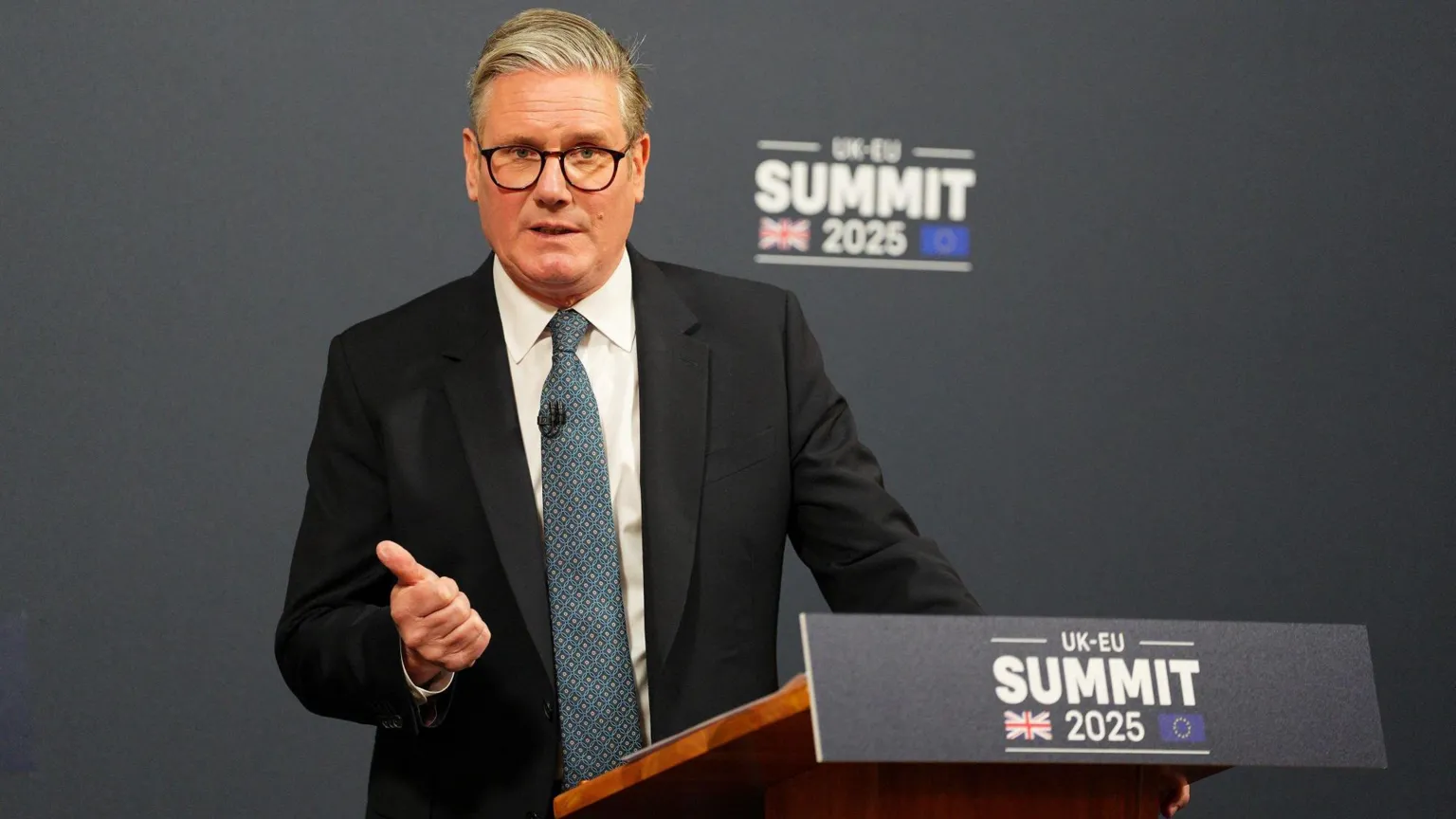
UK Prime Minister Sir Keir Starmer has declared it’s time to move past the “political fights” over Brexit as the UK and European Union have struck a comprehensive agreement to reset their relationship.
The new deal covers key areas including fishing rights, trade facilitation, defense collaboration, energy cooperation, and youth mobility programs. A cornerstone of the agreement is a 12-year extension allowing EU fishing vessels continued access to British waters, easing trade frictions in return. This marks the most significant thaw in relations since the UK officially left the EU in 2020.
European Commission President Ursula von der Leyen hailed the summit as a “historic moment” made possible by Starmer’s leadership, emphasizing the tangible benefits this agreement will bring amid global uncertainty. Starmer called for moving forward, leaving behind old debates to focus on practical solutions that benefit the British people.
The agreement simplifies import and export procedures for food and drink, reducing some routine checks on animal and plant products. In exchange, EU fishing rights are secured until 2038, and the UK government announced a £360 million fund to support coastal communities and the fishing industry.
Although fishing constitutes only about 0.04% of UK GDP, it was a symbolic issue during the Brexit campaign. Starmer defended the deal as offering stability and easier market access for British fishing communities. Critics from Reform UK and some Conservative voices described the deal as overly concessionary.
The deal also requires the UK to align with certain EU regulations on food standards, emissions trading, and electricity market cooperation, granting the European Court of Justice a role in resolving trade disputes—a contentious point in UK politics.
On security, the UK will join the EU’s proposed £150 billion defense fund, allowing British arms manufacturers to bid for contracts. Trade and energy cooperation under the agreement could add nearly £9 billion to the UK economy by 2040.
Additional provisions include expanded youth mobility schemes, efforts for the UK to join the Erasmus student exchange program, increased use of automated passport gates for British travelers, and enhanced collaboration on North Sea energy networks.
The reset follows years of strained relations over Brexit, with Starmer’s government seeking to stabilize ties amid a shifting global landscape marked by US policies and Russia’s invasion of Ukraine. Public polls indicate growing regret over Brexit and favor closer EU relations, though Eurosceptic parties like Reform UK remain politically influential.
This agreement signals a pivotal new chapter for UK-EU relations, aiming to balance sovereignty concerns with pragmatic cooperation for mutual benefit.