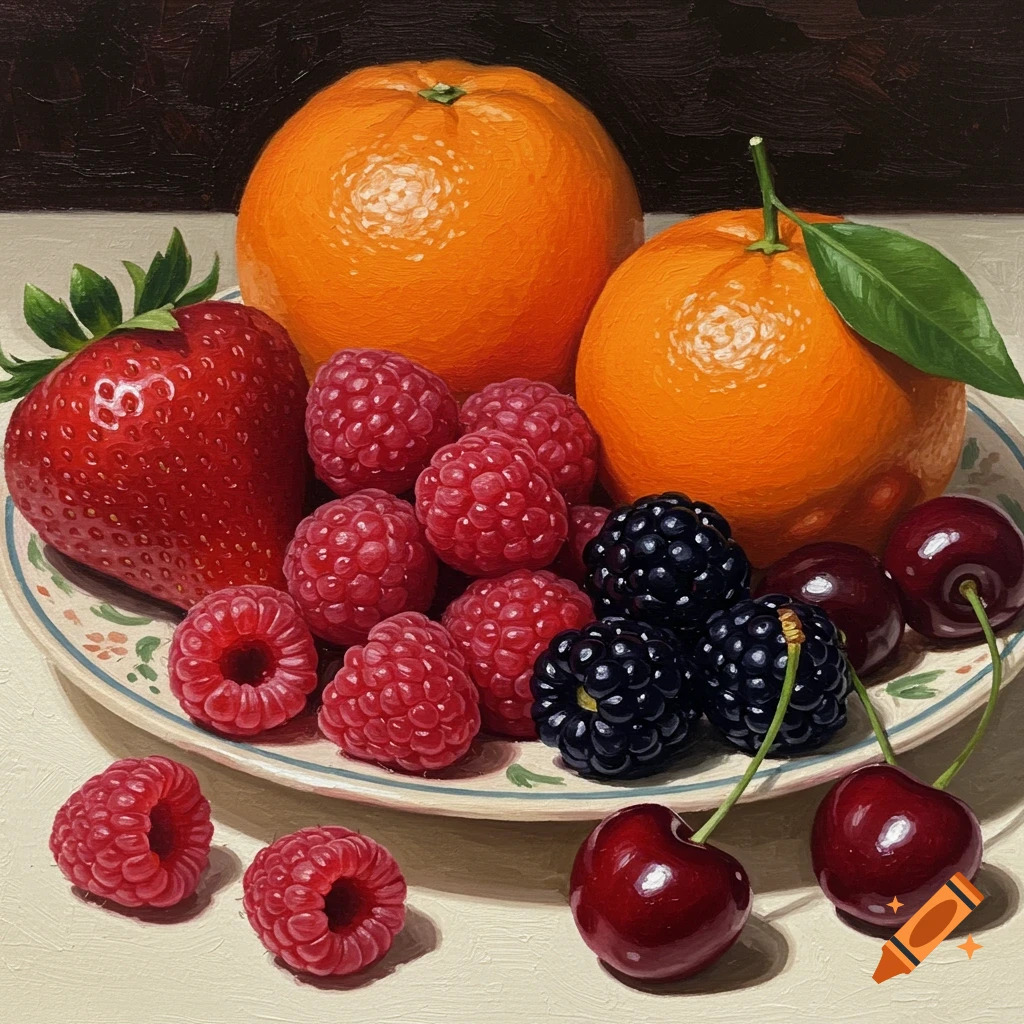
“Two jin of sugar mandarins for 9.9 yuan! One jin of strawberries for 12.8 yuan! Fruit prices are down!”
Recently, fruit vendors at a wet market in Shanghai’s Pudong New Area have been blasting such promotions through loudspeakers.
This scene is a snapshot of China’s fruit market in 2026. This winter, prices of many popular fruits have fallen noticeably compared with previous years. Interviews conducted by Yicai with growers, distributors, retailers, and on-the-ground market visits show that the broad decline in fruit prices is driven by both supply-side upgrades across the industry chain and changes on the consumption side. Looking ahead, the localization of mainstream fruits is set to become a defining trend.
From 20% Off to Prices Halved: A Broad-Based Decline
“For us on the retail end, the change is very clear. Cherries were the first to see obvious price drops this year—of course it depends on the variety. High-end cherries have remained relatively stable, but prices of standard varieties are down at least 20%, and at one point were cut in half. Blueberries and sugar mandarins are selling well now, and their prices are also lower than last year. These are all top sellers, which shows that mainstream fruits have been in a downward price cycle since late last year through January,” a procurement head at a major supermarket chain told Yicai.
Data from the Guangzhou Jiangnan Fruit and Vegetable Wholesale Market shows that on January 29, 2026, imported cherries were priced at 45 yuan per kilogram, down from 57 yuan a year earlier. Imported blueberries fell from 56.25 yuan to 50 yuan per kilogram over the same period. Imported durians dropped nearly 10 yuan year on year to 36.94 yuan per kilogram. Domestic fruits followed a similar pattern: oranges declined from 6 yuan to 3.4 yuan per kilogram, while strawberries fell from 43 yuan to 35.5 yuan per kilogram.
Zeng Yulian, General Manager of Fresh Produce Procurement at Benlai Life, noted that since the start of winter, seasonal fruits such as strawberries, oranges, and Gannan navel oranges have shown a broadly perceived and significant decline in retail prices compared with last year.
Platform data from Benlai Life and nationwide market trends indicate that sugar mandarins have experienced some of the most pronounced fluctuations in this round of price adjustments, with bulk purchase prices in certain producing areas down 30%–50% year on year.
Analysts from Yimutian added that the first batch of sugar mandarins launched in late November 2025 opened at 3–4.5 yuan per jin, at least 1 yuan cheaper than the same period in 2024. By early 2026, prices had fallen to around 2 yuan per jin, with smaller fruit selling for as little as 1.5 yuan. While supply enthusiasm increased compared with last year, procurement demand dropped sharply.
Strawberries have seen an even steeper slide. Feedback from multiple producing regions shows that although launch prices were high, they fell faster than last year—dropping by around 50% in less than a month. For example, Dandong “99 Hongyan” strawberries in Liaoning opened at 50–70 yuan per jin in early November 2025, only to fall to around 40 yuan within a month. By December, cream strawberries and Ningyu strawberries in Jiangsu were trading at 10–20 yuan per jin, but have since dropped to 4–5 yuan.
Oversupply at the Core of the Price Drop
The decline in fruit prices is not driven by a single factor, but rather by structural changes across the industry.
Guo Liqiu, a fruit trader at the Shouheng Gaobeidian International Agricultural Products Trading Center in Beijing, said that overall fruit prices this year are 20%–30% lower than usual, primarily due to changes in supply and demand. Increased supply has pushed prices down across the board.
Imported fruits offer a clear example. Cherries, once driven by strong Chinese demand, attracted heavy overseas investment and rapid capacity expansion. This year, the surge in imports—combined with uneven quality—has dragged down overall prices, leading to supermarket promotions such as five jin of cherries for under 100 yuan.
Zeng echoed this view, noting that favorable weather and the spread of planting technologies have kept output of strawberries and sugar mandarins stable and abundant. In Guangxi and other major producing areas, expanded planting driven by past high prices has now entered peak production, significantly boosting supply.
According to Yimutian data, China’s sugar mandarin planting area exceeds 10 million mu, with 2025 output reaching 6.5 million tons, up 25% year on year. Strawberry planting has also expanded steadily to more than 2.21 million mu, with output nearing 4 million tons—about one-third of global production.
Blueberries, another high-profile fruit, have attracted both industry players and outside capital. Some companies have crossed over into blueberry cultivation, rapidly expanding acreage. For instance, Nopoxin entered the blueberry sector in 2018 and now operates 37,000 mu. In the first half of 2025, its blueberry unit generated 1.63 billion yuan in revenue with a net margin of 33%.
Industry insiders note that large-scale blueberry cultivation has relatively low technical barriers, with specialized services available for seedlings, land preparation, irrigation, and greenhouses. The main barrier is capital: orchards in Yunnan often span hundreds of mu, requiring tens of millions of yuan in upfront investment. Returns, however, are quick—seedlings planted in spring can bear fruit by year-end.
As planting booms converged, supply growth has far outpaced demand. Multiple fruits—sugar mandarins, ponkan, wogan oranges, navel oranges, strawberries, and blueberries—hit the market simultaneously between December 2025 and January 2026, intensifying competition. Quality differentiation further fueled price wars, especially among lower-grade fruit.
Supply chain efficiency has also played a role. Improved cold-chain logistics and the rise of e-commerce and community group buying have reduced losses and intermediaries, allowing end prices to reflect origin prices more closely.
At the same time, consumers have become more price-sensitive, while enjoying a wider range of choices. With blueberries, kiwifruit, and other options readily available, substitution effects have capped price increases for traditional citrus varieties.
Impact Up and Down the Chain
Falling retail prices are rippling upstream. Lin Chun, a fruit trader in Guangdong, said weak downstream demand has made the upstream business particularly tough this year. Purchase prices for citrus have dropped 40%–50%, with some varieties hitting 20-year lows, dampening buying enthusiasm among traders.
Blueberries are no exception. Data and field insights suggest upstream prices are down about 20% year on year. “Domestic blueberry prices fall every year. With output rising sharply, prices this year are clearly lower than last year,” said wholesaler Hou Junliang.
Yimutian analysts noted that blueberry prices have been trending downward for one to two years, sliding from 30–50 yuan per jin in early 2024 to 15–30 yuan this year.
Industry players are now more cautious about further expansion. Rapid acreage growth has pushed prices down to levels that risk failing to cover costs. Analysts warn that while lower prices stimulate consumption, price wars driven by homogenous expansion can erode growers’ margins and undermine long-term sustainability. The solution lies in avoiding blind expansion, improving quality and differentiation, developing processing and value-added products, strengthening order-based farming, and exploring agri-tourism models to boost incomes.
Long-Term Polarization and Accelerating Localization
Retailers expect a short-term seasonal bump before Lunar New Year, particularly for gift-box fruits, but prices are likely to fall again afterward. Zeng predicts a pattern of “short-term holiday stabilization and long-term polarization,” with premium fruit maintaining value while lower-quality products face sustained pressure.
Looking ahead, the industry is entering a quality-driven shakeout. The rise of mid- to high-end domestic fruits and faster local substitution are becoming clear trends. Success will hinge not on control of sales channels, but on building stable, efficient, and agile end-to-end supply chains. At the same time, consumption scenarios are diversifying—from family staples to office snacks, fitness meals, children’s foods, and gifts—driving innovation in packaging, convenience, and functionality.
Even international brands are accelerating localization by establishing domestic growing bases and integrated supply chains. With supportive agricultural policies, expanding e-commerce, and evolving offline retail experiences, China’s fruit market is moving toward a more balanced, stable growth phase—one that increasingly returns to the intrinsic value of the product itself.