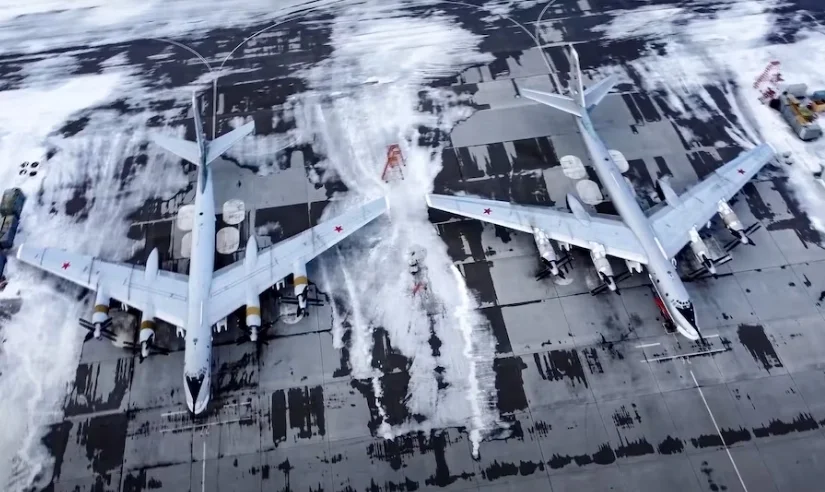
In 1941, Japan’s carrier-launched planes devastated the U.S. Pacific Fleet, signaling the end of the battleship era. Today, Ukraine’s inexpensive drones—costing only tens of thousands of dollars—may have inflicted billions in damage on Russia’s strategic bombers.
📉 Drone “Infiltration” Strikes
According to intelligence sources, Ukraine used trucks to secretly transport wooden drone launch compartments into Russia and launched them remotely from within Russian territory. Despite Russia’s denials of Ukraine’s claims—destroying or disabling one-third of its strategic bombers—satellite images have already confirmed damage to at least 13 large Russian aircraft.
⚙️ Global Lessons in Drone Warfare
Max Boot warned that this operation reveals a critical weakness in modern airbase defense: drones can easily be modified into lethal weapons, posing a direct threat to traditional airfields. Armies relying solely on fences and guards will struggle to counter such infiltrations.
The article suggests this may push militaries worldwide to invest more in counter-drone systems, as spending on traditional manned aircraft starts to look increasingly like 1930s cavalry investments—outdated and inefficient.
🌍 Strategic Impact: Resilience Over Decisive Change
“Operation Spiderweb” won’t fundamentally alter the conflict, just as Pearl Harbor didn’t defeat the U.S. Navy outright. But it shows Ukraine’s remarkable resilience and creativity. The article notes Ukraine has built a world-leading drone industry, producing 2.2 million drones last year and targeting 4.5 million this year.
By contrast, while Russia, with Iranian assistance, also produces drones, it consistently lags behind Ukraine’s innovative efforts.
💡 U.S. Aid Shortfall and Ukrainian Ingenuity
Boot also criticized the Trump administration for failing to replenish Ukraine’s depleted Patriot missile stockpiles. Lacking defensive munitions, Ukraine pivoted to attacking the bombers launching the missiles—showing ingenuity under pressure.
He concluded that although these drone attacks raise strategic risks and may provoke Russian retaliation, such bold tactics are what might force Putin to the negotiating table. Ukraine’s actions show they refuse to be defeated by aggression.
🔍 Key Takeaways and Spread Analysis
🔑 Core Points
- Drone infiltration strikes show how cheap drones can bypass airbase defenses, rewriting modern warfare.
- The Pearl Harbor analogy underscores a shift from traditional to new-era warfare.
- Global militaries face a new reality of low-cost, high-impact drone attacks.
- Ukraine’s resilience: Even with limited Western support, it uses creative tactics to fight back.
📈 Viral Potential
- Strong news hook: WaPo + drone attack + Pearl Harbor analogy—easy for social media sharing.
- Brings fresh insight into the technical evolution of the Russia-Ukraine war.
- Likely to fuel debate in international security, military, and tech communities.