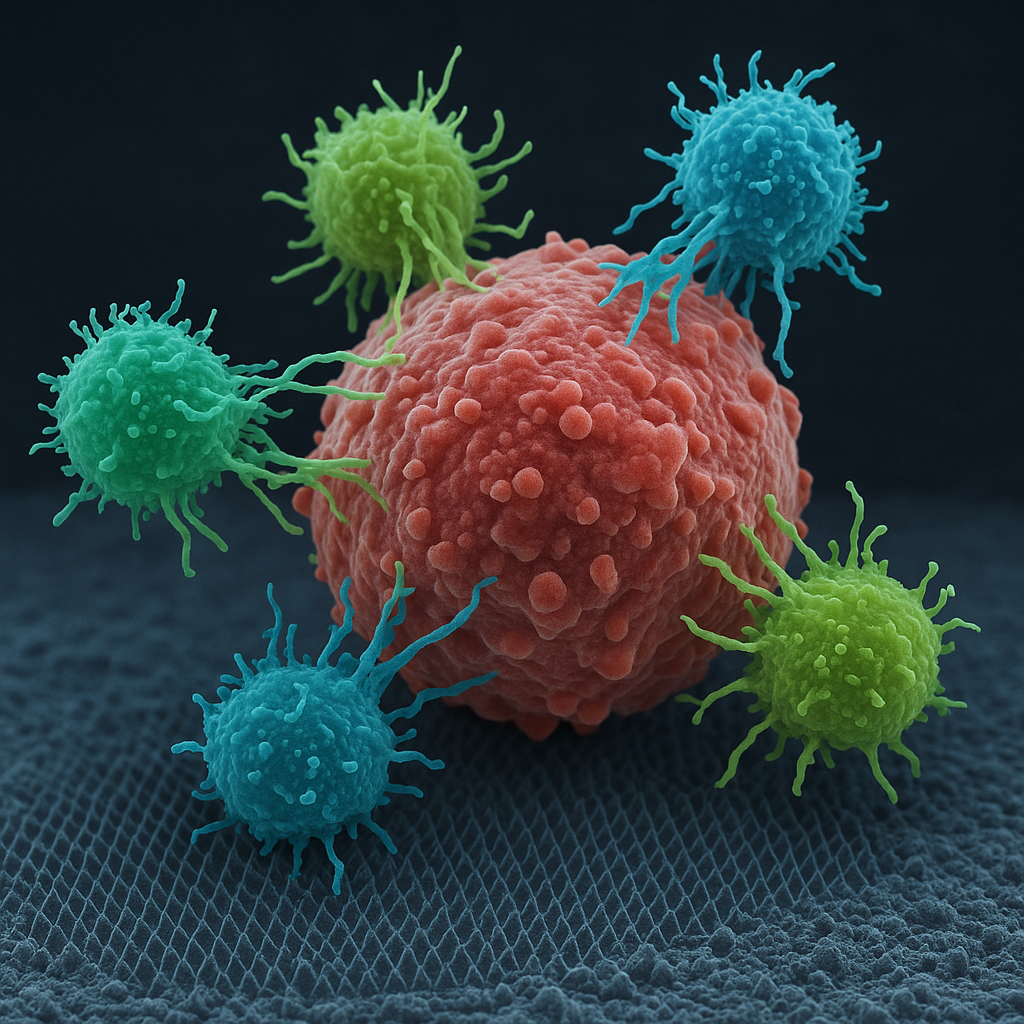
CAR-T cell therapy has emerged as one of the most groundbreaking cancer immunotherapies in recent years, particularly in treating hematologic malignancies like leukemia. However, maintaining CAR-T cell activity inside the body remains a major hurdle for its broader application.
A research team at Ben-Gurion University of the Negev recently announced that they have designed a new artificial activation platform for T cells by incorporating nanotechnology from semiconductor manufacturing. This platform is expected to greatly improve the effectiveness of CAR-T therapy, especially for treating solid tumors.
The researchers explained that during laboratory modification, CAR-T cells are activated in an artificial environment vastly different from the natural immune activation conditions in the human body—this mismatch may be the root cause of their short-lived efficacy. By engineering a nanostructured surface that mimics the natural immune microenvironment, the team identified a design that significantly enhances T cell response and longevity.
Crucially, the team also developed a cost-effective, scalable nanofabrication process to produce clinical-grade activation platforms. This innovation enables high-quality, large-scale generation of CAR-T cells suitable for adult cancer therapy. Laboratory and animal tests showed that CAR-T cells produced using this platform exhibit stronger and longer-lasting anti-cancer effects.
The study has been published in the latest issue of Advanced Materials, and the team is actively working to scale the technology for clinical use. If successful, this approach could redefine the role of CAR-T therapy in solid tumors and adult oncology.