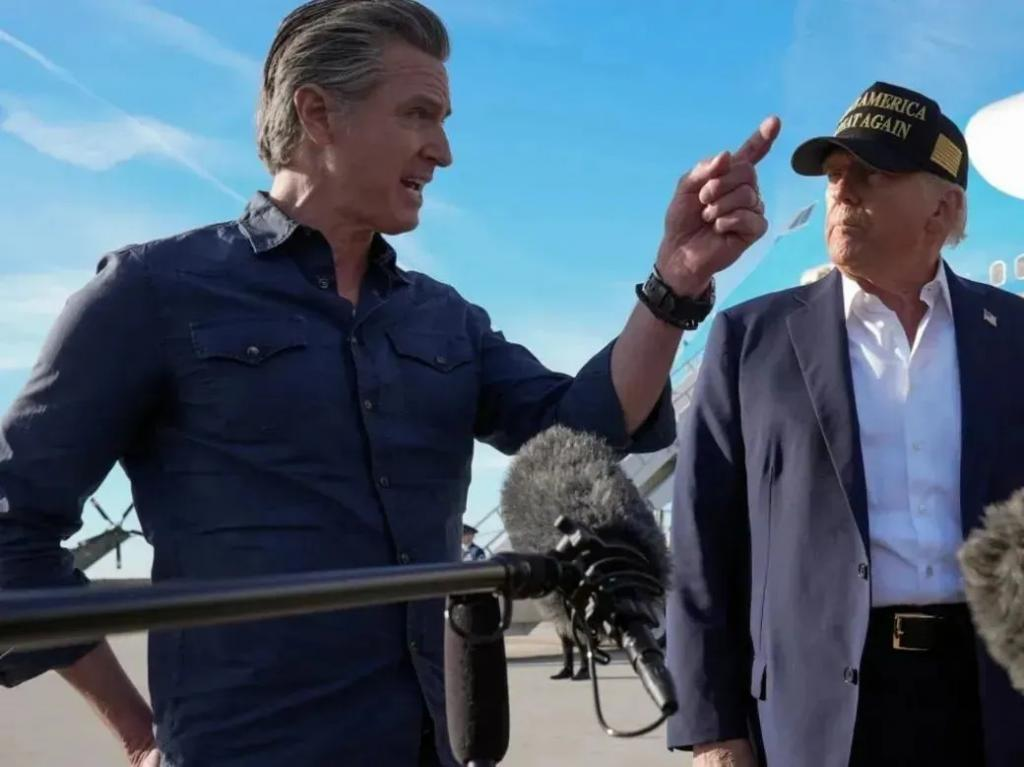
Federal immigration raids in Los Angeles have triggered widespread protests and clashes with police. In response, President Trump bypassed Governor Newsom, ordering the deployment of 2,000 National Guard troops and threatening prosecution against any officials who interfere. Newsom hit back defiantly, stating, “Arrest me if you must—I will not back down from defending California.”
California filed a lawsuit on June 9, claiming the federalization of state troops without gubernatorial consent violates the 10th Amendment. The state is joined by 22 Democratic governors and former VP Kamala Harris, who condemned the move as “cruel and deliberately provocative.”
At its core, this crisis reflects a fundamental clash between federal authority and state autonomy—centered on sanctuary policies and immigration enforcement. California, a Democratic stronghold, sees the intervention as an attack on its governance model.
The battle could be shaped by three key factors:
- Judicial outcome: The conservative-leaning Supreme Court (6-3) could favor Trump, setting a dangerous precedent for federal overreach.
- Public opinion: Immigrant-friendly California may rally behind Newsom, but concerns over security could sway moderate voters.
- International pressure: Mexico has already condemned the U.S. response, pushing the issue into global focus.
As military boots clash with legal filings, Newsom’s stance has transformed from state resistance to national opposition leadership. This is no longer just about Los Angeles—it’s a symbolic trial of America’s federal balance and the future of democratic governance.