As rising geopolitical tensions and the Ukraine war push European countries to ramp up military spending, major U.S. defense contractors are accelerating their expansion in Europe. According to the Financial Times on June 24, the upcoming NATO summit is expected to propose raising members’ defense spending to 5% of GDP—an opportunity American arms firms are eager not to miss.
At last week’s Paris Air Show, U.S. executives repeatedly emphasized “transatlantic cooperation,” positioning themselves as enablers of European defense sovereignty. Bernd Peters, VP of Business Development at Boeing Defense, stated, “We are an American company, but we are also a global company,” pledging support for Europe’s domestic defense ambitions.
Tech defense startup Anduril, which just partnered with Germany’s Rheinmetall on drone systems, echoed this message—championing “co-building” over “contract manufacturing,” and stressing local control and transparency.
Rather than simply exporting equipment, more U.S. firms are now investing in joint R&D and local production in Europe. This not only ensures market access amid rising calls for European autonomy but also strategically embeds U.S. firms in future European projects.
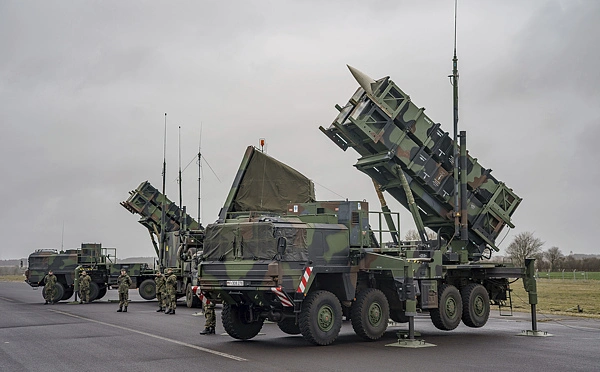
Lockheed Martin and Raytheon, for instance, have already announced multiple production partnerships in Europe. Lockheed plans a missile manufacturing site with Rheinmetall, while Raytheon’s joint venture with MBDA will produce Patriot missiles in Germany. In 2024, European operations accounted for around 11% of each company’s global revenue.
Yet, U.S. firms still face growing concerns about future political tensions—especially if Trump returns to the White House. European officials remain uneasy about depending on U.S.-regulated systems like the F-35, which are subject to the International Traffic in Arms Regulations (ITAR), limiting local upgrades and export permissions.
MBDA CEO Éric Béranger emphasized that while partnerships with the U.S. are valued, European governments do not want American legal restrictions to “hang over every defense decision.” Roberto Cingolani, CEO of Italy’s Leonardo, underscored the need for sovereignty in software and component upgrades to ensure interoperability among allies.
To counter reliance, the EU has launched major rearmament efforts. In March, the European Commission proposed an €800 billion “Rearm Europe” strategy. In May, it approved the “European Defence Industry Programme,” offering €150 billion in low-interest loans to EU members for weapons procurement—35% of which can be used for non-European suppliers.
As Poland, the EU’s rotating presidency, put it: “The more we invest in security, the less vulnerable we become.” Europe is now navigating a critical balancing act—between U.S. support and its own strategic independence.